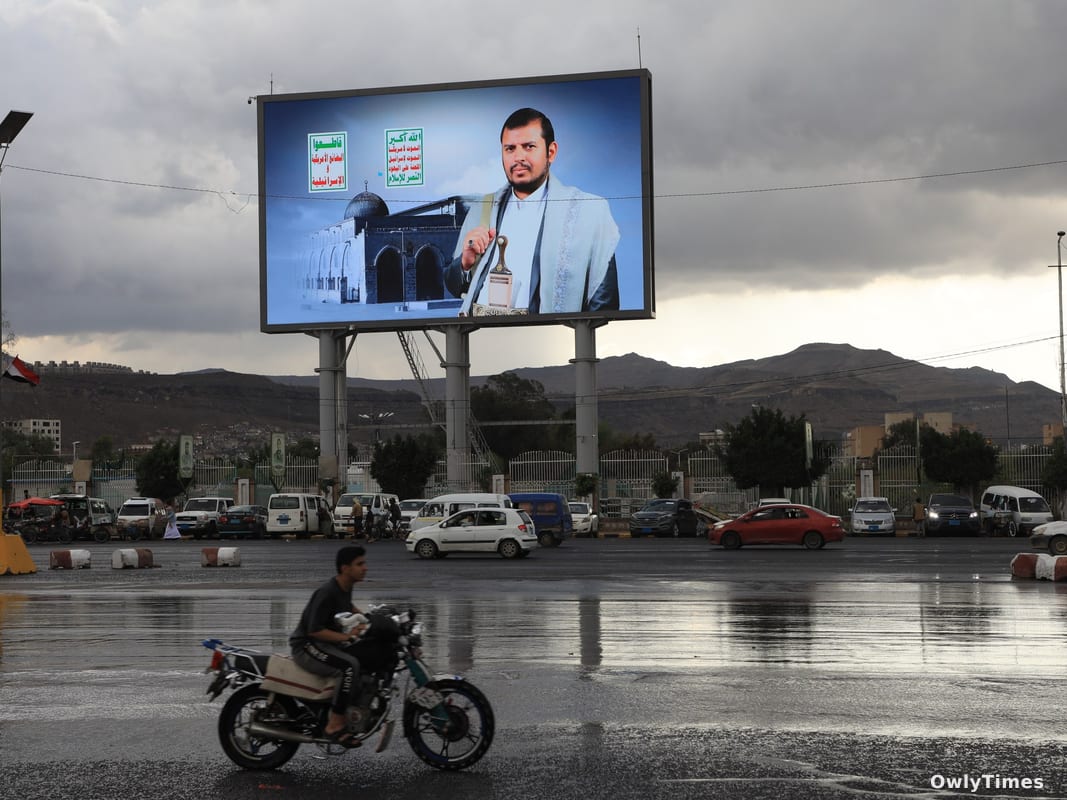

The narrative coming out of the Middle East focuses on escalating tensions between Iran and Israel, with the Houthis cast as a proxy force. The real story here isn't about the Houthis’ limited missile launches – it’s about the quiet desperation of ordinary Yemenis bracing for a conflict they didn’t start, but will undeniably pay for. In Sanaa, a city already reeling from a decade of civil war, the prospect of renewed Israeli strikes isn’t a geopolitical calculation; it’s a threat to the fragile existence of families like Yasser’s, who are clinging to a precarious stability.
Yasser, a 45-year-old ice cream shop owner, embodies this reality. His 3-by-3-metre shop, stocked with three refrigerators, provides just enough income to support his family of five. It’s a modest life, but one built on a hard-won independence from aid and reliance on others. Now, with the Houthis’ involvement in the US-Israeli war, that independence feels terrifyingly vulnerable. “The moment Israel begins its military response to the Houthis, we will lose the little comfort we have today,” he told Al Jazeera, anticipating the familiar cycle of fear, price hikes, and fuel shortages. This isn’t abstract anxiety; it’s the lived experience of a population repeatedly caught in the crossfire of regional power struggles.
This article draws on reporting from Al Jazeera.
The Houthis declared their first attack on Israel on March 28th, a pledge to continue strikes “until the declared objectives are achieved.” While these initial attacks have been limited and largely intercepted, the mere act of entering the fray has triggered a wave of apprehension in Sanaa. Israel has already struck Yemen repeatedly in 2024 and 2025, and the expectation, as a senior Israeli military official bluntly stated, is that those attacks will resume – and that the Houthis “will pay the price.” This isn’t a promise of proportionate response; it’s a warning of potentially devastating consequences for a country already on the brink of collapse. United Nations reports confirm this, highlighting the risk of exacerbating Yemen’s dire economic situation and disrupting crucial supply chains. The numbers are stark: nearly 1,200 children have been killed or injured in Yemen despite a truce, a chilling reminder of the human cost of conflict.
The fear isn’t just about bombs falling. Ammar Ahmed, a 28-year-old taxi driver, remembers the “horror” of previous Israeli and US air strikes, recalling a feeling of utter vulnerability. He’s already considering relocating his family, prioritizing their safety over everything else. But even relocation offers no guarantee of security. Abdulrahman, an apartment owner in Sanaa, is now meticulously vetting potential tenants, fearing that housing a Houthi official could turn his building into a target. He recounted the August assassination of Houthi Prime Minister Ahmed al-Rahawi in an airstrike, a chilling example of how easily civilians can become collateral damage. The logic is brutal: Israeli intelligence, according to Abdulrahman, “would hit the place regardless of the number of civilians that may be killed.” This isn’t paranoia; it’s a rational assessment of risk based on past experience.
Despite the widespread anxiety, there’s also a surprising degree of unwavering support for the Houthis among some Yemenis. Mohammed Ali, a 26-year-old university graduate, expressed faith in the Houthi leadership and a willingness to endure further hardship. He frames the conflict as a resistance against the “might and callousness” of the US and Israel, echoing the narrative promoted by Abdel-Malik al-Houthi, the Houthi movement chief, who insists that staying out of the conflict isn’t an option. This loyalty, however, offers little comfort to those like Wafiq Saleh, a Yemeni economic researcher, who warns of a “painful blow” to the country’s already crippled economy. Saleh predicts disruptions to maritime navigation, particularly in the Bab al-Mandeb strait, leading to soaring prices for essential imports and paralyzing the fishing sector, which supports half a million Yemenis.
The disconnect is jarring. While Houthi supporters speak of resilience and resistance, the reality for ordinary citizens is a looming humanitarian catastrophe. The international community’s focus on de-escalation between Iran and Israel often overlooks the immediate and devastating impact on Yemen. The Houthis may coordinate with Iran, but they don’t control the consequences of their actions. Those consequences will be borne by people like Yasser, Ammar, and Abdulrahman, who are simply trying to survive. The question isn’t whether Yemen will be affected by this conflict – it already is. The question is whether the world will remember that Yemen exists before it’s too late, and whether anyone will prioritize the needs of its people over the geopolitical calculations of larger powers. Expect to see a surge in internal displacement within Yemen within the next six months, as civilians preemptively flee urban centers, anticipating a renewed wave of Israeli strikes. The real tragedy won’t be the military targets hit, but the families forced to abandon their homes, their livelihoods, and their fragile hope for a future.