
Is a 40th birthday party really news? For a video game franchise, absolutely. This weekend marks four decades since Nintendo unleashed The Legend of Zelda upon the world, and the ensuing cultural impact is far more significant than a nostalgic trip for gamers. The real story here isn't about celebrating a milestone – it’s about how Zelda, conceived by Shigeru Miyamoto and Takashi Tezuka in 1986 for the Famicom Disk System, quietly redefined what interactive entertainment could be, and continues to shape expectations for immersive storytelling today.
From 8-Bit Hyrule to the Silver Screen
Forty years ago, video games were largely about high scores and simple objectives. Zelda wasn’t. It presented a sprawling world, a sense of discovery, and a narrative that, while rudimentary by modern standards, encouraged exploration and player agency. This wasn’t just a game; it was a digital playground. The original’s influence is still visible in open-world titles like Elden Ring and Genshin Impact, games that prioritize freedom and emergent gameplay over rigidly defined paths. Consider that in 1986, the average home computer had less processing power than today’s smartwatches, yet Zelda managed to create a feeling of vastness that still resonates.
Based on the original creativebloq.com report.
The franchise’s longevity isn’t accidental. Nintendo has consistently iterated, not just on graphics and gameplay, but on the core principles of exploration and puzzle-solving. Each iteration – from Ocarina of Time’s revolutionary 3D world to Breath of the Wild’s radical open-world design – has pushed the boundaries of what’s possible on Nintendo consoles. And now, with a live-action movie on the horizon and whispers of a Nintendo Switch 2 already circulating, the brand is poised to reach an even wider audience. This isn’t just about selling more games; it’s about cementing Zelda as a cornerstone of modern mythology.
Beyond Rupees and Rupees: The Economic Ecosystem
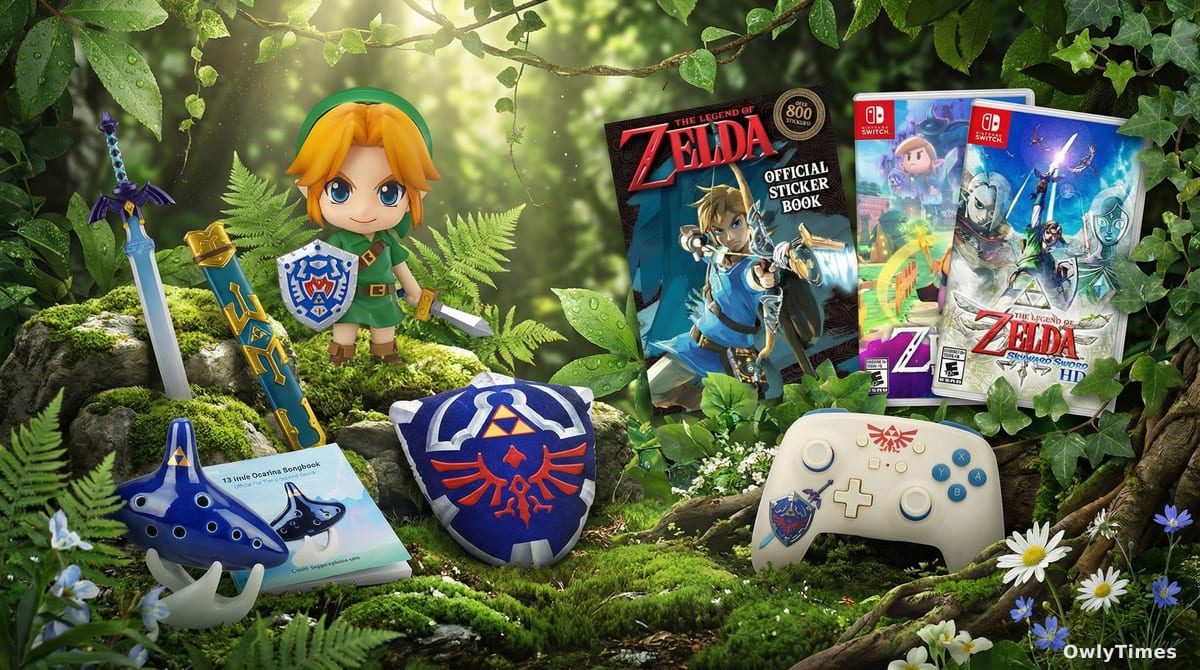
The 40th anniversary isn’t just a cultural moment; it’s a commercial one. Beth, Ecommerce Writer at Creative Bloq, has curated a collection of 24 pieces of merchandise, a testament to the franchise’s enduring appeal as a consumer product. While a themed crossword and branded merchandise might seem trivial, they represent a significant economic engine. Nintendo’s intellectual property (IP) is a powerhouse, and Zelda is a prime example. This year alone, Nintendo is juggling the Zelda anniversary with the 30th anniversary of Pokémon, demonstrating a shrewd understanding of how to leverage nostalgia and fan loyalty.
The success of these IPs isn’t just about the games themselves. It’s about the entire ecosystem – the merchandise, the fan communities, the streaming content, and now, the potential for blockbuster films. This is a model other entertainment companies are desperately trying to replicate, recognizing that a dedicated fanbase is worth far more than fleeting trends. In 2023, the global video game market generated $184 billion in revenue, a 0.6% increase year-over-year, and franchises like Zelda are key drivers of that growth.
The Legacy of Innovation: What’s Next for Hyrule?
What’s often overlooked in discussions about Zelda is its impact on game design education. Countless developers cite Miyamoto and Tezuka’s work as foundational to their own creative processes. The emphasis on non-linear gameplay, environmental storytelling, and intuitive controls has become industry standard. But Nintendo isn’t resting on its laurels. Breath of the Wild and Tears of the Kingdom demonstrated a willingness to deconstruct and rebuild the Zelda formula, and that spirit of innovation is crucial for the franchise’s continued success.
The upcoming live-action movie, directed by Wes Ball, faces immense pressure. A poorly received adaptation could damage the brand’s carefully cultivated image. However, a successful film could unlock a new level of mainstream recognition and revenue. The real test won’t be whether the movie is a critical darling, but whether it can attract a new generation of players to Hyrule. My prediction? Nintendo will quietly begin experimenting with AI-assisted game development tools, not to replace human designers, but to accelerate the prototyping process and explore even more ambitious game worlds. Expect to see a Zelda title within the next five years that leverages AI to create a truly dynamic and unpredictable Hyrule, one where every playthrough feels genuinely unique.