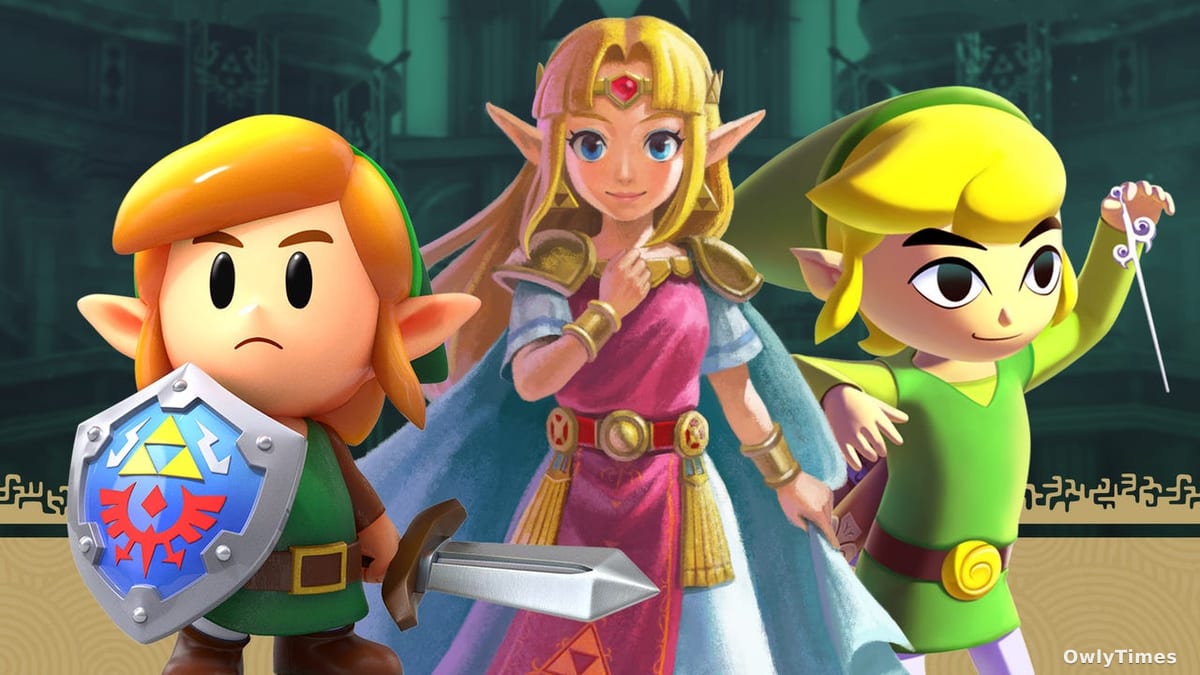

The chipped plastic of the Game Boy felt warm in Brian Altano’s hands, a small rectangle holding an entire world – and a desperate, cookie-fueled mission. He wasn’t just playing The Legend of Zelda: Link’s Awakening; he was actively dismantling his school lunch, trading Otis Spunkmeyer cookies for precious dollars, all to unlock the mysteries of Koholint Island. It’s a story that, on the surface, is a charming anecdote about childhood obsession. But beyond the headlines of a beloved franchise turning 40, it’s a story about how Zelda doesn’t just exist in our lives, it actively shapes them, becoming interwoven with our memories, our priorities, and even our questionable dietary choices. This weekend marks four decades of Hyrule, and for a generation of gamers – and those of us who write about them – it’s a moment for reckoning with a surprisingly personal history.
It’s not hyperbole to say The Legend of Zelda is foundational to gaming culture. Since its debut in 1986, the series has consistently pushed boundaries, not just in gameplay but in storytelling and world-building. IGN itself, as current staff readily admit, has a demonstrable bias towards Hyrule. Seven perfect 10/10 scores awarded to Zelda titles since 1996 – more than any other franchise – speak to a critical reverence that goes beyond simple appreciation. The recent crowning of Breath of the Wild as the greatest game of all time on their 2021 Top 100 list wasn’t a controversial decision; it felt inevitable. But the significance isn’t just about accolades. It’s about a series that has consistently redefined what a game can be, from the genre-bending open world of Breath of the Wild to the stylistic risks of The Adventure of Link.
That risk, however, is precisely what hooked Seth Macy. His first Zelda experience wasn’t the idyllic Hyrule Field most remember, but the brutally difficult, often confusing Zelda II: The Adventure of Link. While many would have been turned off by its side-scrolling combat and unforgiving difficulty, Macy found himself captivated by its aesthetic and atmosphere. He didn’t understand the gameplay, he admits, but the “weird way it transitioned from an overhead map to self-contained battles” ignited his imagination. It’s a testament to the power of early gaming experiences – how a flawed, even frustrating game can leave an indelible mark, shaping creative impulses and even sparking a love for an entire genre, in Macy’s case, JRPGs. The story isn’t about finding a perfect game, it’s about finding your game, the one that resonates on a deeply personal level, even if it’s objectively…unfun.
Source material: ign.com.
This resonance extends beyond individual experiences. Logan Plant’s story, inheriting a love for Zelda from his parents, highlights the intergenerational power of the franchise. His earliest memory isn’t of playing a Zelda game, but of watching his father play The Wind Waker, specifically the shocking moment of Ganondorf’s defeat. It’s a memory built not on personal agency, but on shared experience, a family tradition passed down through pixels and polygons. Plant’s later experiences with Breath of the Wild and Tears of the Kingdom mirrored this pattern, becoming touchstones during formative years, offering solace and connection even amidst the chaos of college life. This isn’t just nostalgia; it’s a demonstration of how Zelda functions as a cultural touchstone, a shared language spoken across generations.
But the celebration of 40 years also forces a reckoning with the franchise’s evolution. From 2D sprites to 3D landscapes, from D-pads to motion controls, Zelda has constantly reinvented itself. This adaptability is its strength, but it also raises questions about the future. Will the next iteration maintain the open-world freedom of Breath of the Wild and Tears of the Kingdom, or will it return to a more structured, linear experience? More importantly, can Nintendo continue to innovate while honoring the legacy of the past 40 years? The pressure is immense. The fanbase is passionate, and expectations are sky-high. The success of Tears of the Kingdom – selling over 19.5 million units worldwide as of December 2023, making it the second best-selling Switch game of all time – proves the enduring appeal of Hyrule, but also sets a daunting precedent.
As we look ahead, the question isn’t simply what the next Zelda game will be, but who it will be for. Will it cater to the established fanbase, rewarding long-time players with callbacks and familiar mechanics? Or will it continue to push boundaries, attracting a new generation of adventurers? The answer will likely be a delicate balance, a tightrope walk between honoring the past and embracing the future. And as the legend continues to unfold, one thing is certain: for many of us, Zelda will remain more than just a game. It will be a memory, a connection, and a constant reminder of the power of interactive storytelling to shape our lives. Will the next chapter be able to capture that same magic, and forge a new generation of players as fiercely devoted as those who came before? That’s the Hyrule we’re all waiting to explore.