
The morning of 30 June 1908 serves as a stark reminder that the most significant cosmic impacts in our history do not necessarily leave a calling card in the form of a crater. While the event above the basin of the Podkamennaya Tunguska River in central Siberia remains the largest impact event in recorded human history, it is frequently misunderstood. The public often perceives the absence of a crater as an unsolved mystery, or worse, a gap in our scientific knowledge. In reality, the absence of a crater is the primary evidence that allows researchers to reconstruct exactly what occurred in the atmosphere that day.
When we examine the site, we rely on the groundwork laid by the mineralogist Leonid Kulik. It was not until 1927, nearly two decades after the event, that the first scientific survey reached the remote Siberian location. The conditions of the era in Russia hindered earlier exploration, leaving the forest untouched by researchers for years. What Kulik discovered, according to Britannica, was not a hole in the ground, but a radial devastation: a vast field of splintered, scorched trees extending 15 to 30 kilometres from an epicentre that pointed clearly to an aerial origin.
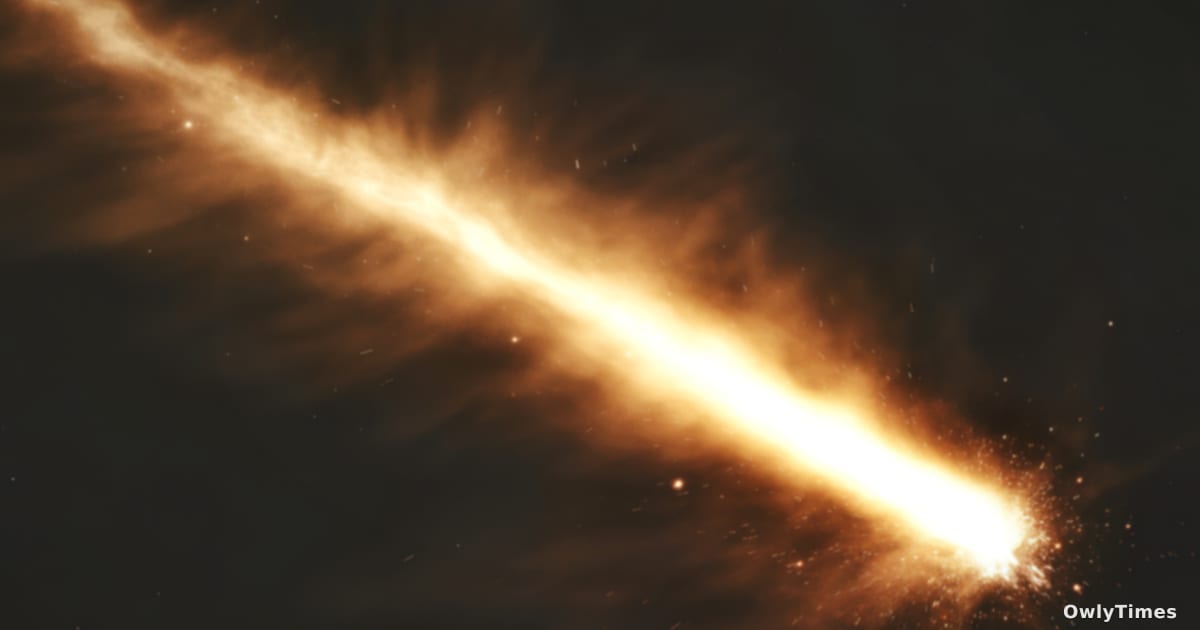
The scientific consensus today is that the Tunguska object—estimated to be a stony asteroid roughly 50 to 60 metres across—never touched the Earth’s surface. Instead, it experienced an airburst. As the object descended into our atmosphere at tens of kilometres per second, the pressure on its leading face became insurmountable for a non-solid body, causing it to fragment and release its kinetic energy in a single, catastrophic explosion at an altitude of approximately 5 to 10 kilometres. This mechanism explains why the forest was flattened by a downward-directed blast wave while the ground remained largely intact.
It is important to distinguish between the established physics of this airburst and the lingering uncertainties surrounding the event. For instance, while it is common to hear the energy of the explosion cited as 10 to 15 megatons of TNT, these figures are reconstructions based on indirect evidence, such as seismic waves recorded in Western Europe and the pattern of the fallen trees. There were no scientific instruments present at the site to measure the blast directly. Consequently, while we can confidently state the energy was several hundred times that of the atomic bomb dropped on Hiroshima, the exact multiplier remains a subject of variable estimation.
Furthermore, we must be cautious regarding claims that persist in the periphery of this research. A notable example is the hypothesis that Lake Cheko, a small body of water near the epicentre, constitutes an impact crater. This proposal, advanced by an Italian research team, has not gained widespread acceptance in the scientific community, as many researchers point to evidence suggesting the lake predates the 1908 event. These fringe debates should not overshadow the well-supported reality that the Tunguska object disintegrated before impact.
Understanding Tunguska is no longer a matter of historical curiosity; it is a vital component of contemporary planetary defense. The event remains a benchmark for the destructive potential of objects that do not need to strike the ground to devastate a region. The 15 February 2013 airburst over Chelyabinsk, Russia, provided a modern, sobering parallel. Though significantly smaller than the Tunguska event, the Chelyabinsk explosion injured roughly 1,500 people, primarily through the secondary effects of shockwaves shattering glass across a populated area.
The next steps for the scientific community involve continuing the rigorous cataloging of near-Earth objects. The focus has shifted from searching only for "planet-killers" to identifying smaller, more frequent objects capable of generating localized airbursts. As we refine our surveys, the primary challenge remains determining how completely we have mapped this population of objects. The next reading of our near-Earth object catalogs will show whether we are successfully identifying the precursors to the next aerial explosion, or if we remain vulnerable to the next surprise from the sky.