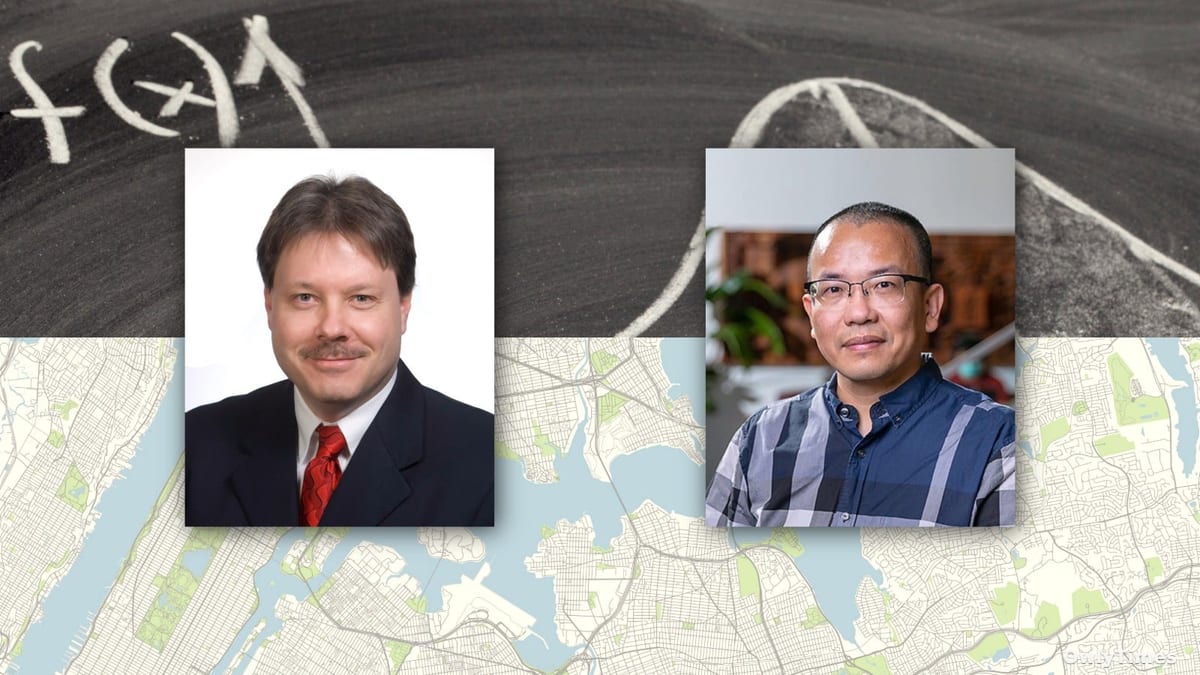

The recent announcement of Dr. James J. Cochran and Dr. Xinyue Ye as 2025 Fellows of the American Association for the Advancement of Science (AAAS) isn’t simply a recognition of individual achievement; it underscores a broader shift in how scientific impact is measured and valued. While prestigious accolades often highlight breakthroughs in narrowly defined fields, the selections of Cochran and Ye—one a statistician focused on humanitarian applications, the other a geospatial AI researcher prioritizing community well-being—signal a growing emphasis on the application of knowledge and its demonstrable benefit to society. This isn’t to diminish the importance of fundamental research, but rather to acknowledge that scientific rigor is increasingly judged not only by methodological soundness but also by real-world relevance.
Bridging Disciplines for Real-World Impact
Dr. Cochran’s election recognizes his work at the intersection of statistics and operations research, but the AAAS specifically highlighted his efforts to improve statistics education in developing nations and apply statistical methods to societal problems. This is a departure from the traditional image of the statistician as a purely theoretical figure. His founding of two research series – a knowledge base for operations research and an eight-volume encyclopedia – demonstrates a commitment to synthesizing and disseminating complex information, a crucial step in translating research into practical solutions. The AAAS noted his recent awards from the Institute for Operations Research and the Management Sciences and the American Statistical Association, further validating the breadth of his influence. Dr. Bryan Boudouris, UA’s vice president for research, rightly points out that this recognition “reflects the quality, world-leading vision, and impact of their scholarship,” extending beyond the university to benefit the state of Alabama and beyond.
Drawn from news.ua.edu.
Dr. Ye’s recognition centers on his pioneering work in GeoAI, digital twins, and urban resilience, framed explicitly as an “interdisciplinary, community-centered approach.” This is particularly noteworthy given the current discourse around artificial intelligence. While much of the public conversation focuses on the potential risks of AI, Dr. Ye is actively demonstrating its potential for positive change, specifically in understanding and improving cities and infrastructure. His founding of the Journal of Computational Urban Science and the ALA-GAINS Hub at UA are concrete examples of his commitment to fostering collaboration and innovation in this rapidly evolving field. He frames the honor as reflecting “the growing importance of interdisciplinary scholarship and the power of building bridges across geography, urban planning, and data science,” a sentiment that resonates with the increasing need for holistic solutions to complex challenges.
Beyond the Headlines: What the AAAS Fellowship Actually Signifies
It’s easy for announcements like these to be reduced to a list of names and titles. However, the AAAS Fellowship isn’t merely an honorary title; it’s a lifetime commitment to upholding “commonly held standards of professional ethics and scientific integrity.” This is a crucial point, especially in an era of increasing concerns about reproducibility and ethical conduct in research. The AAAS, as publisher of the esteemed Science journals, carries significant weight in setting these standards. The inclusion of luminaries like Ellen Ochoa, Steven Chu, and Grace Hopper among past Fellows underscores the high caliber of individuals recognized and the lasting legacy of the award. This year’s cohort, including Cochran and Ye, joins a distinguished group expected to continue championing responsible scientific practice.
Limitations to Consider
While the achievements of Cochran and Ye are undeniably significant, it’s important to acknowledge the inherent limitations of relying solely on awards and accolades to assess scientific impact. The AAAS Fellowship, while prestigious, is still a subjective evaluation process. Nomination biases and the visibility of certain research areas can influence selection. Furthermore, the impact of research, particularly in fields like statistics and geospatial AI, can be difficult to quantify in the short term. The benefits of improved statistical education in developing nations, for example, may not be fully realized for years or even decades. Similarly, the long-term effects of digital twin technology on urban resilience are still unfolding.
Future Directions and the Evolving Landscape of Scientific Recognition
The election of Dr. Cochran and Dr. Ye prompts a crucial question: how will universities and funding agencies adapt to this evolving emphasis on societal impact? Will evaluation criteria for research grants and promotion decisions increasingly prioritize demonstrable benefits to communities and the broader world? The next steps for both researchers are clear – continuing their work, mentoring future scientists, and advocating for responsible innovation. But the broader scientific community must also grapple with how to best incentivize and reward research that addresses pressing global challenges. We should be watching for increased collaboration between academic institutions and community organizations, as well as the development of new metrics for assessing the social return on investment in scientific research. The success of initiatives like the ALA-GAINS Hub, founded by Dr. Ye, will be a key indicator of whether these shifts in emphasis can translate into tangible improvements in the lives of people and the health of our planet.





