
The persistent human quest to not merely extend lifespan, but to genuinely reverse the hallmarks of aging, has taken a significant, though cautiously optimistic, step forward. On February 24, 2026, research published in Proceedings of the National Academy of Sciences detailed a successful intervention in mice, demonstrating that manipulating the activity of specific molecules – transcription factors – can demonstrably shift cellular function towards a more youthful state. While headlines have proclaimed a potential “reversal of aging,” a closer examination of the work by the team led by Changhui Deng, Saul A. Villeda, and Hao Li at the University of California, San Francisco, reveals a more nuanced, yet profoundly promising, advance in our understanding of the biological processes governing aging.
The core question driving this research is deceptively simple: if aging is, at least in part, a consequence of altered gene expression, can we “reprogram” cells to behave as if they are younger? As we age, the activity levels of countless genes shift, contributing to the decline in tissue function and increased susceptibility to age-related diseases. Transcription factors are key players in this process, acting as regulators that control which genes are turned on or off. Identifying which of these factors change with age, and then learning to manipulate them, offers a potential pathway to intervene in the aging process itself. The Li Lab team didn’t seek a single “aging gene,” but rather a network of regulators that, when adjusted, could broadly influence the aging trajectory.
Reporting from nih.gov informs this analysis.
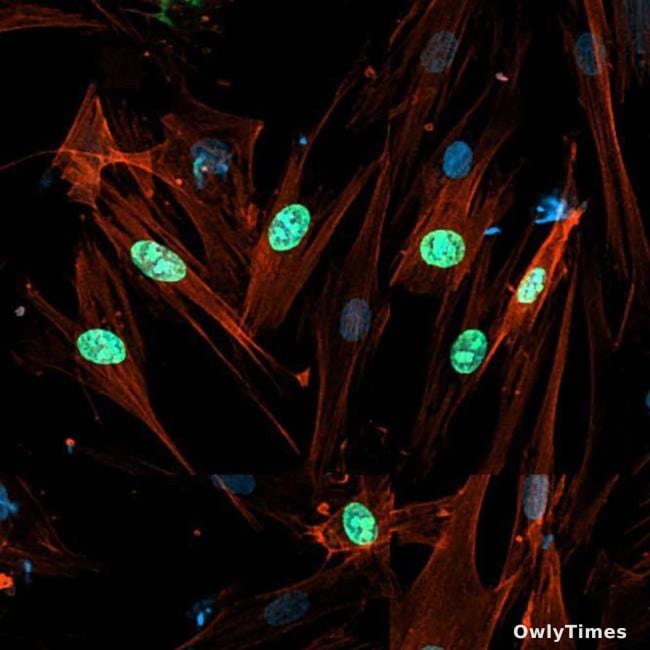
Their approach was remarkably systematic. Beginning with human fibroblast cells – common connective tissue cells – the researchers compared gene activity in young and old samples. Using computational tools, they predicted which transcription factors were most likely to be responsible for the observed age-related changes. This narrowed a vast field of possibilities down to approximately 200 candidate factors, which were then individually altered in aged fibroblasts. The team meticulously measured the resulting changes in gene activity, identifying four transcription factors – EZH2, E2F3, STAT3, and ZFX – that, when adjusted, most effectively reversed the age-related gene expression patterns. Crucially, these manipulations didn’t appear to induce cellular damage or promote cancerous changes, a critical safety consideration.
The real test, however, came with in vivo experiments. Focusing on EZH2, the researchers increased its levels specifically in the livers of aged mice. The results were striking. Thousands of other genes in the liver shifted their activity towards patterns seen in younger mice. More importantly, several negative effects of aging were reversed: fat buildup and liver scarring decreased, and glucose tolerance – a measure of metabolic health – improved. This wasn’t simply a cosmetic change; the intervention demonstrably improved liver function. Hao Li succinctly summarized the findings: “By altering gene expression using the transcription factors we identified, old fibroblasts behaved as if they were younger, and improved the health of old mice.” It’s important to note, however, that this intervention was targeted to a single organ – the liver – and the effects observed were specific to liver function.
It’s easy to get carried away with the implications, but several limitations to consider temper immediate enthusiasm. The study was conducted in mice, and while mouse models are valuable, they don’t perfectly replicate human aging. The long-term effects of manipulating these transcription factors are unknown. Furthermore, the researchers focused on a single organ, and it’s unclear whether similar interventions would be effective – or safe – in other tissues. Transcription factors are notoriously pleiotropic, meaning they influence a wide range of genes and cellular processes. Altering their activity could have unintended consequences, potentially disrupting delicate biological balances. The study also doesn’t address why these transcription factors change with age in the first place – understanding the underlying mechanisms driving these shifts is crucial for developing more targeted and effective interventions.
The next steps for this research are multifaceted. The team is currently investigating the effects of manipulating these transcription factors in other tissues and organs. They are also working to unravel the complex regulatory networks that govern transcription factor activity, hoping to identify upstream targets that could be modulated to achieve similar rejuvenating effects. Perhaps most importantly, researchers are beginning to explore whether these findings can be translated to human cells and, eventually, to clinical trials. The question now isn’t simply can we reverse aging, but how can we do so safely and effectively, and for whom? As we move forward, it will be critical to watch for studies investigating the impact of these transcription factors on a wider range of age-related diseases, and to assess the potential for personalized interventions tailored to an individual’s unique genetic and physiological profile.