
Is Silicon Valley’s obsession with “disruption” blinding us to the real engines of innovation? We’re told the future is built in garages and fueled by venture capital, but the story of Agragene, a small biotech firm quietly thriving in Missouri, suggests a different truth. The real story here isn't about flashy tech or billion-dollar valuations – it’s about the unglamorous, practical problem-solving happening outside the coastal hubs, and the surprising power of affordable real estate.
Stephanie Gamez, founder and leader of Agragene, isn’t trying to build the next social media empire. Her team is battling spotted wing drosophila, an invasive fruit fly that decimates berry crops. These aren’t theoretical problems for farmers; they’re existential threats to livelihoods, and increasingly, traditional pesticides aren’t cutting it. “We’re getting resistant insects in the field that are infesting the fruit,” Gamez explained to First Alert 4. “So, these chemicals aren’t working as well anymore. We’re also not getting a lot of new chemicals in the market, so we need new tools.” Agragene’s solution? Gene editing to create sterile male flies, disrupting the breeding cycle without resorting to harmful chemicals. It’s a targeted, elegant approach, and it’s gaining traction.
Drawn from firstalert4.com.
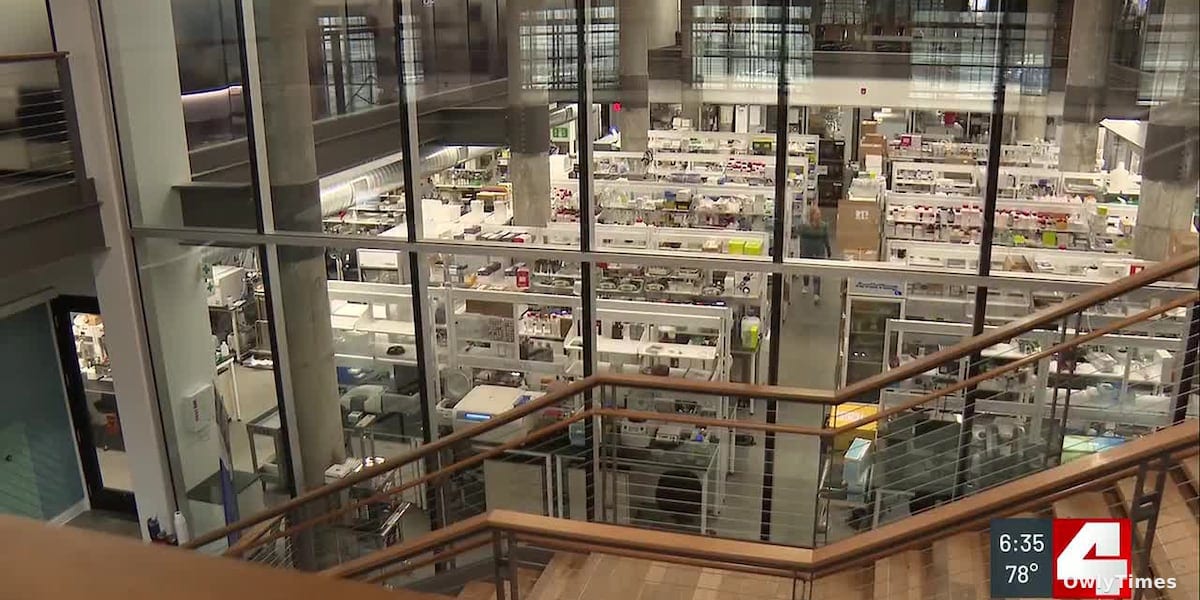
But the science itself isn’t the most compelling part of this narrative. Agragene nearly died in San Diego, strangled by exorbitant costs. The company was on the verge of collapse, with investors ready to pull the plug because, as Gamez put it, “money was going toward paying leases.” In San Diego, they were shelling out $7.25 per square foot for lab space. That’s a figure that would make any early-stage startup shudder. A relocation to Maryland Heights, Missouri, and the Helix business incubator, slashed that cost to a mere $2.25 per square foot. This isn’t just a cost difference; it’s a lifeline.
This move wasn’t just about the bottom line, though. St. Louis isn’t some biotech backwater. According to the Brookings Institution, the region boasts 700 bioscience firms and 15,000 jobs. Donn Rubin, president and CEO of BioSTL, points to a unique concentration of plant scientists – “more plant scientists concentrated here than anywhere else in the world.” The presence of giants like Bayer has cultivated a deep talent pool, and organizations like Washington University and the Danforth Plant Science Center provide crucial support. Agragene didn’t just find cheaper rent; they found an ecosystem. The company’s success is a testament to the power of a connected, supportive community, something Silicon Valley often talks about but rarely delivers on consistently.
The impact extends beyond Agragene’s immediate growth. Anne Sellman, a researcher at the company, returned to St. Louis after graduating from Colorado State, drawn by both family and opportunity. “I think it kind of flies under the radar,” Sellman said. “People don’t understand how much opportunity there is in St. Louis.” This isn’t just about attracting talent to the region; it’s about bringing talent back, offering a compelling alternative to the relentless pressure and sky-high cost of living in traditional tech hubs. Gamez herself emphasized the quality of life for her family, stating, “This is a place where my family can grow and succeed.”
Agragene’s technology isn’t limited to fruit flies, either. The gene-editing techniques they’re developing could be applied to other invasive pests, like the emerald ash borer threatening Missouri’s trees. This highlights a crucial point: the solutions to our most pressing problems aren’t always going to come from the most hyped locations. They’ll come from places where smart people can afford to work, where collaboration is prioritized, and where the focus is on solving real-world problems, not chasing unicorns. The company is now expanding, looking at new applications for their gene-editing work, and Gamez is confident in continued growth.
Here’s what to watch for: over the next two years, keep an eye on the number of biotech firms leaving California and the Northeast for states like Missouri, North Carolina, and Texas. Don’t focus on the headlines about AI or the metaverse. The real shift will be measured in square footage costs, talent migration, and, ultimately, the number of practical solutions that actually reach the people who need them. The future of innovation isn’t about escaping gravity; it’s about finding solid ground.