
Beyond the Trophy Case: What BGHS Science Success Reveals About STEM Education
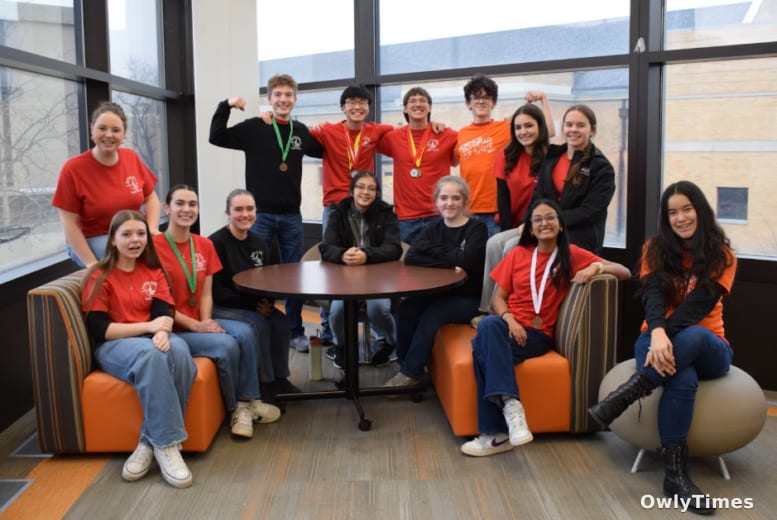
The recent achievements of students from Bowling Green High School (BGHS) at regional science competitions aren’t simply a collection of medals and accolades; they’re a signal of a shifting approach to STEM education, one that prioritizes applied knowledge and collaborative problem-solving over rote memorization. While headlines focus on the “Superior” rating earned by freshman Brady Stierwalt and the team’s 12th-place finish at the Bowling Green State University Regional Science Olympiad, a closer look at the events themselves reveals a more nuanced story about how schools are preparing students for a future demanding adaptability and innovation. The competitions, held on March 14th, showcase a move away from individual tests and towards challenges that mirror the complexities of real-world scientific endeavors.
The Science Olympiad, involving over 400 students from 18 schools, isn’t about reciting the periodic table. Mac Fogarty and Bolan Xu’s second-place finishes in both Engineering CAD and Machines, for example, demonstrate a practical understanding of design, construction, and iterative improvement – skills directly applicable to manufacturing and engineering fields. Similarly, Archita Ravikumar and Bolan Xu’s third-place win in the Electric Vehicle event isn’t just about knowing physics; it’s about applying those principles to build a functioning, optimized machine. This emphasis on “doing” science, rather than just “knowing” science, is a key differentiator. BGHS’s second year of participation yielded five medal-winning events, a significant improvement over their initial foray, suggesting a program gaining momentum and refining its approach.
Brady Stierwalt’s project, earning him a trip to State Science Day on May 16th, further illustrates this trend. His investigation into the effectiveness of different foods on probiotics isn’t a pre-packaged experiment from a textbook. It’s original research, requiring him to formulate a hypothesis, design a methodology, collect and analyze data, and present his findings – the core tenets of the scientific method. The University of Toledo’s Regional Science Day, in partnership with the Ohio Academy of Science, specifically encourages this type of independent inquiry, fostering a generation of students comfortable with ambiguity and capable of generating new knowledge. The “Superior” rating isn’t simply a grade; it’s validation of his ability to navigate the entire research process.
Reporting from bgindependentmedia.org informs this analysis.
However, it’s crucial to acknowledge the limitations of drawing broad conclusions from a single school’s performance. BGHS’s 12th-place finish, while a step forward, still places them in the middle of the pack. Factors such as access to resources, dedicated coaching, and student demographics all play a role in competition outcomes. Furthermore, the Science Olympiad, while valuable, is still a competition. The pressure to win can sometimes overshadow the intrinsic rewards of scientific exploration. It’s also important to note that participation in these events likely skews towards students already predisposed to STEM fields, raising questions about how to broaden access and engagement for all students.
The success of the BGHS STEAM club, advised by teacher Lilly Ahmed, is clearly a driving force. Ahmed’s observation that Science Olympiad “challenges students to think critically, collaborate, and apply their learning in real-world ways” underscores the intentionality behind the program’s design. The club provides a space for students like Sophia Brown, Kaylee Bonaguro, and the other contributing team members to extend their learning beyond the classroom, fostering a sense of ownership and intellectual curiosity. But the question remains: how can schools replicate this model of hands-on, collaborative learning on a larger scale, ensuring that all students have the opportunity to develop these essential STEM skills? As Brady Stierwalt prepares for State Science Day, watch for whether his research sparks further investigation into the gut microbiome and personalized nutrition – a field poised for significant advancements in the coming years.