
The California Endgame: Newsom Signals a Willingness to Challenge Harris
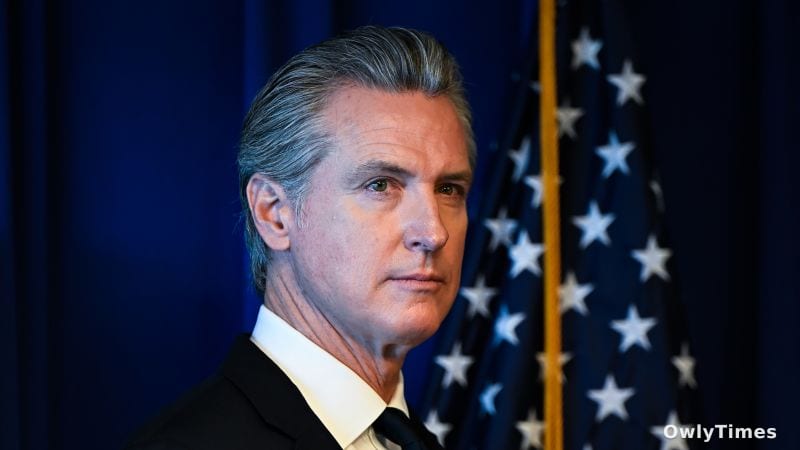
The carefully calibrated ambiguity surrounding Gavin Newsom’s presidential ambitions just sharpened into focus. His recent CNN interview with Dana Bash wasn’t about denying a future run – it was about establishing the conditions under which he would run, even against Kamala Harris. This isn’t a spontaneous thought experiment; it’s a strategic positioning move, designed to subtly pressure Harris and simultaneously test the waters for a Newsom candidacy predicated on a generational shift within the Democratic party. The core calculus is simple: Newsom is signaling he won’t defer to Harris simply because of their shared California political history.
Source material: CNN.
The “San Francisco now, she’s LA” comment, initially dismissed as playful geography, is a pointed assertion of distinct political brands. It’s a claim to represent a newer, more forward-looking California, distancing himself from Harris’s earlier, more establishment-oriented tenure. This echoes the historical dynamic between presidential hopefuls from the same state – think of the often-frosty relationship between Lyndon B. Johnson and Earl Warren, both Texans who ascended to national power. Johnson, despite benefiting from Warren’s earlier visibility, ultimately carved out his own path, emphasizing a different vision for the country. Newsom is attempting a similar maneuver, subtly framing Harris as representing a past era of California politics while positioning himself as its future.
Who benefits and who loses from this nascent rivalry? Harris, currently the Vice President, stands to lose the most. A primary challenge from a high-profile governor like Newsom forces her to expend resources and defend her record, potentially weakening her position for a future presidential run. The Democratic establishment, currently largely aligned with Harris, faces a potential fracturing. Newsom, meanwhile, gains by elevating his national profile and establishing himself as a viable alternative. The biggest beneficiaries, however, are likely to be Republican strategists, who would relish a protracted Democratic primary fight. The longer the party is divided, the more advantageous their position in the general election.
The history between Newsom and Harris is not one of seamless collaboration. Harris’s memoir, “107 Days,” reveals a pointed slight – Newsom’s delayed response to her call for support after Joe Biden’s initial hesitation about reelection, a response she interpreted as a lack of enthusiasm. While Newsom later claimed the call came from an unknown number, the incident speaks to a pre-existing tension. This isn’t a personal feud, necessarily, but a clash of ambitions and political styles. The fact that Newsom acknowledges this history, even while downplaying it, is significant. It suggests a willingness to engage in a competitive dynamic, should the opportunity arise.
Newsom’s invocation of his son’s concerns about his absence is a carefully constructed appeal to a broader narrative of family values and personal sacrifice. It’s a tactic employed by politicians across the spectrum, designed to humanize them and portray them as reluctant leaders. However, the timing – raising this concern during a discussion about a potential presidential run – feels calculated. It allows Newsom to simultaneously express ambition and demonstrate a degree of self-doubt, potentially softening his image and appealing to voters wary of overly aggressive politicians. The question isn’t whether Newsom wants to run, but whether he can convincingly portray himself as a candidate motivated by duty rather than personal ambition.
The political chess move to watch next isn’t a formal announcement, but a shift in Newsom’s fundraising activity. Is he quietly building a national donor network? Is he actively recruiting staff with presidential campaign experience? The answer to those questions will reveal the true extent of his intentions. The current ambiguity is a strategic asset, allowing him to maintain maximum flexibility. But as the 2028 election cycle draws closer, Newsom will be forced to make a decision. The question isn’t if these two California titans will collide, but when – and whether the Democratic party will be prepared for the fallout.