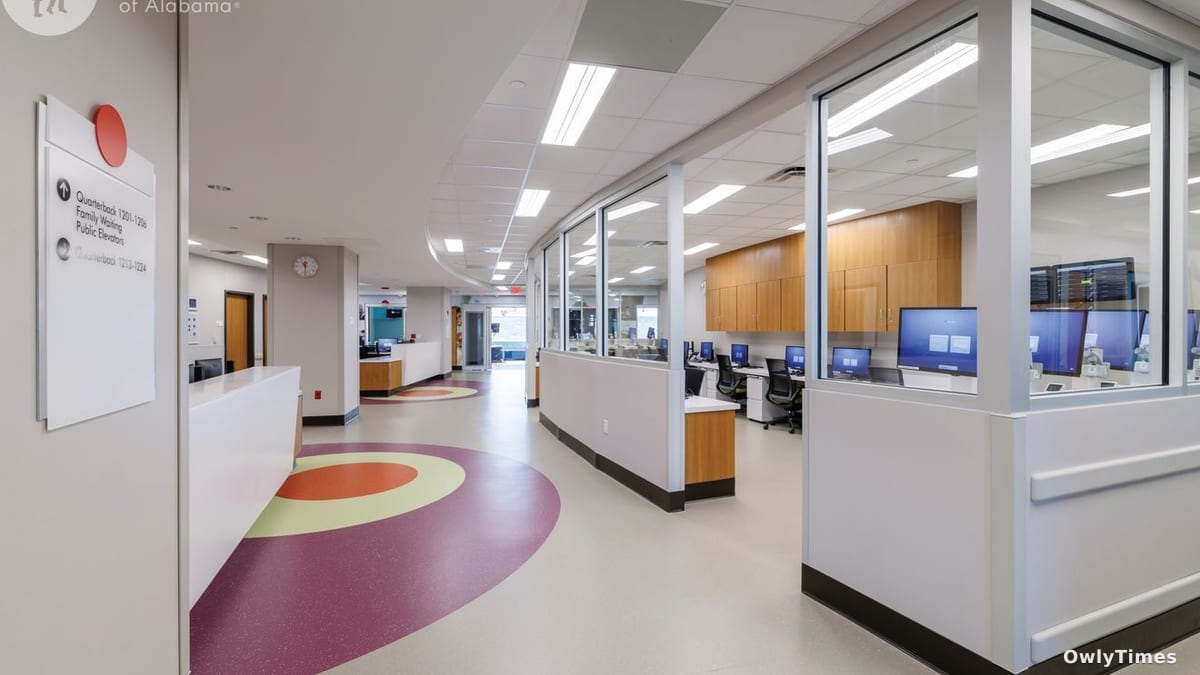

The escalating frequency of violence directed toward healthcare workers isn’t simply a matter of isolated, shocking events like the recent tragedy at Baptist Health Brookwood Hospital in Homewood, Alabama. It’s a systemic issue reflecting broader societal trends and demanding a re-evaluation of how we protect those providing care. While headlines understandably focus on the murder-suicide that claimed two lives on Sunday – a patient and a visitor – the incident is, tragically, part of a pattern. It’s a pattern where hospitals are increasingly recognized not as sanctuaries, but as potential flashpoints for violence, and where the statistical likelihood of a healthcare worker experiencing assault far exceeds that of professionals in nearly any other field. This isn’t about predicting the next shooting; it’s about understanding why healthcare settings are becoming increasingly dangerous every day.
The shooting at Baptist Health Brookwood, where police are investigating a murder-suicide, echoes past incidents in the Birmingham area. In December 2012, St. Vincent’s Hospital saw a gunman injure three before being killed by police, and in March 2018, UAB Highlands Hospital experienced a horrific event where an employee fatally shot a nursing supervisor and wounded another colleague before taking his own life. These events, while thankfully infrequent in their most extreme form, contribute to a climate of fear and necessitate a critical look at security protocols. However, focusing solely on preventing active shooters obscures a more pervasive problem: the constant threat of non-lethal, yet deeply damaging, assaults.
Source material: abc3340.com.
The numbers paint a stark picture. According to the U.S. Bureau of Labor Statistics, healthcare workers are five times more likely to experience workplace violence than workers in other professions. Consider this: healthcare employees comprise roughly 10% of the national workforce, yet they account for nearly half of all reported workplace assaults. This isn’t a subtle difference; it’s a five-fold disparity. Much of this violence, as Dustin Bass, president of the Emergency Nurses Association, points out, isn’t the result of external attackers. “We have been seeing more incidents of emergency department violence nationally,” Bass stated, emphasizing that a “significant amount…is physical, not just verbal.” This suggests the violence often stems from patients or visitors already within the healthcare system, potentially grappling with crisis, mental health issues, or the stress of medical emergencies.
The current approach to hospital security is largely decentralized, a patchwork of responses tailored to individual facility needs. Danne Howard, president and CEO of the Alabama Hospital Association, explains that “every hospital has an emergency operations plan according to their geography, the resources in their area, so there’s not just one size fits all.” While this localized approach allows for flexibility, it also creates inconsistencies. In Alabama, for example, metal detectors aren’t mandated, despite the clear and present danger. Howard notes that “a lot of our hospitals do…have a lot of other security measures in place,” but the definition of “a lot” remains vague, and the level of protection varies considerably. This raises the question of whether relying on individual hospital initiatives is sufficient, or if a statewide, or even national, standard is necessary.
Limitations to consider are significant. The data on workplace violence, while alarming, relies on reported incidents. Many assaults likely go unreported due to fear of retaliation, normalization of aggressive behavior, or a lack of clear reporting mechanisms. Furthermore, attributing the rise in violence solely to external factors ignores the internal pressures within healthcare systems – staffing shortages, long hours, and increasing patient loads – which can contribute to heightened tensions and potentially escalate conflicts. The focus on security measures like metal detectors, while understandable, risks creating a more hostile and less welcoming environment for patients and families, potentially hindering access to care.
The next crucial research steps involve a deeper understanding of the root causes of violence against healthcare workers. We need to move beyond simply counting incidents and begin analyzing the factors that contribute to them. This includes investigating the role of mental health, substance abuse, and de-escalation training for both staff and patients. Furthermore, research should focus on the effectiveness of different security measures – not just metal detectors, but also improved lighting, security personnel training, and the implementation of robust reporting systems. Perhaps most importantly, we need to ask: what systemic changes within healthcare itself can reduce the stressors that contribute to violent encounters? Will increased staffing levels, improved mental health support for patients, and a renewed focus on compassionate care ultimately prove to be the most effective security measures of all?