
The Framing War in Alaska: Beyond Ranked Choice, a Battle for Party Control
The lawsuit filed by Repeal Now against Alaska election officials isn’t simply about ranked choice voting; it’s a calculated maneuver to re-establish partisan control over the state’s electoral process. The dispute over ballot language – specifically, whether to frame the initiative as “restoring” or “ending” certain voting practices – reveals a deeper strategic intent: to subtly influence voters by presenting the repeal as a return to a familiar, and arguably more comfortable, status quo for the Alaska Republican Party. This isn’t a grassroots uprising against a confusing new system, but a top-down effort, guided by consultants like Greg Powers based in Utah, to reclaim a diminishing sphere of influence.
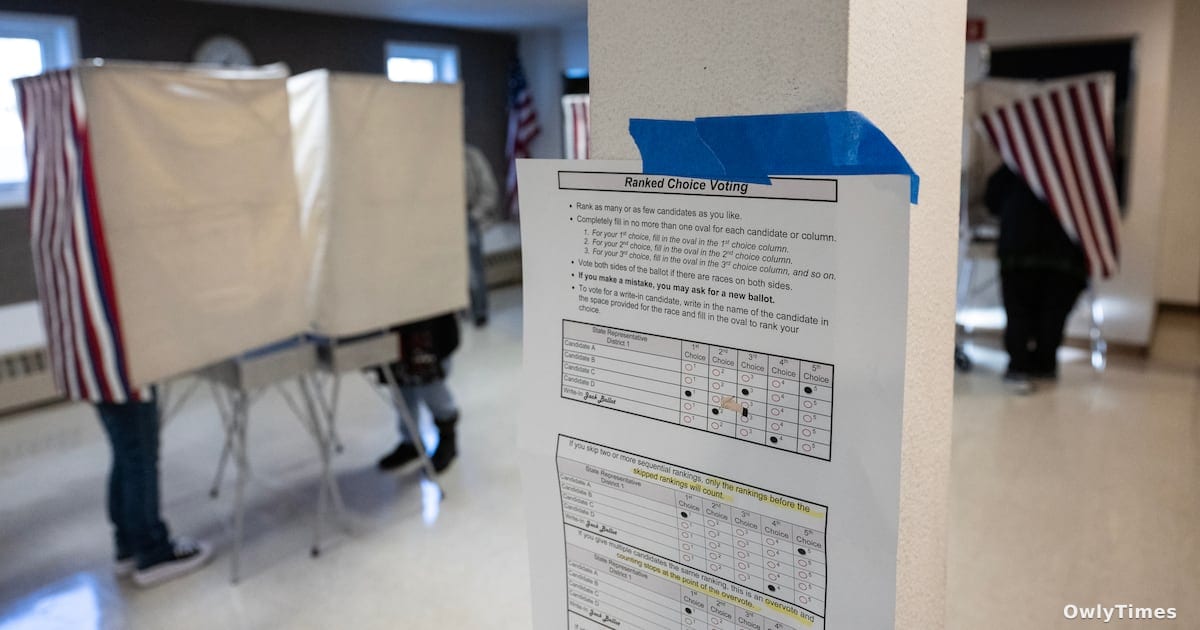
The core of the conflict lies in the 2020 ballot initiative that upended Alaska’s elections. This initiative, enacting nonpartisan open primaries, top-four ranked choice general elections, and expanded campaign finance reporting, demonstrably weakened the traditional gatekeeping role of political parties. Prior to 2020, Alaska’s parties dictated primary access, allowing for strategic exclusion and the cultivation of loyal candidates. The open primary system, where all candidates appear on a single ballot regardless of affiliation, and the subsequent ranked choice general election, which allows voters to express nuanced preferences, circumvented this control. The resulting electoral landscape, as evidenced by the continued success of figures like Lisa Murkowski who navigate elections independently, is demonstrably less beholden to party orthodoxy. The $1.1 million spent in the 2022 election cycle by outside groups, a figure significantly higher than previous years, underscores the increased competitiveness and, consequently, the need for greater financial transparency – a transparency Repeal Now seeks to dismantle.
Who benefits and who loses from this proposed shift? The Alaska Republican Party stands to gain the most. Reverting to partisan primaries allows them to vet candidates, control messaging, and mobilize their base more effectively. The elimination of expanded campaign finance reporting requirements benefits not only the party itself but also the dark money groups that operate in its orbit. These groups, often unwilling to disclose their funders, rely on opacity to influence elections. Conversely, independent candidates, moderate Republicans, and voters seeking greater transparency would lose. The current system, while imperfect, offers a pathway for challengers to emerge outside the established party structure and provides voters with a clearer picture of who is funding political campaigns. The fact that the Division of Elections initially defended the original ballot language, only to alter it after the first lawsuit, suggests a sensitivity to the political pressures at play.
Source material: adn.com.
This isn’t an isolated incident. The battle over Alaska’s voting system echoes historical struggles over franchise and electoral control. The late 19th and early 20th centuries saw similar efforts by dominant political machines to restrict voting access and manipulate election outcomes. While the tactics have evolved, the underlying principle remains the same: control the rules of the game to maintain power. The initial pushback against the 2020 initiative, and the subsequent formation of Repeal Now, mirrors the resistance faced by proponents of reforms like the Australian ballot – a secret ballot designed to curb voter intimidation and corruption – in the late 1800s. Both instances represent attempts by established interests to defend a system that favors their position. The current legal challenge, framed as a quest for “impartial” ballot language, is a modern iteration of this age-old struggle.
The Division of Elections’ response to the latest lawsuit will be the critical chess move to watch. Will they again yield to pressure from Repeal Now, further shaping the ballot language to favor their narrative? Or will they defend the integrity of the process, even at the risk of escalating the legal battle? The outcome will not only determine the wording on the ballot but also signal the state’s commitment to either preserving a more open and transparent electoral system or reverting to a model of greater partisan control. The question isn’t simply whether Alaska will keep ranked choice voting, but whether it will allow its parties to reclaim their traditional power over the electoral process.