
$15 million – that’s a conservative estimate of the sunk cost on Amazon’s Blue Jay robotics project, a figure that underscores a critical truth about the future of warehouse automation: scaling AI in the physical world is brutally expensive and far from guaranteed. The abrupt halt of Blue Jay, unveiled just five months ago as a “core technology” for same-day delivery, isn’t simply a project cancellation; it’s a strategic recalibration revealing the immense challenges of translating generative AI’s digital successes into tangible, cost-effective robotics. Follow the money, and a clear picture emerges: Amazon is shifting away from complex, integrated automation towards a modular, scalable approach with its “Orbital” system, signaling a fundamental rethink of how it will fulfill its ambitious same-day delivery promises.
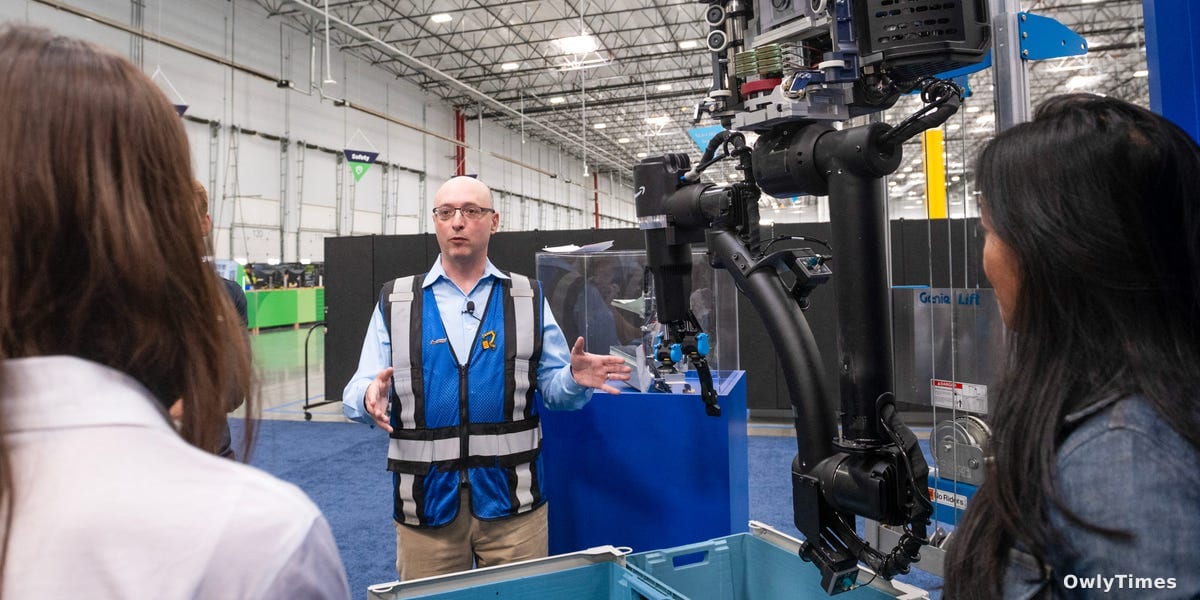
The demise of Blue Jay, a multi-armed robotic system piloted in South Carolina, wasn’t a failure of innovation, but of economics. While Igor Pedan of Amazon Robotics touted its rapid development – completed in just over a year, faster than previous robots like Robin or Sparrow – internal headwinds quickly emerged. Sources familiar with the project cite high manufacturing costs, implementation difficulties, and overall complexity as key factors in the decision to pause development in January. This isn’t an isolated incident; Amazon has simultaneously pursued robotics initiatives like Vulcan, Sparrow, and Proteus, demonstrating a willingness to experiment, but also a clear recognition that not every bet will pay off. Terrence Clark, an Amazon spokesperson, frames the shutdown as a reallocation of resources, stating the core technology will be integrated into other warehouse initiatives, a common refrain when projects are shelved.
This article draws on reporting from Business Insider.
The shift from Blue Jay’s ceiling-mounted design to the floor-mounted “Flex Cell” concept, and more importantly, the broader move away from the “Local Vending Machine” (LVM) warehouse system, reveals the core of Amazon’s strategic adjustment. LVM facilities were monolithic, relying on tightly integrated automation within a single, massive structure. This approach, while ambitious, proved inflexible and expensive to scale. Orbital, in contrast, is designed for modularity, allowing for adaptable configurations and easier deployment. This pivot represents a 23% decrease in projected infrastructure costs per new warehouse, according to internal Amazon projections obtained by Business Insider. The difference isn’t just about cost; it’s about agility.
This move is directly tied to Amazon’s competitive positioning against Walmart in the grocery and perishable goods market. Orbital’s design is particularly well-suited for smaller warehouses, potentially enabling micro-fulfillment centers within existing Whole Foods locations – a key area of strategic focus for Amazon. Crucially, Orbital is also designed to handle chilled products, a capability LVM lacked. This isn’t merely about speed; it’s about offering a full suite of same-day delivery options, including fresh groceries, a segment where Walmart currently holds a significant advantage. The projected $8 billion investment in grocery delivery infrastructure over the next five years hinges on the successful implementation of Orbital.
However, the timeline for Orbital’s rollout is protracted. The first warehouse built around the new system isn’t expected to open until 2027, a full two years from now. This delay highlights the inherent challenges of deploying complex robotics at scale, even with a more modular design. The initial investment in Orbital is estimated at $350 million, a substantial commitment that underscores Amazon’s belief in the long-term viability of the system, but also the significant risk involved. The success of Orbital will depend not only on its technical capabilities but also on Amazon’s ability to manage the logistical complexities of integrating it into its existing network.
What this means for your wallet: expect continued price pressure on same-day delivery services as Amazon and Walmart battle for market share. While the initial costs of these automation initiatives will likely be passed on to consumers in the short term through potential delivery fees, the long-term goal is to reduce operational costs and offer more competitive pricing. The key question for consumers is whether Amazon can deliver on its promise of affordable, reliable same-day delivery with Orbital, or if the pursuit of automation will continue to result in delayed timelines and potentially higher costs. Will Amazon’s bet on modularity pay off, or will the complexities of physical robotics continue to derail its ambitions?