
Beyond the Ice: Rewriting Antarctic History to Forecast Future Sea Levels
The question of how quickly the West Antarctic Ice Sheet will melt isn’t simply a matter of tracking current ice loss – it’s a historical detective story. A recent international effort, spearheaded by researchers from Earth Sciences New Zealand and Victoria University of Wellington, has drilled deeper than ever before beneath the ice, retrieving a 228-meter core of ancient sediment that’s rewriting our understanding of Antarctica’s past and, crucially, refining our predictions for its future. While headlines proclaim the discovery of evidence for a once-open ocean beneath the ice, the real significance lies in the detailed environmental record now available to climate modelers, a record that promises to move projections from broad estimates to more precise timelines.
This article draws on reporting from ScienceAlert.
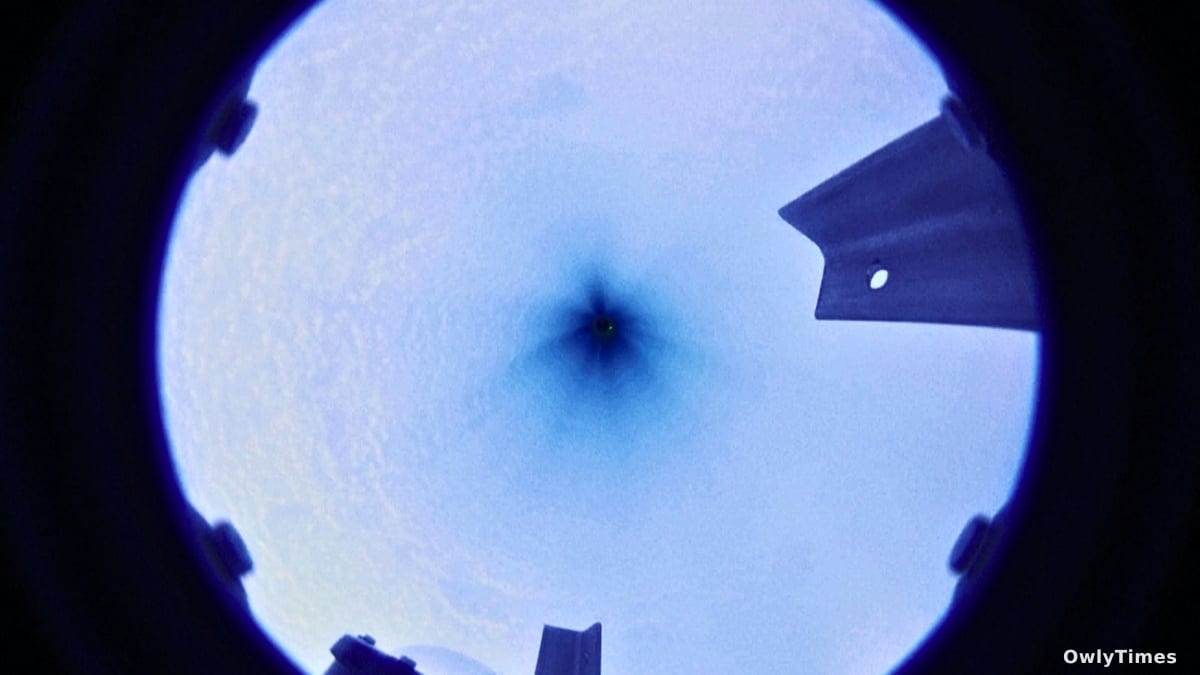
The team, comprised of 29 researchers, drilled through 523 meters of ice at Crary Ice Rise on the Ross Ice Shelf, a feat completed in January. The recovered sediment represents a continuous archive stretching back 23 million years, a period encompassing significant shifts in global climate. This is a substantial leap forward; previously, models relied on geological data gathered from distant locations, offering a less direct and potentially less accurate picture of West Antarctic dynamics. The ice sheet itself holds enough frozen water to raise global sea levels by a staggering four to five meters (13 to 16 feet), making accurate predictions not just an academic exercise, but a matter of global security.
What the study actually found isn’t simply confirmation of a past ocean – scientists already suspected the region had once been ice-free. Instead, the core provides a detailed sequence of environmental conditions, revealing when and how the transition occurred. Co-chief scientist Molly Patterson of Binghamton University explained that the sediment contained both material consistent with a modern ice sheet environment and, crucially, fragments of marine organisms – shells and remains of creatures that require sunlight. This indicates periods where the area was not covered by a thick ice sheet, but rather an open ocean, a floating ice shelf, or a margin with calving icebergs. The presence of these organisms is a direct, localized signal of past ocean conditions, something previously lacking in the Antarctic record.
The implications are particularly relevant given the accelerating rate of ice loss observed via satellite in recent decades. The team’s report, released Wednesday, acknowledges the uncertainty surrounding the specific temperature increase that could trigger a rapid and irreversible collapse of the West Antarctic Ice Sheet. The sediment record offers a potential answer: by analyzing the conditions present during periods when Earth’s average temperatures were two degrees Celsius or more above pre-industrial levels – conditions we are rapidly approaching today – researchers can identify critical thresholds and feedback loops. This isn’t about predicting if the ice will melt, but how quickly and under what circumstances.
However, limitations to consider are inherent in reconstructing the past. While 23 million years is a long timeframe, it represents only snapshots in Earth’s history. The sediment record, while detailed, is still a proxy for past conditions, subject to interpretation and potential biases. Furthermore, the conditions 23 million years ago were not identical to those of today; factors like atmospheric composition and continental configuration differed significantly. Extrapolating past events to the present requires careful consideration of these nuances. The core samples are currently being transported over 1,100 kilometers across the Ross Ice Shelf to Scott Base, and then to New Zealand for more in-depth analysis, a logistical undertaking that highlights the challenges of Antarctic research.
The next crucial step involves detailed analysis of the sediment’s composition, including isotopic ratios and microfossil identification. This will allow researchers to refine the timeline of environmental changes and pinpoint the specific factors that drove the retreat of the Ross Ice Shelf. More importantly, this data will be integrated into existing ice sheet models, improving their accuracy and predictive power. The question now isn’t just what Antarctica was like millions of years ago, but what specific warning signs are embedded within that history that we should be watching for today – specifically, are we seeing the same early indicators of instability that preceded past collapses? The fate of coastal communities worldwide may depend on the answers hidden within these ancient sediments.