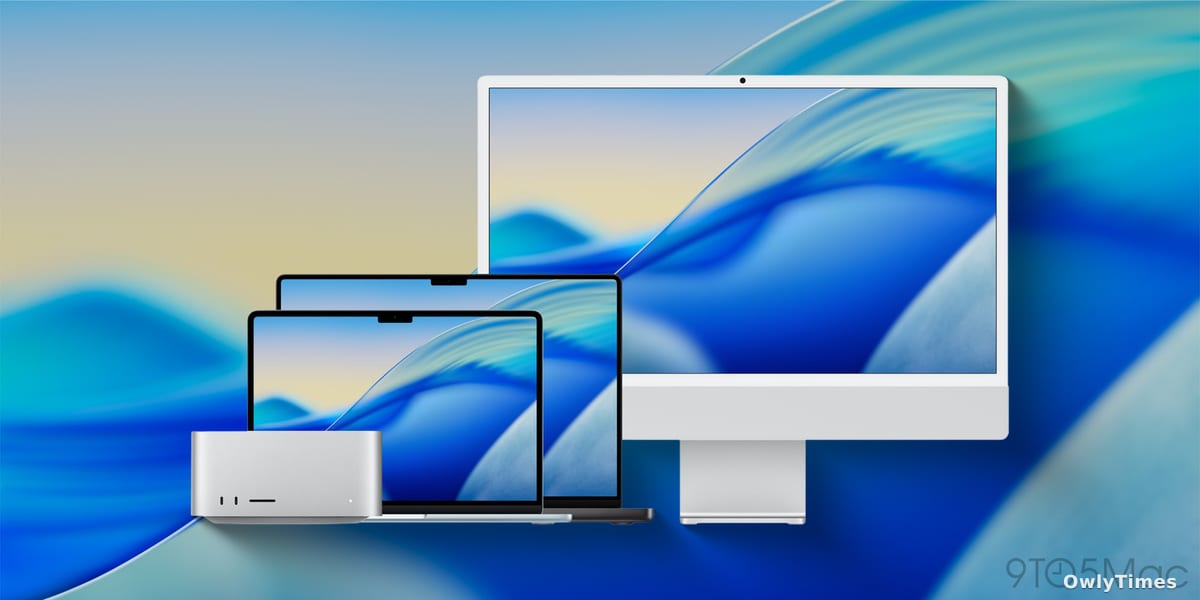

Is Apple about to flood the market with Macs? Twenty-plus new products this year sounds like a Silicon Valley land grab, but the real story here isn't sheer volume – it’s a calculated segmentation play designed to lock users into the ecosystem at every price point, and a tacit admission that the “revolutionary” M4 generation wasn’t quite enough to move the needle. We’re not looking at a burst of innovation so much as a meticulously planned offensive, and ordinary consumers are about to be the battleground.
The Two-Tiered Pro Strategy: Legacy vs. Future
The impending launch of two new MacBook Pros this year – one powered by the M5 Pro/Max chips, the other by the M6 Pro/Max – is the most telling detail. Apple isn’t just refreshing its professional line; it’s acknowledging a split in its user base. The M5 Pro models represent a final polish of the existing design, a “last hurrah” for those who aren’t ready to gamble on a complete overhaul. This is a smart move, preventing alienation of professionals heavily invested in the current workflow. But the M6 Pro, with its rumored thinner profile, OLED display, and touch support, is where things get interesting. This isn’t an incremental upgrade; it’s a bet on a future where the line between laptop and tablet blurs, and where Apple hopes to regain ground lost to competitors like Microsoft with its Surface line. The fact that they skipped an “Ultra” chip in the M4 generation only makes the reappearance of the M5 Ultra in the Mac Studio even more intriguing – a clear signal they’re not abandoning power users, even as they experiment with form factors.
Original reporting: 9to5mac.com.
The ‘MacBook’ Revival: A Trojan Horse for Ecosystem Lock-In?
Forget the Pro models for a moment. The most disruptive launch isn’t about power, it’s about price. The revival of the simply-named ‘MacBook’ – rumored to start at $699 and come in “fun colors” – isn’t about competing with the high-end Windows laptops. It’s about poaching users from the Chromebook and entry-level PC markets. Tim Cook and his team understand that once someone is inside the Apple ecosystem, the lifetime value is exponentially higher. This isn’t just a laptop; it’s a gateway drug. The affordability is appealing, but the real play is getting a new generation hooked on iMessage, FaceTime, and iCloud. It’s a long-term investment, and a potentially brilliant one.
Desktop Dynamics: The Curious Case of the Missing Mac Pro
While the laptop news dominates, the desktop revisions are equally significant. A new Mac Studio with both M5 Max and M5 Ultra configurations is expected, filling a gap left by the relatively muted M4 launch. The return of the “Ultra” designation suggests Apple recognizes the need for extreme performance, even if it means revisiting older chip architectures. The M5 Mac mini, likely available in base M5 and M5 Pro configurations, will continue to be the entry point for desktop users. But the biggest question mark remains the Mac Pro. Bloomberg’s vague mention of its impending arrival is hardly reassuring. Given Apple’s recent focus on integrated silicon, the future of a modular, upgradeable Mac Pro feels increasingly uncertain. Is it being quietly phased out, or is Apple working on a radical redesign?
Beyond the Specs: The User Experience Tax
All this hardware is impressive, but Apple’s strength has always been the seamless integration of hardware and software. However, that integration comes at a cost. The walled garden, while offering security and simplicity, also limits user choice and repairability. The rumored touch support on the M6 MacBook Pro, while potentially innovative, also raises concerns about software optimization and the potential for a frustrating user experience if not implemented flawlessly. And let’s be honest, the accessories – the $209 AirPods Pro 3, the $100 USB-C power adapter, the $30 tomtoc sleeve – are where Apple really makes its money. These aren’t optional extras; they’re essential components of the Apple experience, and they add significantly to the overall cost.
Here’s what to watch for: in the next six months, pay attention to how Apple markets the ‘MacBook’. If the messaging focuses heavily on ease of use, seamless integration with other Apple devices, and the benefits of the ecosystem, it will confirm that this launch is less about competing on specs and more about expanding Apple’s reach. The real test won’t be whether these new Macs are technically superior, but whether they can successfully lure users away from established platforms and into the Apple fold.