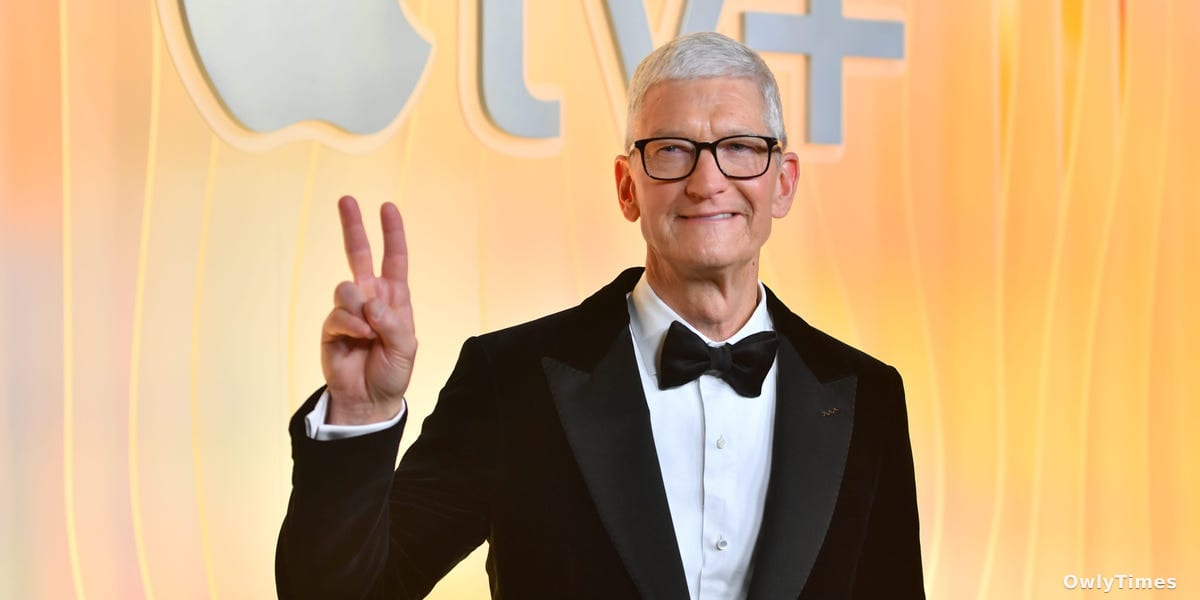

The transition of Apple from a product-innovation engine to a services-first financial juggernaut concludes on September 1, 2026, when Tim Cook steps down as CEO. Following a nearly three-decade tenure that began in 1998, Cook will pivot to the role of executive chairman, handing the company's reins to John Ternus, the current senior vice president of hardware engineering.
Follow the money and the internal power structure reveals a deliberate move toward engineering-led leadership. While Cook’s legacy is defined by the expansion of the company’s services division—a segment that has grown into a $100 billion-plus annual revenue stream—the promotion of Ternus alongside the appointment of Johny Srouji as chief hardware officer signals a strategic pivot back to the company’s core: its silicon and device architecture.
Under Cook’s leadership, Apple achieved the status of the world’s first trillion-dollar company in 2018, eventually swelling to a market capitalization exceeding $4 trillion. This era was defined by operational efficiency, the scaling of the Chinese market, and the diversification of revenue through the App Store, iCloud, and Apple TV. Yet, this era also faced significant friction. The termination of "Project Titan"—the multi-year, multi-billion-dollar effort to build a self-driving car—and the mixed reception of the high-cost Apple Vision Pro headset highlight the difficulty of maintaining the iPhone’s historical market dominance.
Ternus inherits a company at a critical crossroads. While Apple’s balance sheet remains robust, the firm is currently playing catch-up in the generative AI race. The delay in overhauling Siri, once a leader in voice-assistant technology, has left a vacuum that competitors have been aggressive in filling. The success of the upcoming leadership transition will be measured against the company’s ability to pivot its hardware portfolio to accommodate the next generation of AI-integrated software.
The appointment of Srouji as chief hardware officer suggests that Apple intends to double down on vertical integration. By aligning hardware design and silicon development more tightly under the new executive structure, the company is attempting to reclaim the product-first narrative that defined the tenure of Steve Jobs. This shift aims to move past the stumbles of the early 2010s, such as the initial 2012 Apple Maps rollout, by centralizing authority in the hands of those who build the actual machine.
For investors and consumers, the primary trigger to monitor is the launch of the iPhone 18. Scheduled for the fall of 2026, this product cycle will serve as the first major test for Ternus’s leadership. The device is expected to feature a significantly overhauled AI-powered Siri, marking the company’s most public attempt to bridge the gap with its rivals in the artificial intelligence sector. Whether the transition to a hardware-focused executive suite can restore the rapid innovation pace of the past will be reflected in the market’s reaction to the iPhone 18’s performance and the subsequent adoption rates of its integrated AI services.





