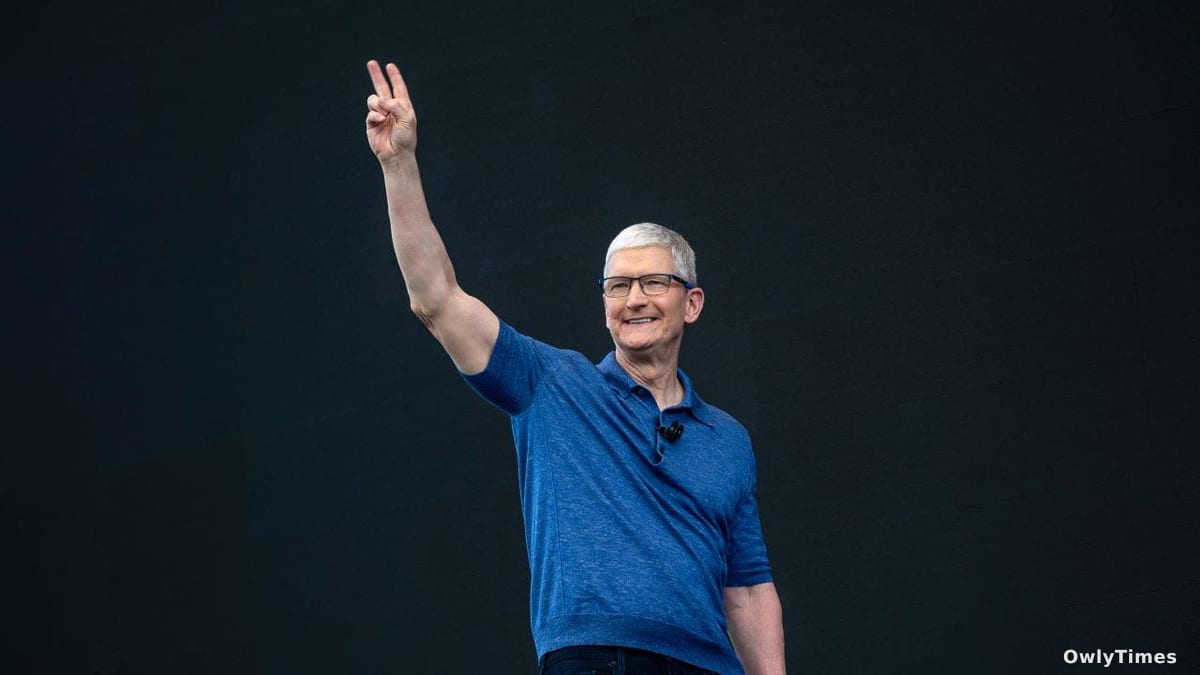

28 years after first walking through the doors of the company, Tim Cook is stepping down as CEO of Apple, a move that marks the end of an era defined by operational mastery and the company's evolution into a trillion-dollar juggernaut. On Monday, the tech giant confirmed that Cook will transition to executive chairman of the board of directors, handing the reins to John Ternus, the current senior vice president of Hardware Engineering, effective Sept. 1, 2026.
Follow the money and the structural shift reveals a strategic realignment rather than a standard exit. Cook, who joined the company in 1998 and assumed the permanent CEO role in 2011 following the death of Steve Jobs, is not leaving the ecosystem entirely. His new position as executive chairman focuses specifically on engagement with global policymakers. This pivot suggests that Apple is prioritizing navigating complex regulatory landscapes and shifting its manufacturing footprint—most notably aligning with the domestic manufacturing push—over the day-to-day management of product cycles.
The succession of Ternus represents a move to double down on the company’s core identity as a hardware-first innovator. Having joined the product design team in 2001, Ternus has been a central architect of the modern Apple ecosystem, overseeing the development of the iPhone, Mac, Apple Watch, iPad, and AirPods. With Wedbush Securities analyst Dan Ives noting that Ternus is the right pick despite the "surprise" timing of the transition, the market is signaling that continuity in hardware excellence is the priority as the firm navigates its critical expansion into artificial intelligence.
Beyond the CEO office, the internal architecture of the company is undergoing a broader reorganization. Arthur Levinson, who has served as non-executive chairman for 15 years, will transition to lead independent director on Sept. 1. Simultaneously, Johny Srouji has been promoted to the newly created role of chief hardware officer, effective immediately. By elevating Srouji—formerly senior vice president of hardware technologies—and positioning Ternus at the helm, Apple is centralizing its technical leadership to ensure that its hardware and software integration remains its primary competitive moat.
This transition is framed by the company as a "thoughtful, long-term succession planning process" unanimously approved by the board. However, the move comes as the tech sector faces broader labor market volatility, highlighted by recent reports of Meta planning to slash roughly 8,000 jobs next month. While Apple’s leadership change is a deliberate, years-in-the-making pivot, the divergence between Apple’s structured succession and the wider industry’s aggressive cost-cutting measures is notable.
For the investor and consumer, this change signals a shift in Apple’s public and political face. While Cook’s legacy is built on 28 years of operational efficiency and global supply chain dominance, his transition to executive chairman indicates that Apple views its future as being as much about policy management as it is about gadget innovation. The next reading of the company’s performance metrics under the Ternus-led hardware division will determine whether this pivot to policy-focused leadership can maintain the growth trajectory established during the Cook era.