
$64.3 billion is the revenue figure that defines the structural complexity John Ternus inherits as he prepares to assume the role of CEO at Apple on Sept. 1. This massive sum, generated in the 2025 fiscal year, represents more than just a line item in a financial statement; it underscores the precarious reliance Apple maintains on Greater China, a market currently navigating a transition from a decade of explosive growth to a period of intense geopolitical and competitive friction.
Follow the money, and the picture of Apple’s footprint becomes clear. For the past 15 years, Tim Cook anchored Apple’s global dominance in the factories of Foxconn and Luxshare, transforming the company into a juggernaut by leveraging the manufacturing capacity of the Zhengzhou complex. Yet, this reliance created a dual-dependency: Apple needs China for its supply chain and its consumers, while China serves as a primary hub for Apple’s hardware ecosystem. The transition to Ternus—an engineer whose public profile lacks the high-level diplomatic track record Cook cultivated—comes at a moment when this relationship is being tested by both Washington’s protectionism and a cooling in domestic Chinese consumer loyalty.
The Manufacturing Pivot
The strategic tension facing the incoming leadership is defined by the "China-plus-one" model. While Cook established the blueprint for manufacturing, pandemic-era lockdowns and the trade wars initiated under President Donald Trump forced a shift in operational strategy. Apple began diversifying into India and Vietnam, a necessary hedge against systemic risk.
Nabila Popal, a senior director at International Data Corporation (IDC), notes that supply chain execution will serve as the immediate litmus test for the new CEO. Ternus must balance the imperative of diversifying away from China to satisfy U.S. policy pressures without triggering retaliatory friction in Beijing. The success of this transition hinges on maintaining efficiency while managing the political fallout of shifting assembly lines out of the country that fueled Apple’s rise.
Reclaiming the Consumer Market
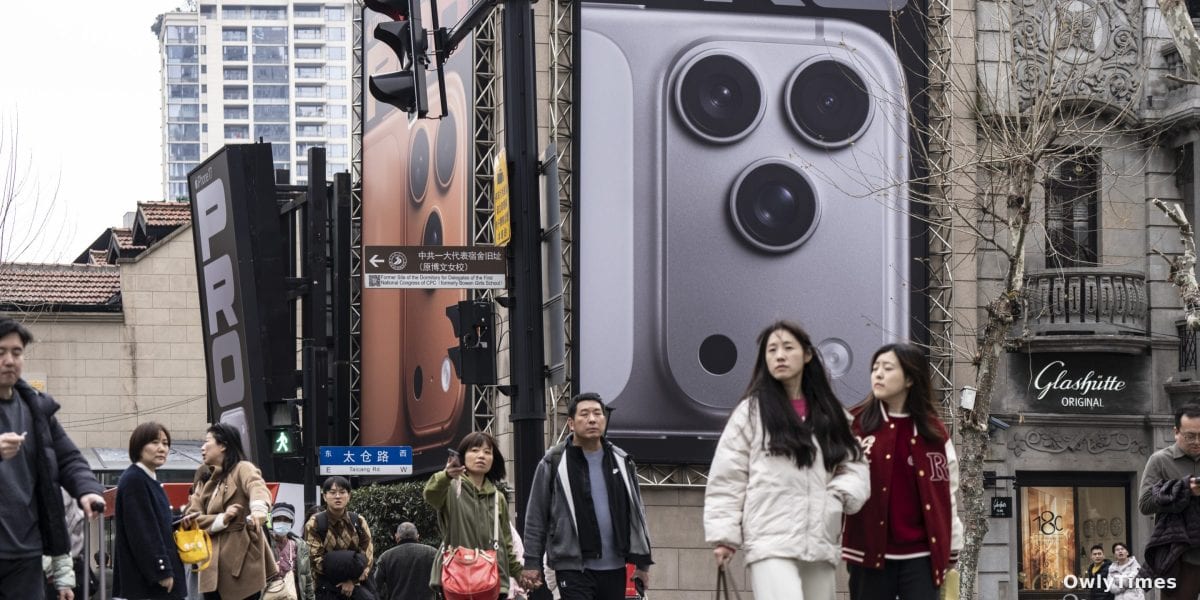
The numbers from the most recent quarter suggest a brief, yet significant, resurgence. Greater China sales climbed to $25 billion, a sharp increase from the $18.5 billion recorded a year prior. This recovery was largely driven by the iPhone 17, which successfully tapped into the brand-conscious nature of the Chinese market. IDC data from the first quarter of 2026 confirms this, showing Apple reclaiming the No. 2 spot in China with a 19% market share, a marked improvement from the fourth-place position held just twelve months earlier.
However, this recovery sits atop a fragile foundation. Apple has faced persistent headwinds, including state-mandated restrictions on device usage in government departments and surging competition from local giants like Huawei and Xiaomi. Furthermore, Apple’s inability to deploy its AI services due to regulatory hurdles set by the Cyberspace Administration of China leaves a competitive vacuum. While domestic rivals like ZTE and Honor are rapidly integrating AI-driven hardware, Apple remains tethered to negotiations with partners like Baidu and Alibaba.
The Innovation Gap
The competitive landscape is expanding beyond handsets. While Apple famously abandoned its automotive ambitions due to profitability concerns, Xiaomi, under the leadership of Lei Jun, has successfully pivoted from consumer electronics to electric vehicles, delivering 500,000 units since its 2024 launch. This success has bolstered Xiaomi’s brand equity, creating a "halo effect" that bolsters its phone sales.
For the individual investor or consumer, the takeaway is clear: Apple’s valuation is no longer just about its ability to iterate on hardware, but its capacity to navigate an increasingly sovereign technology environment in China. The next reading of the company’s quarterly revenue from Greater China will indicate whether the iPhone 17's success is a durable trend or merely a temporary reprieve in a market that is fundamentally rethinking its relationship with Western technology giants.