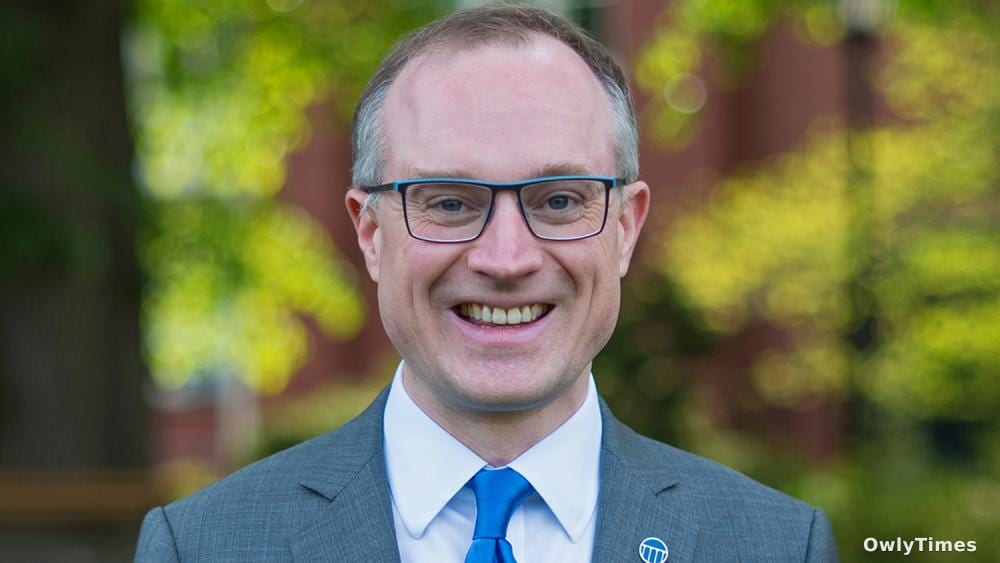

The transition of academic leadership often signals a shift in institutional priorities, particularly when the incoming head balances a pedigree in fundamental research with a track record of commercial success. The appointment of John Mauro as the interim John Leone Dean in the College of Earth and Mineral Sciences at Penn State reflects this intersection of high-level materials science and practical, industry-facing innovation. As the university prepares for this change, effective July 1, the move highlights a strategic focus on integrating industrial sustainability into the heart of earth science education.
Bridging the Gap Between Industry and Academia
Mauro’s appointment, succeeding Lee Kump after his nine-year tenure, is not merely an administrative shuffle but a consolidation of the college's research-to-market pipeline. With 18 years at Corning Incorporated, Mauro brings a perspective sharpened by the demands of product development. His background includes co-inventing multiple generations of Corning Gorilla Glass, a material that fundamentally altered the durability of the billions of electronic devices currently in use globally. This experience is distinct from purely theoretical research, as it requires an understanding of how molecular structure translates into mass-market performance.
At Penn State, Mauro has continued this trajectory by co-inventing LionGlass, a glass composition engineered to lower the carbon footprint of manufacturing while simultaneously enhancing mechanical strength. While headlines might focus on the prestige of his new deanship, the underlying scientific achievement here is the ability to maintain, or even improve, material toughness while reducing the extreme temperatures required for glass production. This dual focus—on both environmental impact and structural integrity—is what distinguishes his work from traditional glass manufacturing methods that have remained largely unchanged for decades.
Scientific Rigor Meets Administrative Transition
The methodology behind Mauro's success is rooted in a prolific career that includes over 430 peer-reviewed publications and the possession of 85 U.S. patents. As an elected member of the National Academy of Engineering, his expertise is vetted by the highest standards of the scientific community. Yet, the transition to the deanship introduces a new set of variables: managing the college’s interdisciplinary mission, which he previously influenced as head of the Department of Materials Science and Engineering and as chair of the Intercollege Graduate Degree Program.
Limitations to this transition exist, primarily the challenge of scaling individual innovation to institutional oversight. While Mauro’s history of collaborative leadership and his role as editor-in-chief of the Journal of the American Ceramic Society demonstrate a capacity for oversight, leading a college with the breadth of the College of Earth and Mineral Sciences requires managing diverse research portfolios that extend far beyond glass science. Whether his specific focus on materials engineering will translate into broader support for the college’s diverse geosciences and environmental departments remains a key area for the faculty to watch.
Future Directions for Sustainable Materials
The significance of this appointment lies in the continued push for sustainable industrial materials. The success of LionGlass, which has already garnered international attention and multiple industry partnerships, suggests that the next phase of research at Penn State will likely prioritize the decarbonization of heavy industry. This is a critical pivot, as the glass industry has historically been one of the most energy-intensive sectors in manufacturing.
The next steps for the college will be marked by the integration of Mauro’s research philosophy into the broader curriculum and outreach missions. Observers should monitor the next report on the industry adoption rates of LionGlass as a measurable signal of whether the college’s internal research is successfully bridging the gap to large-scale, real-world sustainability. By keeping the focus on materials that solve societal challenges, Mauro’s tenure will be measured by how effectively the college can convert academic breakthroughs into tangible, carbon-reducing industrial standards.