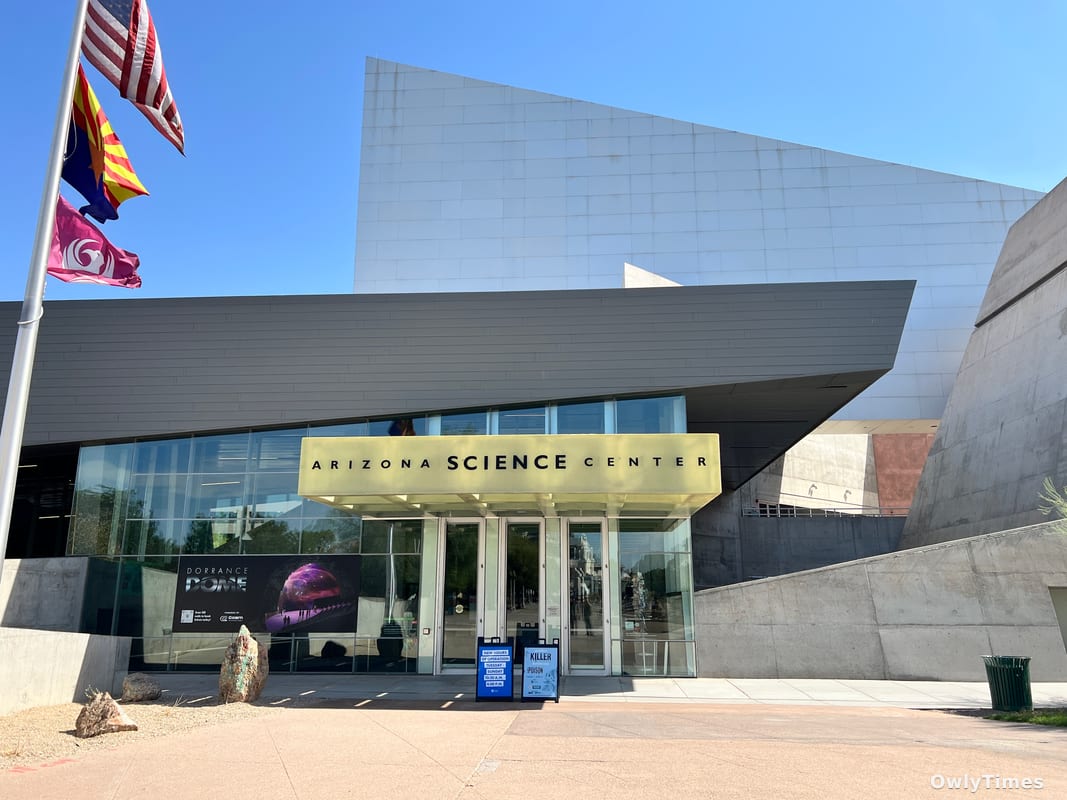

How do we reconcile the rapid pace of technological innovation with the foundational education required to understand it? This is the central challenge facing modern science museums, and it is a question now being steered by Tammy Stewart, recently named the Hazel A. Hare president and CEO of the Arizona Science Center.
While news outlets have focused on the leadership transition, the real significance lies in how the center intends to bridge the gap between traditional STEM staples and the complexities of modern industry. Stewart, who has served as interim CEO since last fall, brings a unique perspective shaped by 25 years in the arts and culture sector and an early career in information technology. Her appointment represents a pivot toward integrating high-level regional industries—specifically semiconductors and autonomous technology—into a public-facing, interactive educational framework.
The study of science in a museum setting often struggles to keep pace with the real-world applications of technology. Stewart notes that while physics and chemistry remain the bedrock of the center’s programming, the institution is shifting its focus to topics like artificial intelligence and semiconductor manufacturing. These are subjects that, as Stewart points out, many adults today did not encounter during their own formal schooling. The goal is to demystify these systems, much like the center’s previous partnership with an autonomous vehicle company to demonstrate how lidar systems function in real-time.
A primary example of this pedagogical shift is SEMIquest, an exhibition currently on display. By partnering with the SEMI Foundation, the center is attempting to move beyond static displays. During a recent visit, Stewart observed 1,500 school children on-site, including a young student who, upon seeing a model clean room in the gallery, immediately engaged with the exhibit by donning a "bunny suit." This highlights the difference between academic observation and experiential learning: one provides data, while the other aims to cultivate the curiosity necessary for future technical literacy.
However, there are limitations to this approach that any institutional leader must navigate. The most immediate is the financial reality of the nonprofit sector. Stewart candidly acknowledges that diversifying revenue—balancing ticket sales with private philanthropic contributions—is a constant, rigorous planning process. As the needs of the community grow, so too do the requirements for resources. Whether the center can successfully scale its ambitious plans for a full building renewal while maintaining financial sustainability in a competitive philanthropic landscape remains a critical variable.
Furthermore, the tension between local relevance and broad scientific education is a delicate balance. The center is currently preparing a new gallery dedicated to Arizona’s water story, slated to open later this year. This represents a strategic attempt to ground abstract scientific principles in the specific geographic and environmental challenges of the desert. By localizing the curriculum, the institution hopes to attract both the local student population and tourists, thereby stabilizing its earned revenue streams.
The next steps for the organization involve a comprehensive renewal of the building and the development of a permanent gallery dedicated to semiconductors. The success of these initiatives will be measured by the center’s ability to convert these complex industrial subjects into accessible, interactive experiences. As the organization moves forward with its grand plans, the next reading of the center’s visitor engagement metrics and philanthropic support levels will indicate whether this strategy of blending local environmental issues with high-tech industry advocacy is a viable model for the future of science communication.





