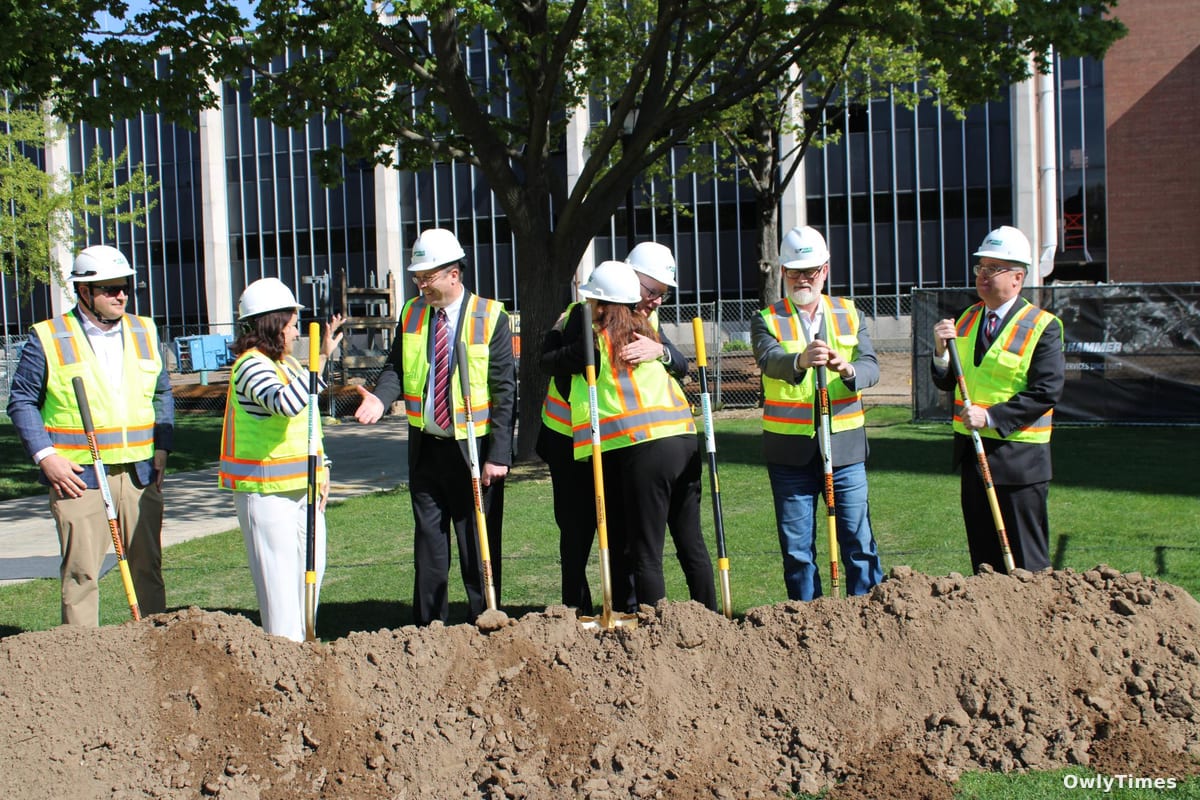

The physical environment where scientific inquiry occurs is rarely neutral. At the University of Wisconsin-La Crosse (UWL), the transition from the aging infrastructure of Cowley Hall to the high-tech, integrated design of the Prairie Springs Science Center represents a shift in how the institution intends to address the state’s STEM workforce shortage. On Friday, May 8, the university held a ceremonial groundbreaking for the project’s second phase, marking the start of a transformation that aims to reconcile nearly six decades of academic history with the demands of modern research.
Bridging the Gap Between Legacy and Innovation
The new project, carrying a budget of $92.8 million, is tasked with replacing Cowley Hall, a structure that has housed the university’s science department since 1965. While the replacement is a practical necessity given the deterioration of the older building, the design intent goes beyond mere utility. The second phase will feature 30 labs, classrooms, and collaborative spaces designed to foster cross-disciplinary research. By connecting directly to the first phase of the Prairie Springs Science Center, the university is moving toward a centralized hub model, which research suggests can improve student retention and faculty collaboration compared to fragmented, departmentalized facilities.
The Bipartisan Push for STEM Infrastructure
The project has been framed by university leadership and political figures as a rare point of consensus. During the groundbreaking ceremony, speakers including Universities of Wisconsin Executive in Charge Chris Patton, Wisconsin Representative Derrick Van Orden, State Assembly Representative Jill Billings, and Wisconsin State Senator Brad Pfaff emphasized that the funding required a deliberate effort to cross political aisles. This bipartisan support reflects an underlying urgency regarding Wisconsin’s economic trajectory. According to data provided by the university, 87% of students from the College of Science & Health choose to remain in Wisconsin after graduation, making the state’s investment in these facilities a direct play to retain technical talent within its own borders.
Limitations to Consider in Large-Scale Construction
While the promise of new laboratories and solar-integrated, energy-efficient architecture is clear, the transition period remains a significant challenge. The demolition of a building that has served as the campus anchor for science education for 59 years necessitates a complex logistical shift for faculty and students currently utilizing the space. Furthermore, while sustainability features such as rooftop solar panels and locally sourced materials are intended to lower long-term operational costs, the actual performance of these systems will depend on rigorous post-occupancy maintenance. The university’s ability to maintain these high-efficiency standards over the building's lifespan will be the true test of this investment’s long-term value.
Future Milestones and Performance Metrics
The construction timeline is ambitious, with completion set for late 2028. Fowler & Hammer Vice President Eric Lehmann and Student Association President Emma Wittman joined university leadership at the site, signaling a unified expectation for the facility's role in the university’s future. As the structure rises, the success of the project will not be measured solely by its square footage or the completion date, but by the university's capacity to scale its output of STEM professionals. The next reading of enrollment numbers and job placement statistics for the College of Science & Health following the building's 2028 opening will indicate whether this significant capital infusion effectively mitigates the current shortage of skilled workers in the region.





