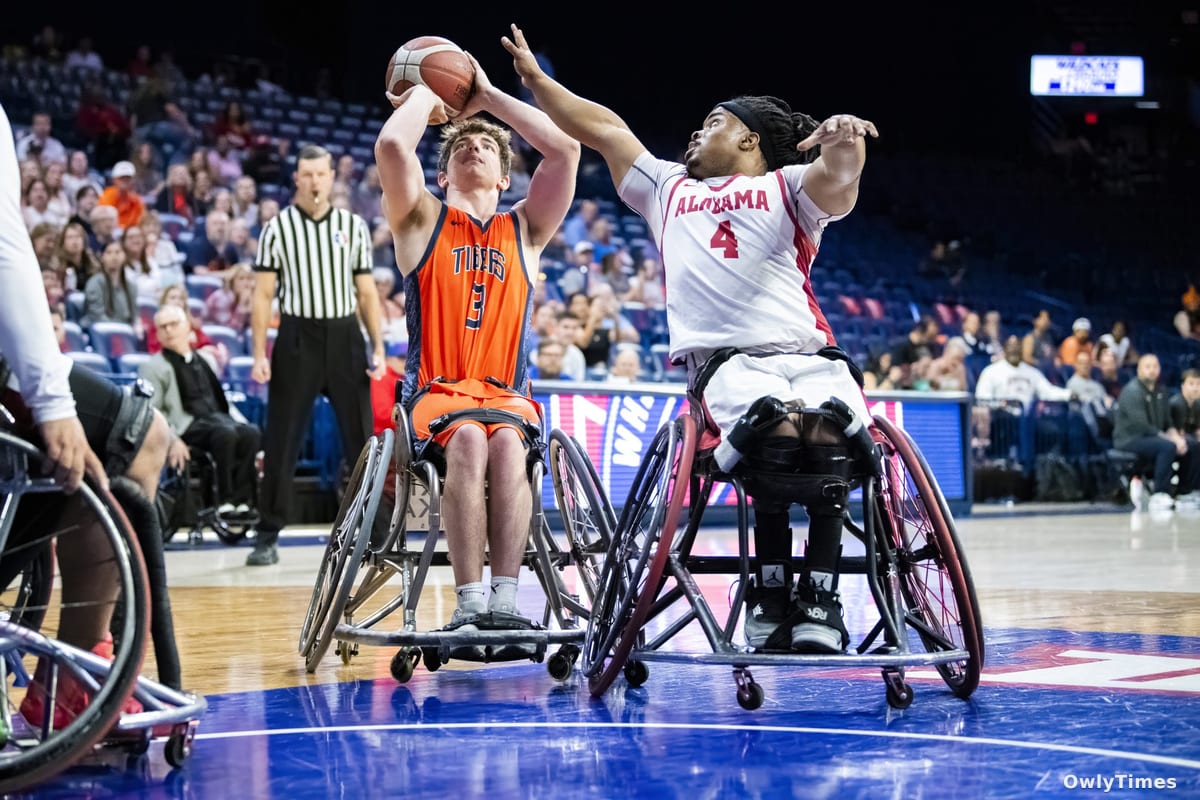

The roar was almost a disruption. Abby Dunn, a graduate guard for the University of Arizona, admitted she feared a technical foul. Not for something she did, but for the sheer, unbridled enthusiasm of the student section packing McKale Center – a scene usually reserved for Pac-12 basketball showdowns. But this wasn’t a typical Wildcats game. It was the first round of the National Wheelchair Basketball Association’s Intercollegiate National Championships, and the energy wasn’t a mistake, or a pity gesture. It was a statement. A statement about a sport desperately seeking its moment, and a university willing to provide the stage.
Beyond the headlines of tournament brackets and winning scores lies a crucial question: why does a sport as dynamic and compelling as wheelchair basketball still struggle for visibility in the United States? The answer isn’t about the quality of play – anyone witnessing the speed, strategy, and physicality at McKale would attest to that. It’s about perception, access, and a cultural lag in recognizing adaptive athletics as athletics, period. The NWBA brought twelve universities to Tucson, not just for a championship, but for a demonstration. A demonstration that a wheelchair isn’t a limitation, but a mechanism for elite competition.
Based on the original cronkitenews.azpbs.org report.
The event’s success wasn’t solely about the games themselves, though the competition was fierce, culminating in victories for the University of Alabama (women’s) and Auburn University (men’s). It was about the integration. Players like Carlos Reynoso, a sophomore at Arizona, spoke of the surreal experience of seeing their game replayed on the Jumbotron, using the same camera angles as their able-bodied counterparts. “It’s huge to have an event like this at McKale,” Reynoso said, highlighting the symbolic weight of sharing the arena. This wasn’t a separate, smaller event tucked away in a rec center; it was a full-scale production, signaling a shift in how adaptive sports are valued within a major athletic program.
This elevation is critical, according to Brandon McBeain, CEO of the NWBA. “Adaptive sports and the Paralympic movement still has an awareness problem here in the U.S.,” he explained. The numbers bear this out. While Europe boasts thriving professional wheelchair basketball leagues – Spain, Germany, Italy, and the UK all have established competitions – the U.S. lacks a comparable structure. This forces aspiring professionals like Abby Dunn to look overseas for opportunities, a frustrating reality for athletes hoping to build a career at home. Dunn’s ambition to compete in the Paralympics is fueled by the experiences gained at Arizona, but her long-term prospects hinge on finding a professional pathway abroad.
The University of Arizona’s commitment extends beyond hosting a tournament. With six adapted sports – wheelchair basketball, track, tennis, swimming, golf, and paratriathlon – the university is a leader in providing opportunities for athletes with disabilities. Crucially, many of these athletes receive scholarships, allowing them to pursue both their athletic and academic goals. This support system is transformative, as illustrated by the story of Alana Nichols, a Wildcat alum and five-time Paralympian. Nichols, the first American woman to medal in both summer and winter Paralympics, credits adaptive sports with rebuilding her life after a spinal injury. “Wheelchair basketball and adaptive sports in general really changed my life,” she said, emphasizing the power of sport to restore a sense of self and purpose.
Nichols’ journey underscores a deeper truth: adaptive sports aren’t just about athletic achievement; they’re about reclaiming agency and building community. Tucson, Reynoso noted, has a particularly strong wheelchair community, fostering a sense of belonging and support. The university even hosted a “Pizza with Paralympians” panel, connecting young athletes with established role models. This mentorship is vital, not just for athletic development, but for instilling a belief in what’s possible. Nichols’ message to the next generation is simple: “It’s the chase for me. Not everyone is going to win a gold medal… if you are present and enjoy the process of what you are doing, that’s where it all matters.”
The energy at McKale wasn’t just about cheering on a basketball game; it was about witnessing a cultural shift. It was about recognizing that athleticism isn’t defined by physical ability, but by dedication, resilience, and the pursuit of excellence. The crashing of chairs, the smell of burning rubber, the sheer intensity of the competition – these aren’t signs of a lesser sport, but of a sport demanding to be seen. As the NWBA prepares to return to Arizona for its junior and adult national championships in 2027, the question isn’t whether they’ll be welcomed back, but whether the momentum generated at McKale will translate into sustained investment and broader recognition for adaptive athletics across the country. Will this be a turning point, or just a fleeting moment of visibility? The future of wheelchair basketball – and the athletes who dedicate their lives to it – depends on the answer.