
Beyond the Textbook: How ASU Students Are Redefining Science Outreach
The persistent decline in American students’ science literacy – consistently lagging behind global peers in international assessments like PISA – isn’t simply a matter of curriculum or funding. It’s a matter of engagement. While national conversations often center on standardized testing and STEM career pipelines, a quieter, but potentially more impactful, shift is happening at the grassroots level. At Arizona State University, a student-led organization called Science Detectives isn’t just teaching science; they’re actively dismantling the barriers that prevent many young learners from seeing themselves as scientists. This isn’t about creating the next generation of researchers, though that’s a welcome byproduct. It’s about fostering curiosity and critical thinking in students who might otherwise disengage from science altogether.
This piece references the statepress.com report.
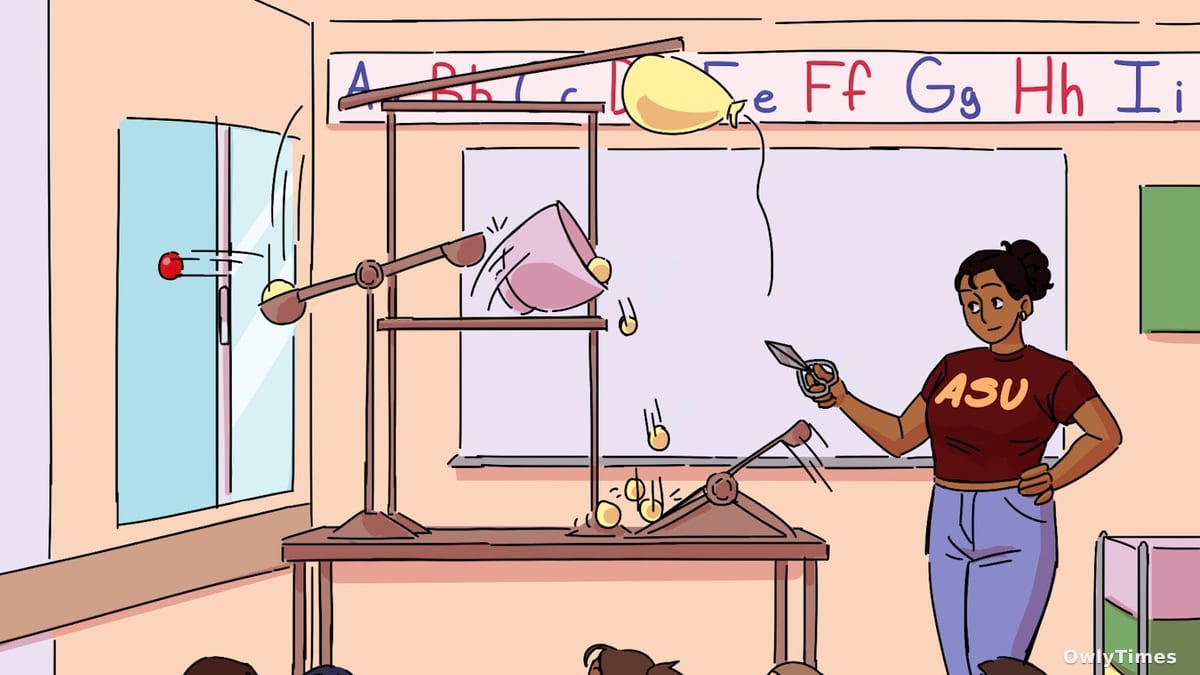
Founded and run by ASU undergraduates, Science Detectives provides free, hands-on science lessons to third through sixth graders in Tempe and Mesa. The program’s core philosophy, as articulated by Alex Park, a junior studying biophysics and the organization’s education director, is simple: “We’re a team of students that are dedicated to teaching science experiments to local kids.” But the execution is far from simplistic. What distinguishes Science Detectives from typical after-school programs isn’t just the absence of cost – though that’s crucial – but the deliberate pedagogical choices made by its volunteers. They’ve moved away from the traditional “sage on the stage” model of science education, where instructors demonstrate concepts, and toward a fully participatory approach.
This emphasis on active learning is a direct response to what the students at ASU perceive as systemic flaws in existing science education. Camila Naranjo, a junior studying biomedical sciences and co-president of the organization, points to a critical disconnect: “There are a lot of cracks where students can fall through and where they’re just not feeling engaged in the content.” The team’s solution? Eliminate the elements often associated with science anxiety – equations, problem sets, worksheets – and replace them with open-ended experiments where students are encouraged to ask questions and “feel like a scientist themselves.” This isn’t merely a stylistic preference; it’s grounded in educational research demonstrating that inquiry-based learning fosters deeper understanding and retention. The program’s six weekly sessions, held on Fridays, Saturdays, and Sundays, are structured around this principle.
A particularly noteworthy aspect of Science Detectives is their conscious effort to broaden the representation of scientists. Volunteers introduce a “Scientist of the Week,” deliberately showcasing individuals from diverse backgrounds – a strategy designed to counter the historically narrow and often homogenous portrayal of scientific figures. This is a subtle but powerful intervention, addressing the implicit biases that can discourage students from underrepresented groups from pursuing STEM fields. The impact of representation cannot be overstated; studies consistently show that students are more likely to envision themselves in a career if they see people who look like them already succeeding in that field. The organization is funded by Barrett, The Honors College, allowing them to maintain the program’s accessibility.
The Limits of a Local Model
While the success of Science Detectives is encouraging, it’s important to acknowledge the limitations of its current scale. The program currently serves students in Tempe and Mesa, representing a relatively small geographic area. Expanding to other communities would require significant additional funding and volunteer recruitment. Furthermore, the program’s impact is difficult to quantify beyond anecdotal evidence and participant feedback. While volunteers observe increased engagement and enthusiasm among students, rigorous longitudinal studies are needed to assess the long-term effects on science literacy and career aspirations. It’s also crucial to recognize that the students participating in Science Detectives may already possess a pre-existing interest in science, potentially skewing the results. The program isn’t necessarily reaching those most disengaged.
Another consideration is the reliance on undergraduate volunteers. While the enthusiasm and dedication of these students are invaluable, the program’s sustainability depends on consistent recruitment and training. The cyclical nature of university life means that experienced volunteers will inevitably graduate, requiring ongoing efforts to maintain institutional knowledge and program quality. This isn’t a unique challenge for student-led initiatives, but it’s a factor that must be addressed to ensure long-term viability. The program’s success also hinges on the continued support of Barrett, The Honors College; any disruption in funding could significantly impact its operations.
What Happens When Curiosity Isn’t Confined to the Classroom?
The true value of Science Detectives may lie not in its direct impact on test scores, but in its ability to cultivate a mindset of scientific inquiry. By prioritizing hands-on experimentation and open-ended questioning, the organization is fostering a generation of students who are not simply memorizing facts, but actively seeking to understand the world around them. This is particularly relevant in an era of misinformation and scientific skepticism, where critical thinking skills are more important than ever.
Looking ahead, the next crucial research step involves tracking the academic trajectories of Science Detectives participants over several years. Are they more likely to pursue advanced science coursework in high school? Are they more likely to consider STEM careers? Equally important is investigating how the program’s pedagogical approach – the emphasis on inquiry-based learning and diverse representation – can be scaled and replicated in other communities. The question isn’t simply can we expand Science Detectives, but how can we embed its core principles into broader science education initiatives? If we want to reverse the decline in science literacy and inspire the next generation of innovators, we need to move beyond traditional models and embrace approaches that prioritize engagement, accessibility, and a genuine love of learning. Watch for pilot programs in other Arizona cities next year, and consider how your local schools are fostering curiosity beyond the textbook.





