
If the BBC is the bedrock of British culture, why does it feel like the ground is liquefying beneath it? The corporation’s latest annual report for 2025/26 paints a picture of a media giant simultaneously hitting creative peaks and financial rock bottom, leaving one to wonder if a century of public service broadcasting is nearing its final act.
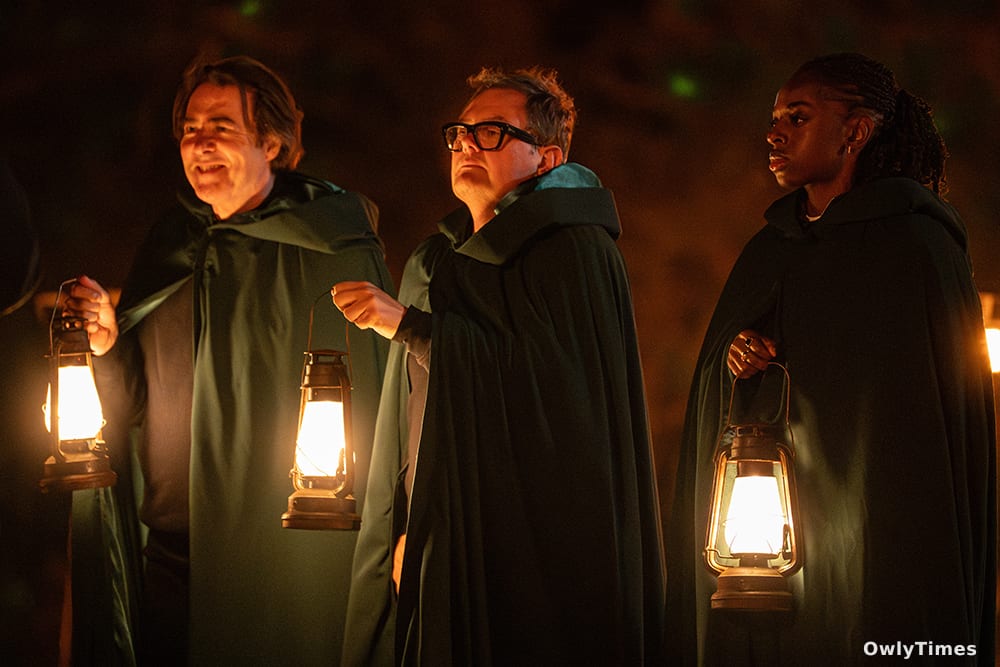
The real story here isn’t just the record-breaking success of shows like The Celebrity Traitors—which pulled in 15 million viewers—or the critical acclaim of The Night Manager; it’s that the BBC is trapped in a structural death spiral. Matt Brittin, the new director-general, has explicitly termed this "a moment of real jeopardy." While Variety notes the BBC’s content dominance, the financial reality is grim: the corporation reported a post-tax deficit of £121 million ($161.88 million), its third consecutive year in the red.
This crisis of sustainability is best understood as a classic "freeloader" problem. According to The Hollywood Reporter, while 94% of U.K. adults engage with BBC services monthly, fewer than 80% of households actually pay the annual license fee. Both Variety and The Hollywood Reporter confirm that the number of licenses in force dropped by 539,000, a staggering decline that highlights the obsolescence of the current funding model.
To plug the holes, the BBC is aggressively shrinking. The corporation confirmed a net loss of 400 full-time equivalent roles last year, contributing to a total headcount reduction of over 2,200 positions—more than 10%—since the 2019/20 period. These aren’t just administrative trims; they are the result of a forced march toward £500 million ($668.9 million) in savings by 2028/29. The Hollywood Reporter also points to internal cultural turbulence, noting an increase in formal bullying and harassment cases, though the time taken to close those investigations has thankfully dropped by a third.
The proposed solution, championed by Brittin and supported by U.K. Culture Secretary Lisa Nandy, is to expand the license fee to cover streaming services like Netflix and Disney+. As Deadline reports, Brittin argues there is "logic" to this, claiming streamers benefit from the production ecosystem the BBC has spent a century cultivating. However, the plan faces immediate friction from the Motion Picture Association, and Brittin himself conceded to Deadline that the enforcement of such a tax would be "difficult."
For the ordinary user, this means the BBC is essentially trying to update a 20th-century tax for a 21st-century digital landscape where "watching TV" has become a fragmented, platform-agnostic activity. The pressure is compounded by a string of editorial controversies—ranging from Gaza documentaries to the fallout from the Huw Edwards scandal—that have left the broadcaster’s reputation bruised.
With the Royal Charter set to expire in 2027, the coming months will be a high-stakes negotiation period. As BBC chair Samir Shah warned in the report, the current funding model simply cannot maintain the BBC’s mission. The trigger for the next chapter of this saga is already set: the government and the BBC will be locked in intense funding discussions throughout the summer, deciding whether the license fee survives by expanding its reach or whether the institution must fundamentally pivot to a new, likely commercialized, existence.