
Is the number 100,000 becoming the new standard unit for systemic disruption? Whether we are looking at the brutal reality of industrial downsizing, the dizzying scale of space colonization, or the grim forensic findings of ancient history, this six-figure milestone is currently defining how we measure both our progress and our collapse.
The real story here isn't the number itself—it’s the starkly different ways we are wielding it to reshape the future.
The Human Cost of Industrial Efficiency
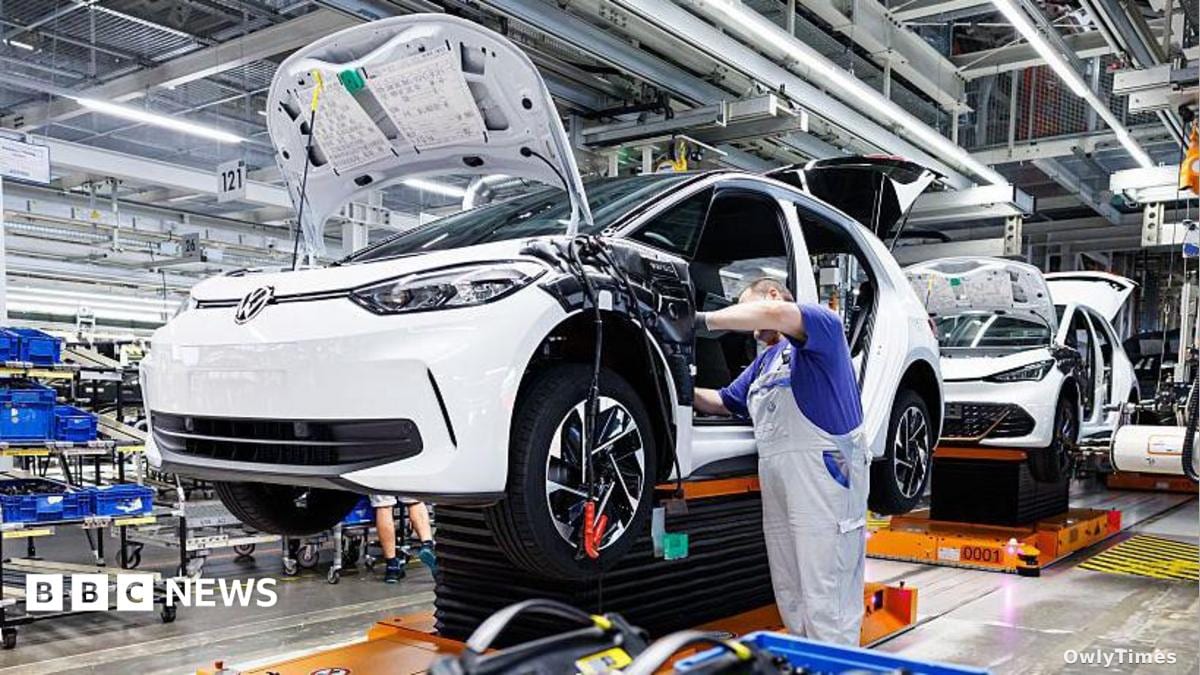
In the automotive sector, 100,000 represents a potential humanitarian crisis. Oliver Blume, the chief executive of the Volkswagen Group, has confirmed that the company is considering cutting up to 100,000 jobs globally, according to the BBC. This figure is double the previous estimate of 50,000, illustrating how quickly a company can shift from restructuring to a survival-mode purge.
The BBC notes that Volkswagen’s operating profit plummeted from €22.6 billion in 2023 to just €8.9 billion last year. For the ordinary worker, this isn't just a balance sheet correction; it means the potential shuttering of plants in Zwickau, Emden, Hanover, and Neckarsulm. While Agence France Presse suggests this 100,000-job figure may be a negotiating tactic against the trade union IG Metall, the underlying pressure from falling sales in China—down 26% in the first half of the year—and increased competition from cheaper, tech-heavy Chinese rivals makes the threat feel uncomfortably real.
The Orbital Infrastructure Race
While Volkswagen is shrinking its footprint to save money, SpaceX is doing the exact opposite to capture the future. According to Space.com, the company has filed an application with the FCC to operate a constellation of 100,000 "Gen3" satellites.
As reported by astronomer Jonathan McDowell, these aren't your average internet satellites. Each Gen3 unit will weigh between 2,000 and 2,500 kilograms, significantly heavier than the current 800-kilogram V2 Minis. Think of it like swapping a fleet of compact cars for a fleet of semi-trucks orbiting the planet. If Volkswagen is struggling with high production costs, SpaceX is betting that building larger, more complex infrastructure in space will eventually pay off, though they have yet to account for the growing concerns from researchers regarding orbital congestion and the impact on the night sky.
A Forensic Echo of the Past
History, too, is being re-evaluated through this same lens of 100,000. Researchers studying a skull found in the Qafzeh cave in Israel have determined that 100,000 years ago, an early Homo sapiens man was likely stabbed in the face with a stone tool, according to Live Science. Published in the journal Scientific Reports, this study marks what experts believe is the earliest evidence of interpersonal violence.
While the context of an ancient burial is a far cry from a corporate boardroom or a launchpad, it serves as a reminder that the human drive to assert dominance—whether through physical force, market share, or technological hegemony—has remained a constant for 100,000 years. We are simply trading stone tools for satellite arrays and pink slips.
What Comes Next
The immediate signal to watch is the meeting of the Volkswagen supervisory board. Because the board includes both labor representatives and company management, the final decision on those 100,000 jobs will provide a clear, measurable indicator of whether European industrial giants can pivot to meet the challenges of the electric vehicle transition, or if they will simply buckle under the pressure of their own overhead. Expect the finalized number of cuts to be the definitive answer to that question.