
If you think your smartphone’s "emergency alert" is just a nuisance, try imagining a world where the infrastructure you rely on—dams, power grids, and basic roads—becomes an active threat to your survival. The real story here isn't just the destructive power of Typhoon Maysak; it’s how quickly a modern, interconnected society can revert to a pre-digital state when the "cloud" literally descends in the form of record-breaking rainfall.
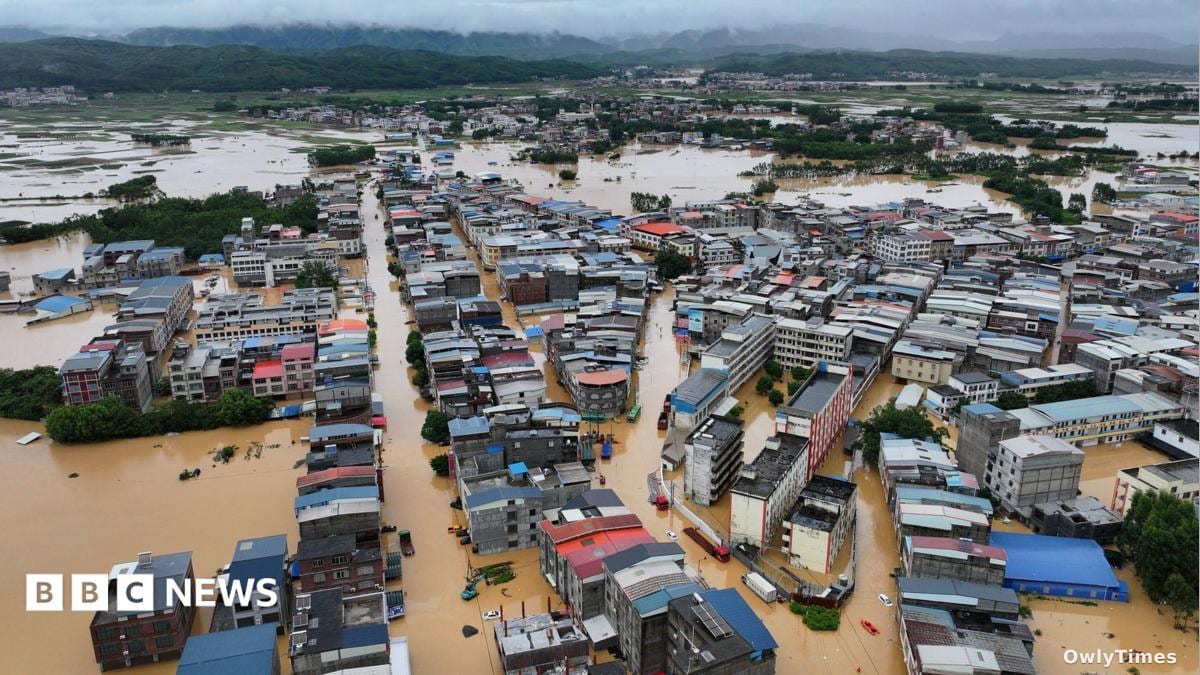
As of Thursday, the confirmed death toll from the floods in southern China has risen to 39, according to Al Jazeera and ABC News. This figure is a sharp increase from earlier reports—such as those from the BBC that cited at least four deaths, or The Guardian, which initially counted two—highlighting the chaotic "fog of war" that follows sudden climate-driven catastrophes. The surge in the death toll is largely attributed to the breach of a reservoir dam in Hengzhou, which alone claimed 26 lives, as reported by Ding Wei, the vice mayor of Nanning.
The scale of the displacement is staggering. Both Al Jazeera and ABC News report that approximately 130,000 people have been evacuated from the Guangxi region. This logistical nightmare required a massive deployment of over 5,700 boats and the use of drones to navigate flooded urban centers that turned into muddy, impassable lakes. For the average user, this isn't just a news headline; it’s the abrupt loss of the "always-on" lifestyle. Residents in the hardest-hit areas reported being completely severed from the outside world, lacking internet, electricity, and even basic communication to check on family members.
The disruption extended far beyond human populations. In a bizarre and dangerous turn of events, the floodwaters damaged enclosures at the Guigang Zoo, leading to the escape of over 100 animals, including zebras, porcupines, and peacocks. As ABC News noted, the situation in Hengzhou was further complicated by reports of escaped snakes from a local farm, forcing authorities to stock up on antivenom. It serves as a grim reminder that when extreme weather hits, the boundaries between the controlled human environment and the natural world dissolve instantly.
The regional impact is also characterized by conflicting reports regarding the broader storm activity. While the BBC notes that 17 people died in the central province of Hubei due to rare tornadoes triggered by the collision of cold northern air and the typhoon’s warmth, ABC News places that specific death toll at 11. These discrepancies underscore the sheer difficulty of monitoring simultaneous disasters across vast distances. Furthermore, while the current crisis stabilizes, the region is already bracing for the next event: Super Typhoon Bavi.
According to The Guardian, authorities are tracking Bavi as it moves across the Pacific with wind speeds reaching up to 180mph. The next measurable signal for residents in the path of Bavi will be the weekend, as the storm is currently projected to make landfall in China’s Fujian or Zhejiang provinces on Saturday. If the recent chaos in Guangxi is any indication, the real challenge for these regions won't just be the wind—it will be whether their physical and digital infrastructure can withstand a second "sudden onset" disaster before they’ve finished cleaning up from the first.