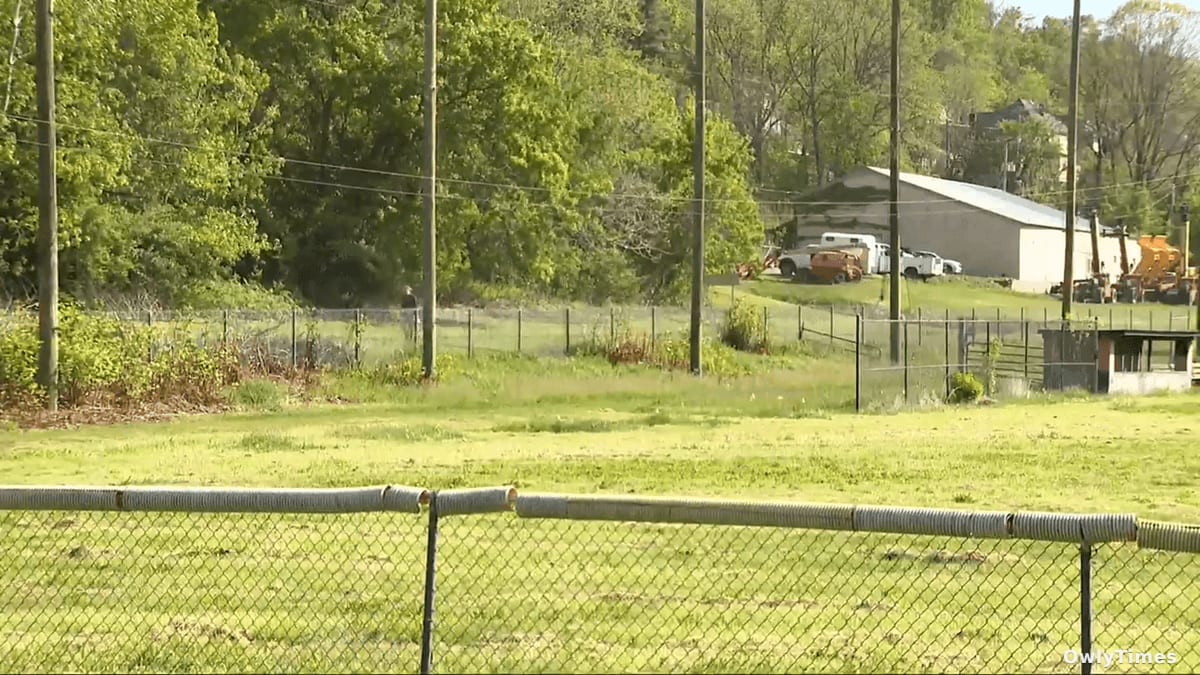

The dirt at the ballfields on West 26th Street in Bellaire has seen decades of local games, but as of Monday morning, that soil is being turned over for something far more ambitious than a standard diamond. The groundbreaking of the Commerce Park Recreation and Entertainment Complex signals a pivot for this Ohio village, transforming a patch of traditional athletic space into a multipurpose hub designed to lure outsiders in. It is a calculated gamble on the "destination economy," where small towns are increasingly betting that public leisure infrastructure is the key to surviving shifting regional demographics.
From Neighborhood Ballfield to Regional Draw
The blueprint for the site is aggressive, replacing the familiar landscape with eight pickleball courts, a dedicated performance stage, and a new walking trail. For Janet Richardson, a Bellaire council member, the project is about solving a fundamental problem: giving people a tangible reason to stop in Bellaire rather than just passing through. By creating a venue that serves as a regional outlier, the village is attempting to manufacture a social gravity that hasn't existed here before.
The strategic focus on pickleball is particularly telling of the current cultural moment. As Belmont County Commissioner Vince Gianangelli noted, the nearest courts currently sit in Elm Grove, West Virginia, creating a service vacuum that Bellaire is now positioned to fill. This isn't just about recreation; it is a bid to capture the disposable time of residents from surrounding areas who are currently forced to drive across state lines to participate in the fastest-growing sport in the country.
The Economics of Public Investment
Securing the capital for this transformation required navigating a competitive landscape of state and federal grants. Village officials successfully lobbied for more than $1.4 million in AMLER funds, a significant injection of capital that dwarfs typical municipal improvement budgets. When combined with an additional $200,000 in state budget funds secured by state Sen. Brian Chavez, the project enters its construction phase fully funded.
The involvement of Sen. Chavez highlights the tension between local ambition and limited municipal resources. Chavez, who reported receiving hundreds of millions of dollars in project requests, singled out Bellaire because the village lacked the tax base to finance such a transition on its own. It is a classic case of the "hump" small communities face: needing the infrastructure to build an economy, but needing the economy to build the infrastructure. By providing the bridge funding, the state is essentially betting that the park will generate the tax revenue growth that the village currently lacks.
Measuring the Return on Infrastructure
While the dirt moves, the real test of this project’s viability will arrive in the coming months. The rapid construction timeline suggests that the village expects to see an immediate impact, with project completion slated for November.
The success of the Commerce Park will ultimately be judged by its ability to act as a catalyst for ancillary private investment. While the courts and stages are the primary draw, the long-term health of the initiative depends on whether the increased foot traffic translates into sustained commercial activity for local businesses. The next reading of the project's utility will be in the final quarter of the year, when the facility moves from a construction site to an operational asset, revealing whether this concentration of public funding can truly anchor a new economic identity for the village.