
The Berlinale’s Political Reckoning: A Festival Forced to Choose Sides
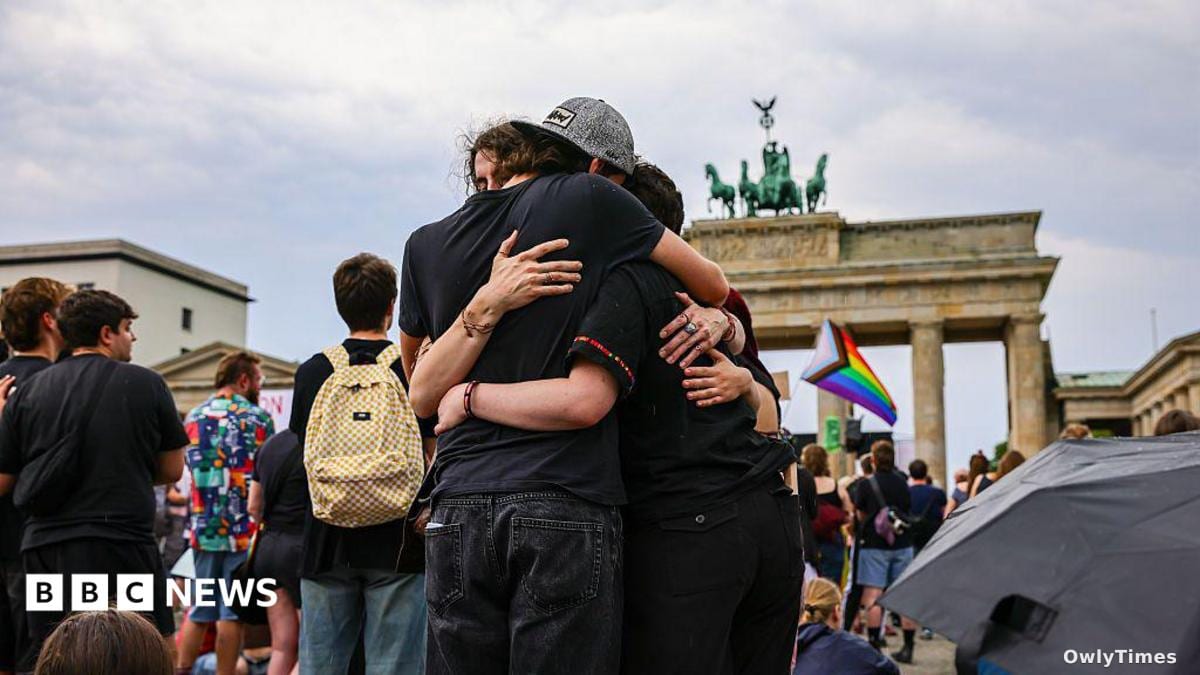
The 76th Berlinale wasn’t a celebration of cinema; it was a pressure test of institutional neutrality. The awards ceremony, intended to spotlight artistic achievement, instead became a series of increasingly explicit political statements denouncing Israeli actions in Gaza and calling for Palestinian liberation. This wasn’t a spontaneous eruption, but the predictable outcome of a strategic calculus: filmmakers, acutely aware of the festival’s international platform and the heightened global sensitivity surrounding the conflict, recognized an opportunity to amplify their message beyond the reach of traditional media. The festival’s leadership, caught between a desire to maintain its prestige and a commitment to free expression, found itself navigating a minefield of stakeholder interests – from the German government, a major funder, to a vocal contingent of artists and activists demanding a stronger stance.
Drawn from The Hollywood Reporter.
The controversy began before the awards were even handed out. Wim Wenders, head of the competition jury, initially cautioned filmmakers to “stay out of politics,” a remark that immediately ignited a firestorm. This wasn’t simply a gaffe; it was a miscalculation of the prevailing mood. Wenders, a veteran filmmaker known for his politically engaged work, inadvertently framed the debate as a choice between art and politics, a false dichotomy that fueled accusations of hypocrisy. The ensuing backlash forced festival director Tricia Tuttle to publicly acknowledge the “grief and anger” within the community, a tacit admission that the festival’s attempt at neutrality had failed. The festival’s $37.5 million budget, roughly 60% of which comes from public funding, immediately became a point of leverage, with critics questioning whether German financial support implicitly demanded a certain level of political conformity.
The strategic use of the awards platform itself was particularly revealing. Marie-Rose Osta’s acceptance speech for the Golden Bear for best short film, Someday a Child, wasn’t a spontaneous outburst but a carefully crafted statement linking the plight of children in Gaza and Lebanon to a perceived “collapse of international law.” The invocation of “genocide” and “veto powers” directly challenged the legitimacy of international institutions and implicitly accused Western governments of complicity. This wasn’t merely artistic expression; it was a deliberate attempt to weaponize the festival’s prestige and draw attention to a specific political narrative. Abdallah Alkhatib, accepting the best documentary prize for Chronicles From a Siege, escalated the confrontation by directly accusing the German government of “complicity” in the situation in Gaza and leading a call for “free Palestine.”
This echoes a historical pattern: major cultural events, from the Cannes Film Festival during the Vietnam War to the Academy Awards during the Cold War, have frequently become battlegrounds for political expression. The difference here is the speed and intensity of the debate, amplified by social media and the increasingly polarized global landscape. The Berlinale’s situation is particularly acute given Germany’s historical responsibility and its complex relationship with Israel. The festival’s attempts to balance artistic freedom with political sensitivity are further complicated by the rise of far-right movements across Europe, a context Donald Trump’s political resurgence only exacerbates. The festival is now navigating a landscape where even acknowledging the existence of differing viewpoints can be interpreted as a political act.
Ameer Fakher Eldin’s attempt to reframe the debate, arguing for “complexity” and resisting “polemical positions,” was ultimately drowned out by the more forceful statements. While his point – that art can operate on multiple levels and doesn’t necessarily require explicit political messaging – was valid, it was strategically disadvantageous in a moment demanding clear moral positions. Wim Wenders’ subsequent acknowledgement of the “artificial discrepancy” between critics and organizers felt like a belated attempt to regain control of the narrative, but the damage was already done. The festival had been irrevocably politicized, and its leadership had been forced to concede ground to the more vocal elements within the film community.
The political chess move to watch next isn’t whether the Berlinale will apologize for allowing these statements, but whether its funding will be affected. The German government, facing pressure from both pro-Israel and pro-Palestinian groups, will need to decide whether it’s willing to continue supporting an institution that has demonstrably become a platform for political activism. A reduction in funding would signal a clear shift towards prioritizing political alignment over artistic freedom, while maintaining the status quo would embolden future attempts to use the festival for similar purposes. The future of the Berlinale, and potentially other international film festivals, hinges on this decision.