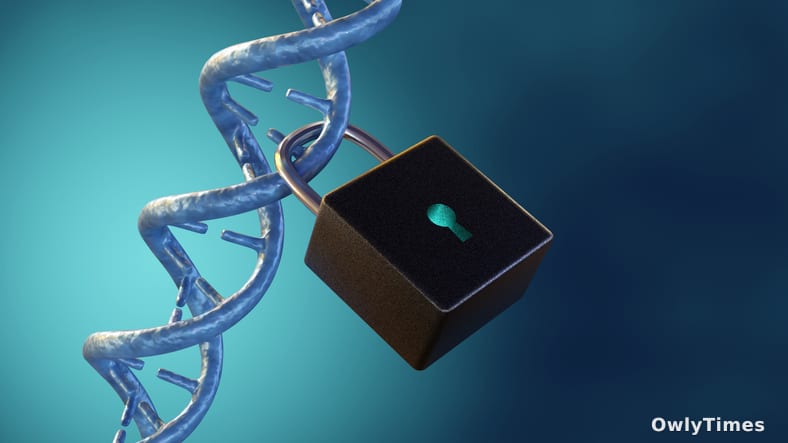

Are we seriously still relying on locked lab doors to protect the future of biotechnology? The headlines are filled with AI risk and cybersecurity threats, but a far more fundamental vulnerability is quietly escalating: the theft of engineered biological materials. The Centers for Disease Control and Prevention and the Department of Homeland Security are already reporting record numbers of unauthorized shipments, and global intelligence agencies are tracking smuggling attempts. The real story here isn't just about securing labs – it’s about recognizing that DNA itself is now a target, and needs its own form of encryption.
The stakes are enormous. Corey Wilson, PhD, a professor at Georgia Tech’s School of Chemical and Biomolecular Engineering (ChBE), points out that “a small vial of genetically engineered cells can contain multiple millions of dollars’ worth of intellectual property and require several years of work to develop.” Currently, that intellectual property is largely defended by physical security – a system that crumbles the moment a sample leaves a secure facility. As Wilson bluntly puts it, leaving valuable genetic material unprotected is like leaving an unlocked cellphone in a desk drawer. Anyone with access can exploit the contents. The global market for these “high-value genetic materials” isn’t some niche concern either; estimates place it at over $1.5 trillion today, with projections soaring to $8 trillion by 2035.
That’s why Wilson and his team – including Ishita Kumar and Luisa F. Barraza-Vergara – developed GeneLock™, a biological security technology that essentially puts a passcode on DNA. Forget complex lab access protocols; GeneLock scrambles the genetic sequence of valuable assets, rendering them non-functional until the correct sequence of chemical inputs – a molecular passcode – is applied. It’s a direct translation of cybersecurity principles to the biological realm, a move long overdue given the increasing sophistication of bio-threats. The team detailed their work in a recent Science Advances study, demonstrating GeneLock’s effectiveness through a surprisingly rigorous test: a biohackathon.
This piece references the genengnews.com report.
This wasn’t some theoretical exercise. Wilson’s team organized a “red team” and a “blue team” – a standard cybersecurity tactic – to simulate an unauthorized access attempt. The blue team engineered the encrypted DNA within E. coli bacteria, while the red team was tasked with cracking the code. The target? A fluorescent protein gene, a stand-in for commercially valuable targets. The results were striking. GeneLock reduced the probability of unlocking the genetic asset through random search to roughly one in 85,000 – a 0.001% chance. Without access to the necessary chemical inputs, the likelihood of success became “effectively negligible,” according to co-lead author Dowan Kim, PhD. To put that in perspective, the team estimates that attempting to crack a real-world commercial target using this method would take years, not months.
The implications extend far beyond academic labs. Companies like New England Biolabs, which produces over 265 undisclosed enzymes in E. coli, stand to benefit enormously. Protein-based drugs, specialty chemicals, and even sustainable bioplastics all rely on proprietary engineered cell lines – all vulnerable without this kind of genetic-level protection. This isn’t about preventing accidental spills; it’s about defending against deliberate industrial espionage and, increasingly, potentially malicious actors. The team is already looking beyond intellectual property protection, developing measures to prevent the unauthorized use or release of potentially hazardous cell lines.
But here’s where the tension lies: GeneLock, while promising, isn’t a silver bullet. It requires careful implementation and ongoing maintenance. The chemical inputs themselves become a new security vulnerability – they need to be protected as rigorously as the DNA they unlock. And, crucially, widespread adoption will depend on industry buy-in and the development of standardized protocols. We’re currently in a situation where the security measures for biological materials lag far behind the capabilities of those who might seek to exploit them. Expect to see a surge in demand for “genetic firewalls” like GeneLock, but also a corresponding arms race as attackers develop new methods to circumvent these protections. My prediction? Within five years, any biotech company not actively implementing genetic security measures will be considered grossly negligent – and a prime target. The question isn’t if a major biological intellectual property theft will occur, but when, and whether the industry will be prepared.