
Is the future of social media… actually about privacy? While Silicon Valley chases the metaverse and algorithmic engagement, a quiet revolution is happening on the fringes, powered by a startup called Germ Network and a decentralized social platform, Bluesky. The real story here isn't just another messaging app – it’s a fundamental shift in how social networks are built, one where features aren’t dictated by a single company, but emerge from a collaborative ecosystem. And it’s a direct challenge to the data-hungry practices that have defined Big Tech for the last decade.
Bluesky, backed by Jack Dorsey, has been positioning itself as the “Twitter alternative” focused on open standards. But the integration of Germ Network’s end-to-end encrypted (E2E) messaging isn’t about competing with Twitter’s feature set; it’s about demonstrating a different philosophy. Unlike Facebook’s Messenger or WhatsApp, which are controlled by Meta, or iMessage, locked within Apple’s walled garden, Germ’s technology plugs directly into the AT Protocol – the foundation of Bluesky and a growing number of other social apps. This means anyone can build on it, innovate, and offer new functionality without needing permission from a central authority.
The technical underpinning of this shift is Messaging Layer Security (MLS), a new standard approved by the Internet Engineering Task Force (IETF). It’s a mouthful, but the key takeaway is that MLS allows for secure communication without relying on a single provider to manage encryption keys. Mark Xue, a former privacy engineer at Apple and co-founder of Germ, explained the appeal: “We align with the ATProto ethos that people should be able to communicate using the apps and tools they choose.” This isn’t just tech jargon; it means your messages, unlike those on most major platforms, truly belong to you, not the company hosting the service.
Original reporting: TechCrunch.
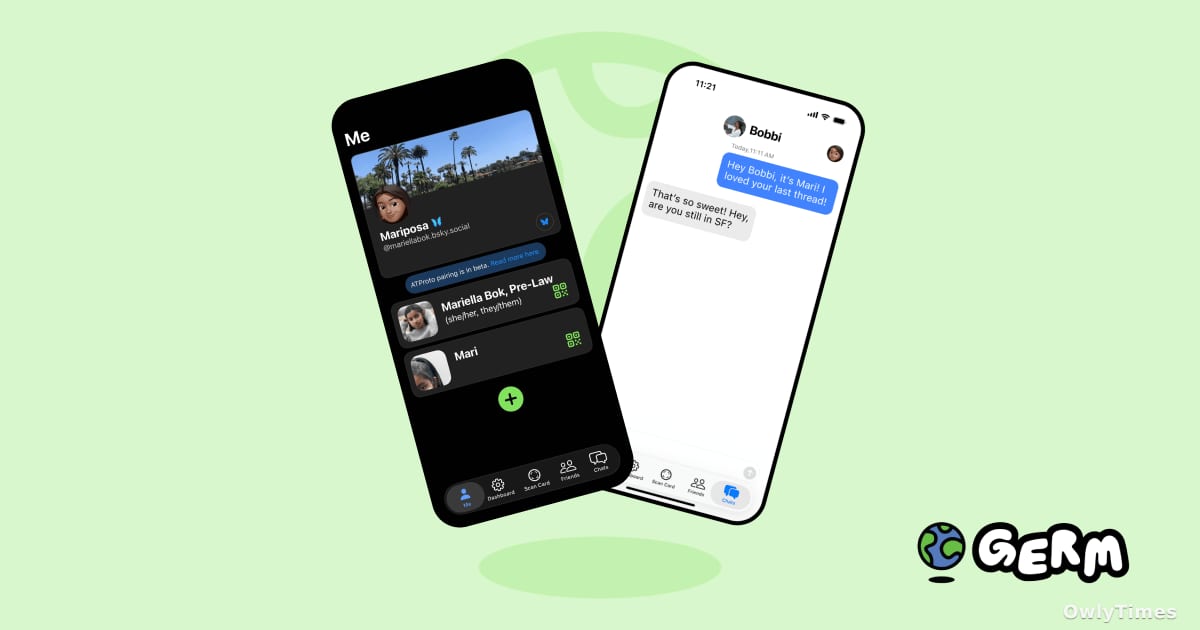
The impact is already visible. Since announcing the integration with Bluesky earlier this month, Germ’s daily active users have jumped by 5x. While that’s a significant increase from a relatively small base – thousands of downloads so far – it signals a genuine appetite for alternatives. The user experience is surprisingly seamless. Instead of requiring a phone number, Germ leverages the AT Protocol to enable encrypted chats, accessible via a simple badge on a user’s Bluesky profile that launches a lightweight iOS App Clip. It’s a far cry from the clunky workarounds often required for secure messaging, and a deliberate attempt to lower the barrier to entry.
But the implications extend beyond individual users. Tessa Brown, CEO of Germ and a communications scholar previously at Stanford, highlighted the potential for specialized use cases. While the team is currently focused on core messaging features, they’re already considering paid options tailored to “prosumer power users” – creators, journalists, and politicians – potentially offering features like support for multiple handles and AI-powered screening of initial messages. This isn’t about building another social media empire; it’s about providing tools for secure communication in a world where misinformation and harassment are rampant.
Bluesky’s willingness to embrace this third-party integration is equally significant. As protocol engineer Daniel Holms bluntly put it, “E2EE is hard.” Rather than attempting to build its own encryption system, Bluesky is leveraging the expertise of developers like those at Germ. This is a pragmatic, and frankly, refreshing approach. It acknowledges that solving complex problems often requires collaboration, not competition. Alex Benzer, head of product at Bluesky, emphasized the company’s commitment to user experience and access to encrypted messaging, calling the partnership with Germ “a treat.”
The move isn’t without its tensions. While the AT Protocol could eventually implement E2E encryption at the protocol level, it’s not a priority right now. This leaves the responsibility for security in the hands of individual app developers, creating a potential fragmentation of standards. However, the early momentum suggests that a community-driven approach to security can be surprisingly effective. And the fact that another AT Protocol client, Blacksky, quickly followed suit with Germ badge support demonstrates the power of this open ecosystem.
Looking ahead, watch for a surge in specialized, privacy-focused apps built on the AT Protocol. The success of Germ isn’t just about encrypted messaging; it’s about proving that a different model for social networking is possible. The question isn’t if more platforms will adopt this approach, but when the larger players will be forced to respond – and whether they can adapt to a world where users, not platforms, control their own data.