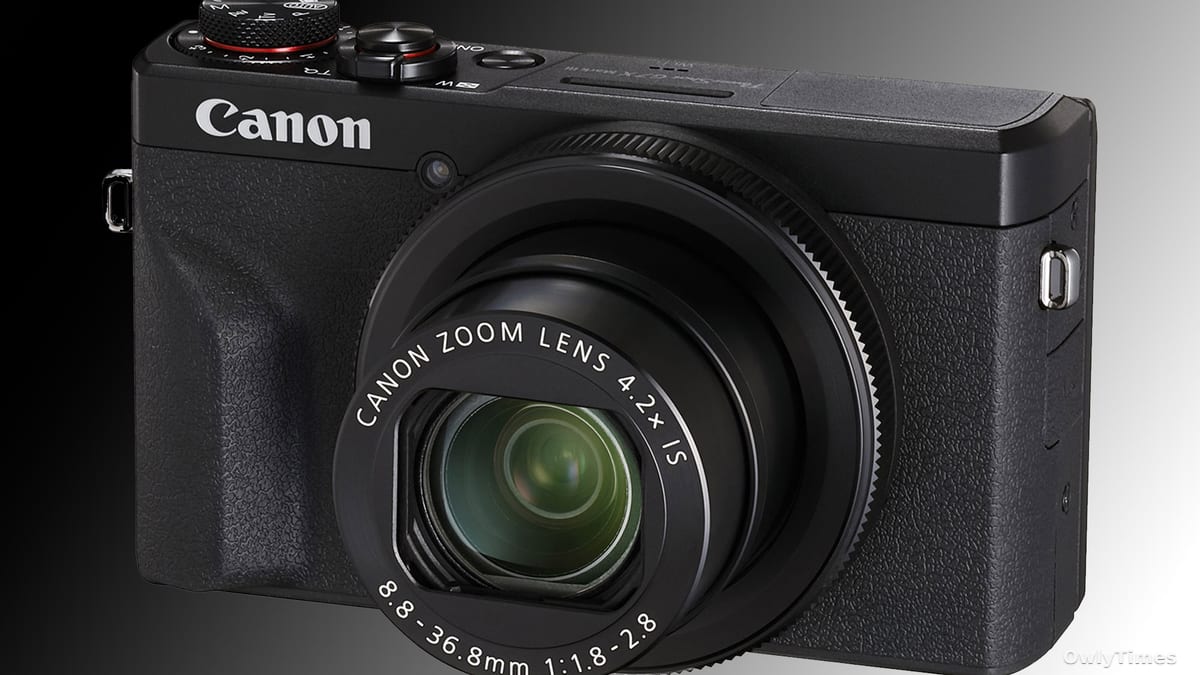

Are we really buying the “camera revival” narrative, or are we just nostalgic for simpler tech? The chatter about a resurgence in compact cameras—fueled by inflated secondhand prices, with models like the PowerShot G7 X III fetching over $1000—has been deafening. But Canon’s recent statements at CP+ 2026 in Yokohama, Japan, as reported by DPReview, suggest the real story isn't a broad return to point-and-shoots, it’s a fundamental shift in who these cameras are for, and what they’re expected to do. Go Tokura, Canon’s Executive Vice President and Head of Imaging Group, bluntly stated that “The current customers of compact cameras are not really our past customers. These are totally new customers.” That’s a stunning admission, and one that throws a wrench into the idea that Canon is simply responding to pent-up demand for the cameras we remember.
This isn’t about fixing a broken market; it’s about creating a new one. For years, enthusiasts have lamented Canon’s neglect of the compact camera space, pointing to the aging G7 X III—still running a seven-year-old DIGIC 8 processor—as Exhibit A. The secondhand market does demonstrate demand, with the G7 X III selling for $1300+ new despite its outdated tech. But Tokura’s comment reveals Canon isn’t chasing those buyers. They’re after someone else entirely. The curious omission of the PowerShot V1 from Canon’s discussion is telling. While packed with updated technology, the V1 is heavily geared towards video, a segment Canon already seems to have covered.
Original reporting: canonrumors.com.
The problem, as Canon Rumors pointed out back in October 2025, is that the compact camera landscape has fractured. Some consumers crave the latest sensors and processors, while others actively seek the lo-fi aesthetic of older models—the “grain” and imperfections that modern technology actively tries to eliminate. This isn’t a simple case of building a better camera; it’s a design challenge with conflicting priorities. Canon’s initial response—essentially a reskinned G7 X III with a $400 price hike—felt like a cynical attempt to capitalize on scarcity, not a genuine commitment to innovation. It suggests internal struggles, perhaps even the dismantling of the teams responsible for previous PowerShot lines, with the last still camera releases dating back to 2018.
The internal hurdles are likely significant. Tokura’s statement hints at a deliberate strategy, not incompetence. Canon may have been quietly addressing different segments all along. The reintroduction of the updated Elph 360HS A and restarting G7X Mark III production could have been a calculated move to satisfy the demand for older technology, freeing up resources to develop a truly new camera for the emerging customer base. This allows Canon to essentially reinvent the fixed-lens camera without internal competition, a luxury they haven’t had in years. The possibilities are, as the source material notes, “fairly unlimited.”
But what does that new camera look like? The idea of a medium-format inspired compact, reminiscent of waist-level viewfinder cameras, is intriguing, but likely won’t be a tech showcase. A more pragmatic approach, and one suggested by the source, is a pair of mirrored PowerShot cameras with overlapping, but distinct, zoom ranges—perhaps a 16-50mm and a 24-100mm, echoing the ranges of the V1 and traditional G7X models. This echoes Nikon’s ill-fated DL lineup, a conceptually sound idea that never fully materialized. Canon, with its established optics expertise, could pull it off.
Tokura’s clear statement is encouraging, but timing remains the question. Rumors suggest something is coming this year, but the real test won’t be if Canon releases a new compact camera, but who buys it. Watch for Canon to announce a new compact camera in late 2026, but more importantly, pay attention to whether their marketing focuses on technical specifications or a specific use case—a new way to create and share images that appeals to a demographic that didn’t grow up with PowerShots. If they’re selling features, they’re still chasing the past. If they’re selling a vision, they might just have a future.