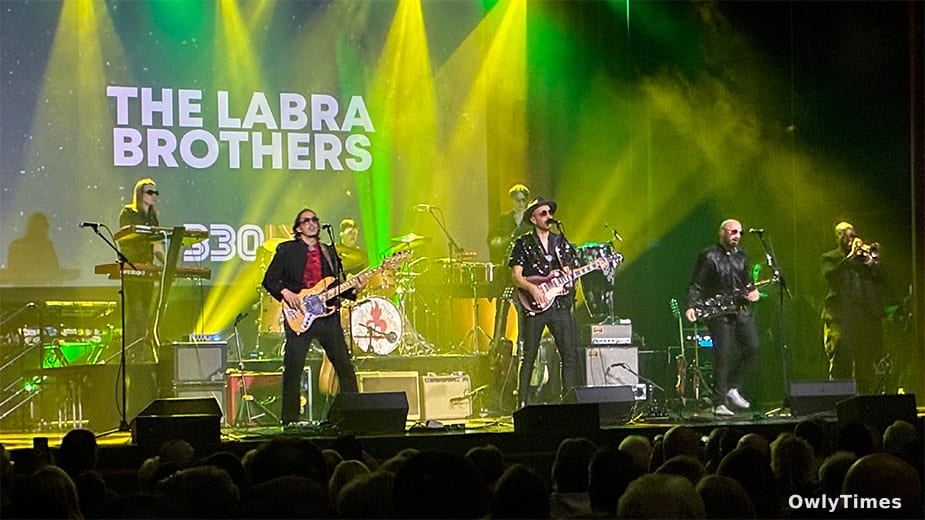

The Robins Theatre in Warren pulsed with a familiar energy Monday night, a sea of faces recognizing The Labra Brothers, Demos Papadimas, and Black Wolf & The Thief – mainstays of the Mahoning Valley music scene. But amidst the comfortable predictability of the 330 Day concert, presented by The Summit radio, a quiet disruption was brewing. Few in the roughly 800-person crowd knew the name Ceci Taylor before she took the stage, and that, it turned out, was entirely the point. In an era where artists meticulously cultivate online personas and pre-release hype, Taylor’s calculated anonymity wasn’t a marketing glitch, but a deliberate act of reclaiming the thrill of discovery – for both herself and her audience.
The 330 Day concert, an annual tradition held somewhere within the Akron-Canton or Youngstown-Warren areas, is more than just a showcase of local talent. It’s a barometer of the region’s cultural heartbeat, a celebration of community funded, in part, by dedicated supporters like Joe Feltes, honored at this year’s event by station manager Tommy Bruno. Feltes, a long-time advocate for The Summit through his work with the Friends of the Summit nonprofit, embodies a quiet, consistent investment in the arts that’s becoming increasingly rare. Public radio, particularly in smaller markets, relies on this kind of sustained support – The Summit’s fundraising efforts are a constant undercurrent to the celebratory atmosphere of events like 330 Day. But beyond the necessary acknowledgements of funding, the night highlighted a different kind of investment: the risk of platforming an unknown artist.
See the original businessjournaldaily.com story for the full account.
Ceci Taylor’s three-song set wasn’t just a performance; it was a statement. The Akron-area native, drawing clear influence from powerhouses like Taylor Swift, Kelly Clarkson, and Pat Benatar, delivered a country-Americana sound with a raw, urgent energy. In a music landscape dominated by algorithms and pre-packaged stars, Taylor’s emergence felt…different. While established artists like Third Day, reuniting for a 30-city arena tour and playing to a likely sold-out crowd at Covelli Centre this weekend, benefit from decades of brand recognition, Taylor was building something from the ground up, one captivated listener at a time. The contrast is stark: a legacy act relying on nostalgia versus a rising artist betting on the power of a genuine connection.
This isn’t simply a story about a local artist “making it.” It’s a reflection of a broader tension within the music industry. Streaming services have democratized music distribution, but they’ve also created an overwhelming glut of content, making it harder than ever for artists to break through the noise. The traditional gatekeepers – record labels, radio programmers – have lost some of their power, but they haven’t disappeared entirely. The Summit, by intentionally placing Taylor on the 330 Day bill, acted as a new kind of gatekeeper, one prioritizing artistic potential over pre-existing metrics. This is a crucial distinction. In 2023, the average artist earned just $21,700 from streaming, according to a recent study by the Trichordist, highlighting the financial precarity facing most musicians. Opportunities like 330 Day, and the radio play that follows, are vital lifelines.
The evening wasn’t solely focused on new sounds. The finale, a collaborative rendition of Marvin Gaye’s “What’s Going On” featuring all the performers, including John Anthony of The Vindys, underscored the unifying power of music. It was a moment of collective catharsis, a reminder that even amidst political division and economic uncertainty – themes powerfully present in Gaye’s original song – music can still bring people together. Meanwhile, Youngstown’s First Fridays event, with its neon-themed science and music, and the traditional Dyngus Day celebrations, demonstrate the Mahoning Valley’s continued commitment to diverse cultural experiences. But the question lingers: will the momentum generated by a single, impactful performance translate into sustained support for artists like Ceci Taylor? Will radio stations and event organizers continue to take risks on the unknown, or will the industry default to the safety of established names? The future of local music, and the thrill of genuine discovery, may depend on the answer.