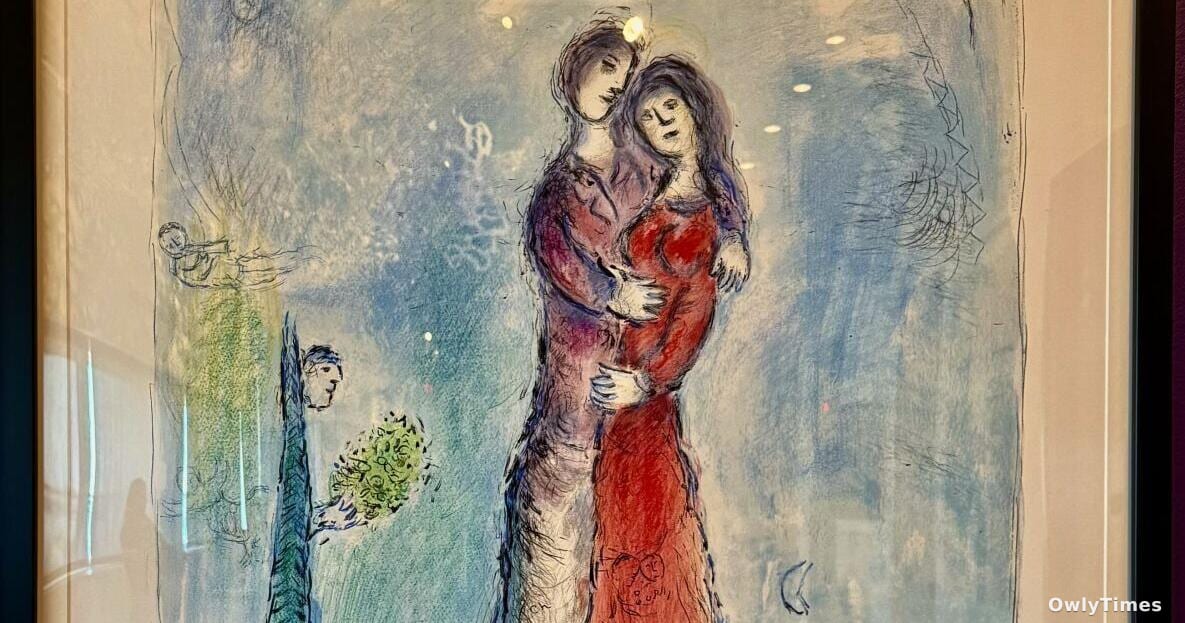

The champagne flutes clinked, a fragile counterpoint to the January chill still lingering in the Louisiana air, but inside the LSU Museum of Art, a different kind of warmth was taking hold. It wasn’t just the catered desserts or the convivial chatter; it was the sheer, unapologetic joy radiating from Marc Chagall’s lithographs, newly unveiled in the exhibit “Danphis and Chloe and Other Lovers,” running through May 24th. As I watched visitors – couples, friends, even solo wanderers – pause before the vibrant prints, a thought struck me: this isn’t just an art show, it’s a deliberate act of cultural resilience, a splash of color against a backdrop of increasingly gray times.
A Tradition of Light in Dark Months
The impulse to seek solace in art during the bleakest months isn’t new. Writer Danny Heitman recently recounted a Scottish tradition, born from the bequest of a shrewd art patron, Henry Vaughan. Vaughan stipulated that 38 watercolors by J.M.W. Turner be displayed every January at the National Gallery of Scotland, believing the weak winter light would best preserve them. But the effect was more profound: a vital dose of beauty during Scotland’s long, gray winters. This echoes a pattern Heitman himself follows, gifting himself museum visits for his January birthday, a conscious antidote to the “post-Yuletide blahs.” The LSU Museum of Art’s timing, shifting the celebration to Valentine’s Day this year, feels similarly intentional. It’s a recognition that, especially now, we need these spaces of beauty, these opportunities for collective uplift.
This piece references the NOLA.com report.
Beyond the Headlines: Art as Sustenance
The opening night felt particularly poignant given the current cultural climate. While the museum buzzed with conversation, news cycles churned with conflict and uncertainty. Rudolphe Sambou, consul general of France in New Orleans, underscored this point in his remarks, stating, “Culture is not an ornament for prosperous times.” He’s right. It’s easy to dismiss art as a luxury, a frivolous pursuit when more pressing concerns loom. But Sambou’s assertion – that culture is a “sustaining part of our shared humanity” – cuts to the core of why these exhibits matter. In 2022, the Dallas Museum of Art drew crowds with its Van Gogh exhibition, and last winter, the LSU Museum of Art showcased American Impressionists. These weren’t just popular events; they were moments of communal restoration, opportunities to reconnect with something larger than ourselves.
Chagall’s Legacy: Finding Joy in the Face of Suffering
Chagall’s work, in particular, feels uniquely suited to this moment. He lived a long life, marked by displacement and hardship, yet his art consistently radiates a sense of wonder and joy. The lithographs in “Danphis and Chloe and Other Lovers,” exploring themes of romantic love, aren’t naive or saccharine. They’re imbued with a deep understanding of life’s complexities, a recognition that even amidst pain, beauty can flourish. Museum director Mark Tullos’s simple statement – “I need this now. This puts me at peace” – speaks volumes. It’s a visceral response to art that doesn’t shy away from emotion, but instead embraces it, transforms it, and offers it back to us as a source of hope. The exhibit features “The Joy,” a lithograph from the Collection of the West Park Museum, prominently displayed in the museum’s foyer, serving as a beacon for visitors.
What’s Next for the Art World’s Role in Wellbeing?
The success of exhibits like this one – and the enduring tradition in Scotland – begs the question: are museums and art institutions actively considering their role in public wellbeing? Beyond simply displaying masterpieces, could they proactively program events designed to combat seasonal affective disorder or offer respite from overwhelming news cycles? The LSU Museum of Art’s choice to host the Chagall exhibit around Valentine’s Day is a small but significant step. But as societal anxieties continue to rise, and the need for connection and meaning becomes ever more acute, we should be asking: how can art institutions become not just repositories of beauty, but vital centers for emotional and spiritual nourishment? Will we see more museums intentionally scheduling uplifting exhibits during traditionally difficult months, or partnering with mental health organizations to offer art-based therapy programs? The answer, I suspect, will reveal a great deal about the future of art’s place in our lives.