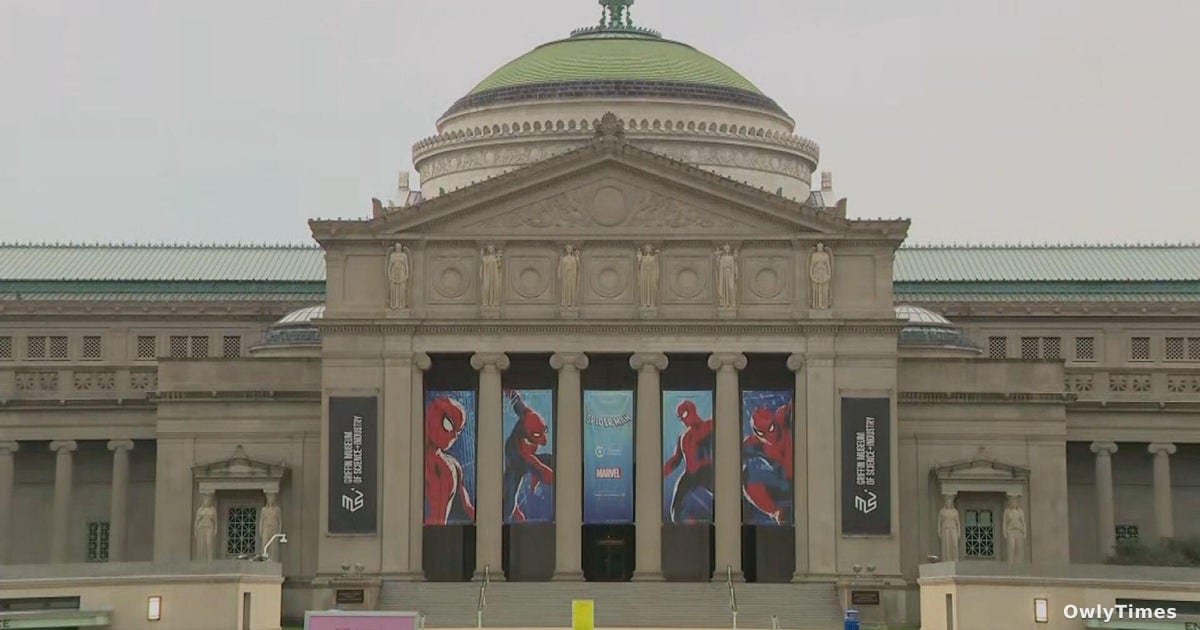

116 days is the new window of opportunity for the Griffin Museum of Science and Industry to capitalize on a cultural juggernaut. While the "Marvel's Spider-Man: Beyond Amazing" exhibition was originally slated to conclude its run this past Sunday, April 26, 2026, the museum’s decision to extend the display until Aug. 16 serves as a case study in how cultural institutions leverage high-demand intellectual property to drive foot traffic. Follow the money: in the museum business, extensions are rarely altruistic; they are a calculated response to sustained consumer interest and the operational necessity of maximizing the return on investment for a traveling exhibit that requires complex logistics to install and maintain.
The Economics of Immersive Branding
The exhibit, which first opened its doors in May 2025, represents a collaboration between Semmel Exhibitions and Marvel, with design work executed by the Berlin-based Studio TK. By extending the run, the Griffin MSI is effectively spreading the fixed costs of this international partnership over a longer period. For the museum, the "Beyond Amazing" exhibit functions as a high-margin product that sits atop the baseline of general admission. Because the exhibit mandates a timed entry ticket on top of the standard entrance fee, the museum is utilizing a tiered pricing strategy to capture additional revenue from its most engaged visitor segments.
Intellectual Property as a Cultural Anchor
The centerpiece of this attraction remains the 1962 comic "Amazing Fantasy #15," the origin point for the character created by artist Steve Ditko and writer Stan Lee. The inclusion of this specific artifact—which chronicles the transformation of Peter Parker following a radioactive spider bite—anchors the exhibition’s narrative. However, the exhibit’s commercial longevity is bolstered by its inclusion of more contemporary iterations, such as Miles Morales and Ghost-Spider, also known as Gwen Stacy. By featuring these diverse character incarnations, the exhibit captures multiple generations of fans, bridging the gap between the original 1962 source material and the modern landscape of TV, film, and video games.
Operational Scalability in Museum Exhibits
The logistical burden of hosting a traveling exhibition of this scale is significant, involving not just the physical security of rare comic books, but also the maintenance of film props and life-size statues. The decision to keep the exhibit in Chicago through mid-August suggests that the internal metrics—likely a combination of daily ticket velocity and average spend per visitor—have consistently exceeded the museum's initial projections. When institutions like the Griffin MSI extend a run, it indicates that the "per-square-foot" revenue generated by the Spider-Man exhibit is outperforming the potential revenue of whatever temporary installation would have replaced it.
The Investor Takeaway
For the casual visitor and the local stakeholder, this extension provides a measurable signal regarding the health of the museum’s current business model. If you are planning a visit, the necessity of a timed entry ticket means that supply is strictly capped, preventing the overcrowding that could diminish the experience. The next reading of the museum’s public attendance reports following the new August deadline will likely determine whether this model of "extended-run" pop-culture exhibits becomes a standard pillar of the Griffin MSI’s long-term financial strategy.





