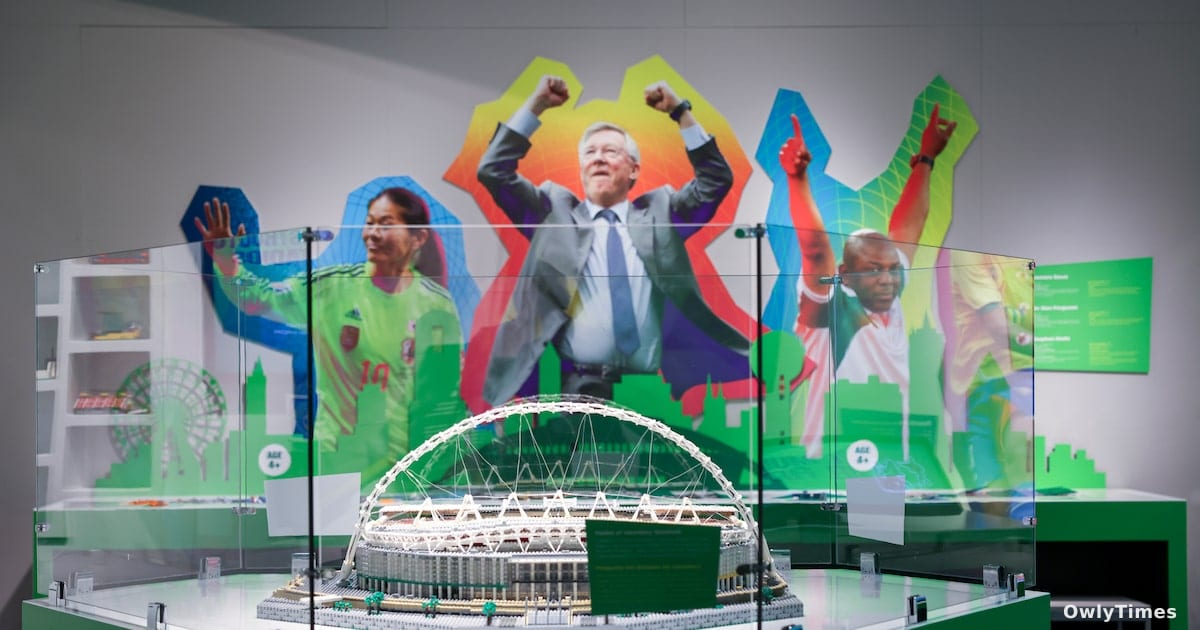

The anticipation surrounding the 2026 FIFA World Cup in Dallas isn’t solely about the spectacle on the field; it’s prompting a deeper look at the surprisingly complex science underpinning the world’s most popular sport. The new exhibition, “Soccer: More Than a Game,” opening March 7th at the Perot Museum of Nature and Science, isn’t simply a celebration of athletic prowess, but a deliberate attempt to dissect the biomechanics, psychology, and even the economic forces that shape the game. This timing is crucial. While many cities host sporting events, Dallas is uniquely positioned to leverage the World Cup as a catalyst for STEM engagement, and the Perot Museum’s exhibit represents a significant investment in that potential.
Beyond the Kick: Deconstructing Athletic Performance
The exhibition’s core strength lies in its commitment to experiential learning. Visitors aren’t presented with static displays, but rather with interactive stations designed to mimic the challenges faced by professional players. The “Coaching Lab for Excellence in Athletics, Technology and Science” (C.L.E.A.T.S.) is a prime example. Here, the presence of humanoid robots capable of playing soccer – on loan from Southlake-based RobotLab – isn’t a gimmick, but a demonstration of the advanced engineering and artificial intelligence increasingly used in athletic training and performance analysis. Linda Silver, the Perot’s chief executive officer, highlights the intention: to move beyond simply watching soccer to understanding how it works. This isn’t about replacing human athletes with robots, but about using robotic models to illustrate the intricate movements and calculations involved in even a single kick. The exhibit even allows visitors to compare their own jumping ability to that of Cristiano Ronaldo, whose recorded leap of nearly 10 feet during a match serves as a benchmark of elite athleticism.
Source material: dallasnews.com.
The Fan Experience as a Design Problem
While the physical demands of the sport are a central focus, “Soccer: More Than a Game” also acknowledges the crucial role of fan engagement. The exhibit dedicates space to the design of team mascots and jerseys, framing these elements not as mere branding exercises, but as deliberate attempts to cultivate loyalty and emotional connection. Visitors can design their own team jerseys, learning about the materials science involved in creating breathable, performance-enhancing fabrics. Similarly, the mascot design station encourages visitors to consider the psychological principles that make a character memorable and appealing. This is a subtle but important point: successful sports franchises aren’t built solely on athletic talent, but on a carefully constructed ecosystem of fan experience, and the exhibit rightly positions design as a critical component.
Data-Driven Immersion and Collaborative Origins
The visitor experience is further enhanced by the use of radio-frequency identification (RFID) bracelets. These bracelets track individual choices and progress throughout the 10,000-square-foot exhibition, creating a personalized learning journey. This data collection isn’t simply for novelty; it allows the Perot Museum to assess the effectiveness of different interactive elements and refine the exhibit over time. The exhibition’s origins also speak to a broader trend in museum curation: collaboration. The Perot Museum partnered with Mexico City’s Museo Interactivo de Economía to develop “Soccer: More Than a Game,” and a companion exhibition in Mexico will explore the cultural and economic impact of soccer across North America. This transatlantic collaboration underscores the global reach of the sport and the potential for museums to serve as platforms for cross-cultural understanding.
Limitations to Consider and Future Directions
It’s important to note that the exhibition, while comprehensive, necessarily simplifies complex scientific concepts. The biomechanical explanations, for example, are presented at a level accessible to a general audience, and may not fully capture the nuances of elite athletic performance. Furthermore, the focus on technology and design could inadvertently reinforce the idea that success in soccer is solely determined by these factors, overlooking the importance of factors like coaching, teamwork, and sheer determination. The exhibit also doesn’t directly address the controversies surrounding the 2026 World Cup, such as concerns about labor practices and environmental sustainability.
Looking ahead, the Perot Museum’s work raises a compelling question: how can museums proactively leverage major sporting events to promote STEM education and civic engagement? The simultaneous “Minerals of the World Cup” exhibit, showcasing gems from competing nations, demonstrates a willingness to expand the scope of the exhibit beyond the purely athletic. Future research should focus on evaluating the long-term impact of these immersive experiences on visitor knowledge and attitudes towards science and technology. Will exposure to the science of soccer inspire a new generation of engineers, designers, and athletes? That’s a question worth tracking as Dallas prepares to host the world.





