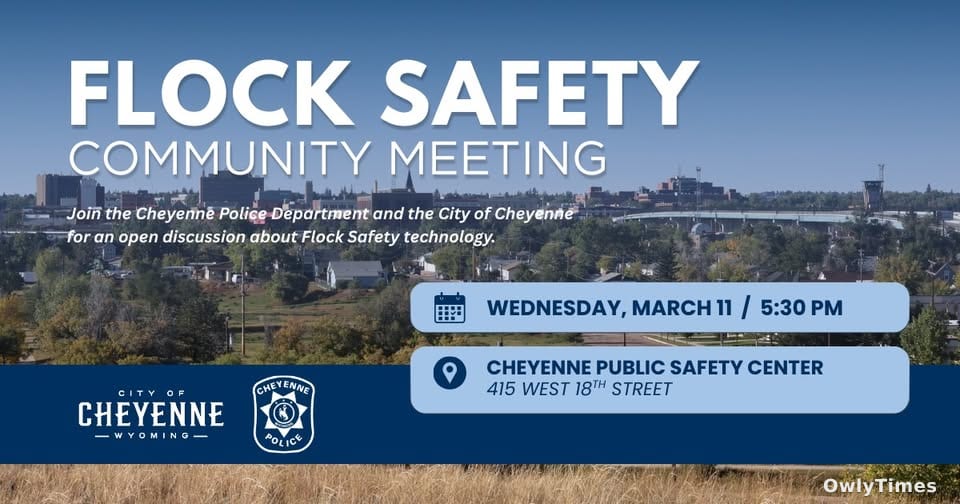

Is your car’s license plate about to become part of a city-wide surveillance network? That’s the question Cheyenne residents should be asking themselves, and frankly, it’s a question every American should be considering as these “safety” systems quietly proliferate. The Cheyenne Police Department’s upcoming community meeting about its Flock Safety Automatic License Plate Reader (ALPR) technology isn’t about transparency; it’s about damage control. The real story here isn’t about explaining how the system works – it’s about who controls the data, how it’s used beyond stated crime-fighting purposes, and the chilling effect constant surveillance has on a free society.
Beyond Amber Alerts: The Expanding Scope of License Plate Readers
The CPD’s release frames Flock Safety as a tool for recovering stolen vehicles and assisting in Amber Alerts, a narrative that’s undeniably appealing. And it’s true, ALPRs can be useful in those scenarios. But the system’s capabilities extend far beyond that. Flock Safety cameras, strategically placed throughout Cheyenne, don’t just scan license plates; they log the date, time, and location of every vehicle that passes. This data is then stored – for a minimum of 30 days, according to Flock Safety’s documentation, but potentially much longer depending on local policies – and accessible to not just the Cheyenne Police Department, but potentially other law enforcement agencies through data-sharing agreements. The CPD release doesn’t detail which agencies might gain access, a critical omission. We’re told the March 11th meeting will offer an “overview,” but overviews rarely delve into the granular details of data-sharing protocols.
This piece references the capcity.news report.
The Illusion of Consent and the Erosion of Privacy
The CPD is presenting this as a community dialogue, an “opportunity for residents…to share their thoughts.” But let’s be clear: the system is already operational. The cameras are already recording. The data is already being collected. This isn’t a vote on whether or not to implement ALPRs; it’s a post-implementation attempt to garner public acceptance. This tactic is increasingly common. Cities are deploying these technologies with minimal public debate, then holding meetings like this one to address concerns after the fact. The implication is that if you don’t attend, you don’t care about safety. If you do attend and raise concerns, you’re framed as obstructing law enforcement. It’s a remarkably effective way to silence dissent. The CPD’s website offers more information, but it’s largely marketing material from Flock Safety itself, not an independent assessment of the technology’s risks and benefits.
The Business of Surveillance: How Flock Safety Profits from Policing
It’s also crucial to understand the financial incentives at play. Flock Safety isn’t a non-profit charity; it’s a rapidly growing, venture capital-backed company. In 2023, the company secured a $45 million Series C funding round, bringing its total funding to $118 million. Their business model relies on selling surveillance technology to municipalities, and the more cities that adopt their systems, the more profitable they become. This creates a perverse incentive to expand surveillance, regardless of whether it’s demonstrably effective at reducing crime. The CPD’s investment in Flock Safety – the exact cost isn’t publicly available – directly contributes to the company’s bottom line. This isn’t about public safety; it’s about a private company profiting from the erosion of privacy. The CPD’s release doesn’t mention the cost of the system, or the ongoing maintenance fees, leaving residents in the dark about how their tax dollars are being spent.
What Happens When Every Move is Tracked?
The long-term consequences of normalizing this level of surveillance are profound. It chills free speech, discourages assembly, and creates a society where individuals are constantly aware of being watched. It’s not about having something to hide; it’s about the fundamental right to privacy. The CPD assures residents that the data is used responsibly, but history is littered with examples of surveillance technologies being abused. The potential for misuse – tracking political activists, monitoring religious gatherings, or targeting specific communities – is very real. The meeting on March 11th is a performative gesture, a way for the CPD to check a box and claim they engaged with the community. But the real work – demanding transparency, establishing clear data-usage policies, and protecting our fundamental rights – will happen after the meeting, and it will require sustained public pressure.
Here’s what to watch for: in the next six months, expect to see a surge in similar ALPR deployments in smaller cities across the country, marketed with the same promises of safety and convenience. The key question isn’t whether these systems will be effective at solving crimes, but whether we, as a society, are willing to trade our privacy for the illusion of security. And more importantly, whether we’ll even notice the trade is being made.





