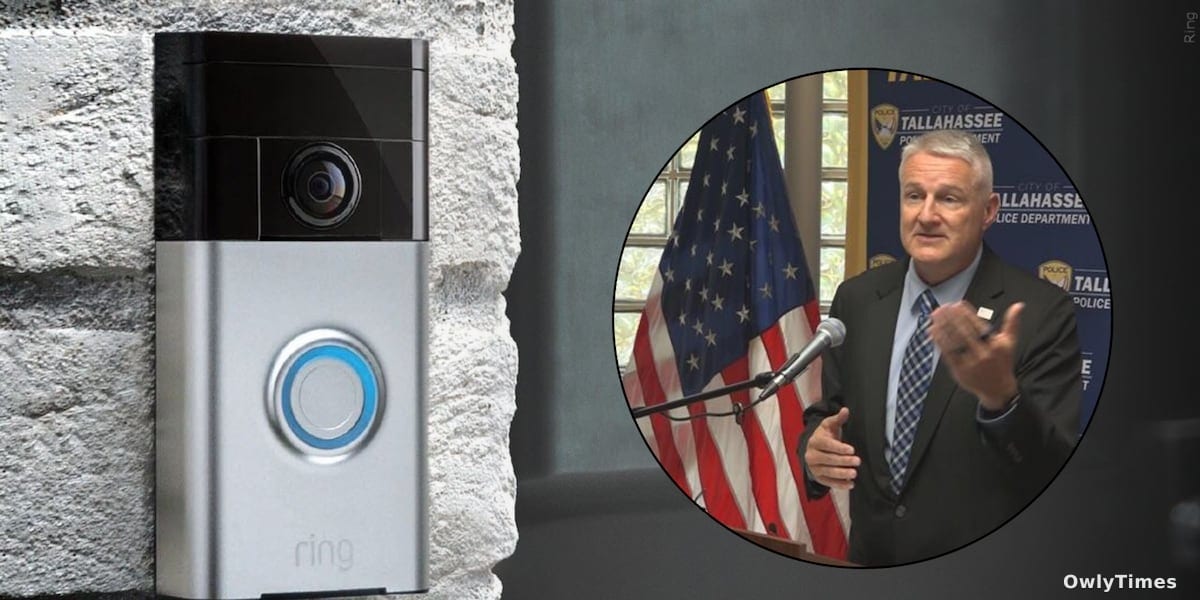

$350 is the entry point for Tallahassee businesses considering participation in the city’s new “Connect Tallahassee” program, a figure that underscores a calculated shift in local law enforcement strategy: outsourcing surveillance infrastructure to the private sector. Announced Friday, the program invites residents and business owners to voluntarily grant the Tallahassee Police Department (TPD) and partner agencies access to their security cameras, feeding into a newly established Real Time Crime Center (RTCC). While framed as a community safety initiative, the financial implications and potential for expanded surveillance warrant closer examination.
The core economic argument, as articulated by Jason Lowe, co-director of the RTCC, centers on cost avoidance. “So we believe we’ll get a very good return on investment as we go through that,” Lowe stated, referencing the savings from not having to “procure and trying to put up all the cameras ourselves.” This admission reveals a budgetary constraint driving the program – a tacit acknowledgement that traditional methods of public surveillance are becoming prohibitively expensive. To quantify this, consider that a single high-resolution public surveillance camera, including installation and ongoing maintenance, can easily cost upwards of $5,000 annually. The city’s ambition to achieve “100 percent” participation, as stated by Police Chief Lawrence Revell, suggests a potential offset of hundreds of thousands, if not millions, in capital expenditure.
However, the cost isn’t borne equally. While residential participation is free, businesses face a tiered fee structure starting at $350. This creates a two-tiered system where commercial entities effectively subsidize the surveillance network, raising questions about fairness and potential incentives. Businesses opting in gain “live access” to the RTCC, a benefit not extended to residential participants who will have footage requested after an incident. This preferential treatment could be interpreted as a form of security premium, effectively privatizing a component of public safety. The Leon County Sheriff’s Office, Florida Department of Law Enforcement, and Florida State University Police Department are also participating, broadening the scope of data collection and potential inter-agency sharing.
See the original wctv.tv story for the full account.
Initial concerns regarding Fourth Amendment rights, raised by Dr. Lee Bushong, a policing expert at Florida A&M University, appear to have been mitigated by the program’s voluntary nature. Bushong initially worried about potential overreach, but his concerns dissipated after confirming the opt-in requirement. However, the voluntary aspect doesn’t negate the potential for subtle coercion. The program’s success hinges on widespread adoption, and the implicit message – that participation enhances community safety – could pressure businesses, particularly those in high-crime areas, to enroll despite financial or philosophical objections. Furthermore, while a warrant is required to compel footage submission, the sheer volume of data collected through voluntary participation could create a chilling effect, discouraging individuals from exercising their right to privacy.
The program’s structure also mirrors a broader trend of “distributed surveillance,” where law enforcement relies increasingly on privately owned cameras. This shifts the burden of surveillance from the public sector to individuals and businesses, blurring the lines of accountability and potentially expanding the scope of data collection beyond what would be permissible through traditional means. The comparison to an “area canvas,” as described by Bushong, downplays the scale and permanence of this new system. A traditional canvas is a temporary investigation; Connect Tallahassee establishes a persistent, networked surveillance infrastructure.
What this means for your wallet: Tallahassee residents should anticipate increased pressure to participate in similar “voluntary” surveillance programs in the future. Businesses should carefully weigh the $350 entry cost against the perceived security benefits and consider the long-term implications of contributing to a privately funded, publicly accessible surveillance network. The key question moving forward is whether the promised “return on investment” in public safety justifies the erosion of privacy and the creation of a two-tiered security system. Watch for the program’s initial participation rates – a low uptake could signal a lack of community buy-in and force the city to reconsider its funding model.