
In the predawn hours of a Georgia morning, 26-year-old information technology administrator Ashton Jones downed a Red Bull to stay awake for a 3 a.m. screening of The Odyssey. He wasn't alone in his exhaustion or his fervor. From the projection booth of a Michigan theater where one family drove 900 miles round trip to witness the spectacle, to the sold-out BFI Imax in London, director Christopher Nolan’s latest epic has sparked a global frenzy that transcends the typical moviegoing experience, turning the act of watching a film into a high-stakes endurance test.
Beyond the headlines of box-office dominance, the true story of The Odyssey is a tale of analog obsession. According to CNBC, the film has transformed the hard-to-find Imax 70mm format into the "crème de la crème" of cinema, with tickets fetching an average of $27.77—an 81% premium over standard admissions. As WIRED notes, this is the first feature film shot entirely on Imax film with Imax cameras, creating a 1.43:1 aspect ratio that offers a sharpness and immersion digital formats have yet to replicate.
A Quest for the Physical Print
The scarcity is manufactured by necessity. Imax CEO Richard Gelfond admitted to CNBC that the company cannot simply produce more 70mm projectors, as the specialized parts are largely no longer in production. This leaves only 41 theaters globally—25 in the United States—capable of projecting the film in its intended format, as reported by WIRED. For fans, the result is a "FOMO" (fear of missing out) culture that mimics the frantic ticket-buying cycles of global concert tours, with some theaters selling seats a year in advance.
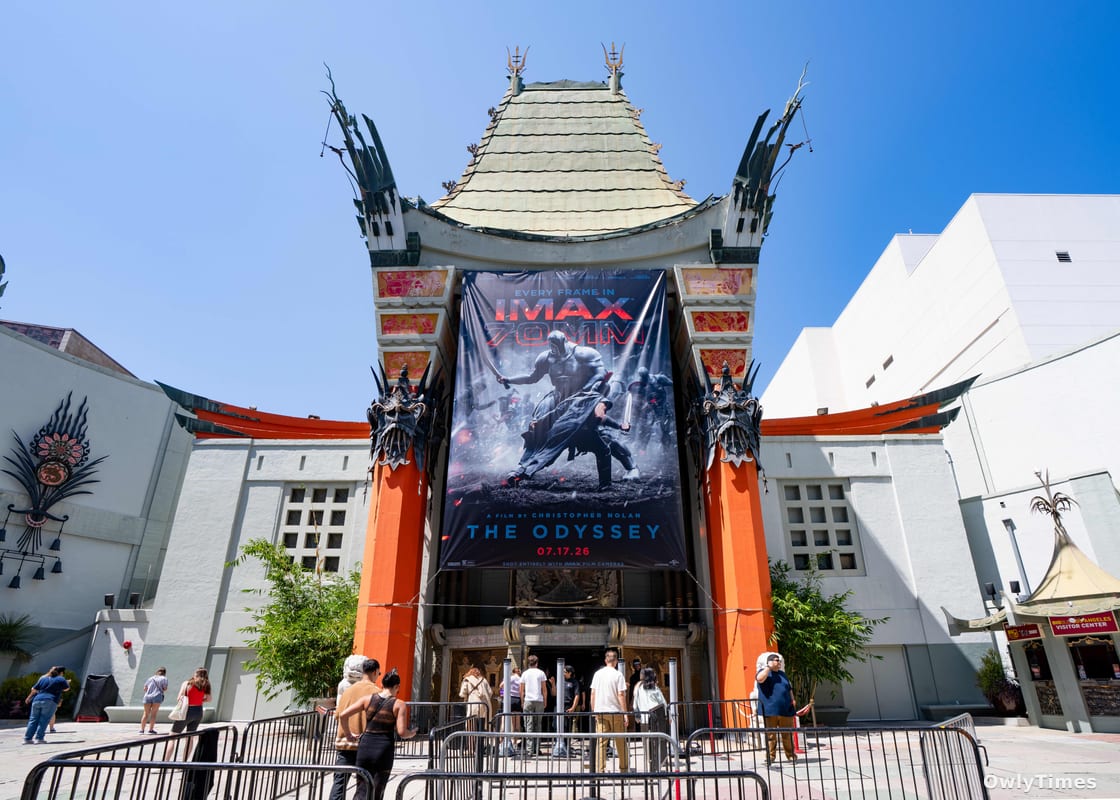
The demand has translated into staggering financial performance. Deadline reports that The Odyssey is projected to hit a second-weekend gross of $84.5 million, marking the highest second-weekend total for a Nolan film, surpassing the 2008 benchmark set by The Dark Knight. At the historic TCL Chinese Theatre, the film has already become the venue's all-time highest-grossing movie, raking in $2.48 million and edging out the previous record-holder, Oppenheimer.
The Nolan Touch and the Human Cost
While the technical achievement is clear, the film’s narrative choices have invited deeper scrutiny. In an analysis for The Guardian, Charlotte Higgins observes that Nolan has traded the "delicious darkness" and wit of the original Homeric epic for a more modern, guilt-laden interpretation. Starring Matt Damon as a "grim and agonised" Odysseus, the film diverges from the source material by largely stripping away the Olympian gods and shifting the focus to human motivation.
This intensity was mirrored behind the camera. CBS News recounts that the production was a logistical gauntlet, filmed across six countries with a cast including Anne Hathaway, Zendaya, and Tom Holland. "It felt in a lot of ways more like an expedition than a movie," Damon told CBS Mornings. The technical constraints of 70mm film—which requires a physical reload every three minutes—forced actors to maintain peak emotional intensity during grueling, real-world conditions on the water.
Why This Moment Matters
The success of The Odyssey signals a pivotal shift in the industry: a "premium large format" revival where a minority of specialized screens are driving the majority of a tentpole's gross. As Deadline points out, this proves that blockbuster success no longer requires a massive 4,000-plus theater footprint to be profitable. By betting on the prestige of the analog experience, Nolan and his studio have successfully argued that if you create an experience that cannot be replicated at home, the audience will follow—even if it means driving 900 miles or staying awake until dawn to catch a showing.