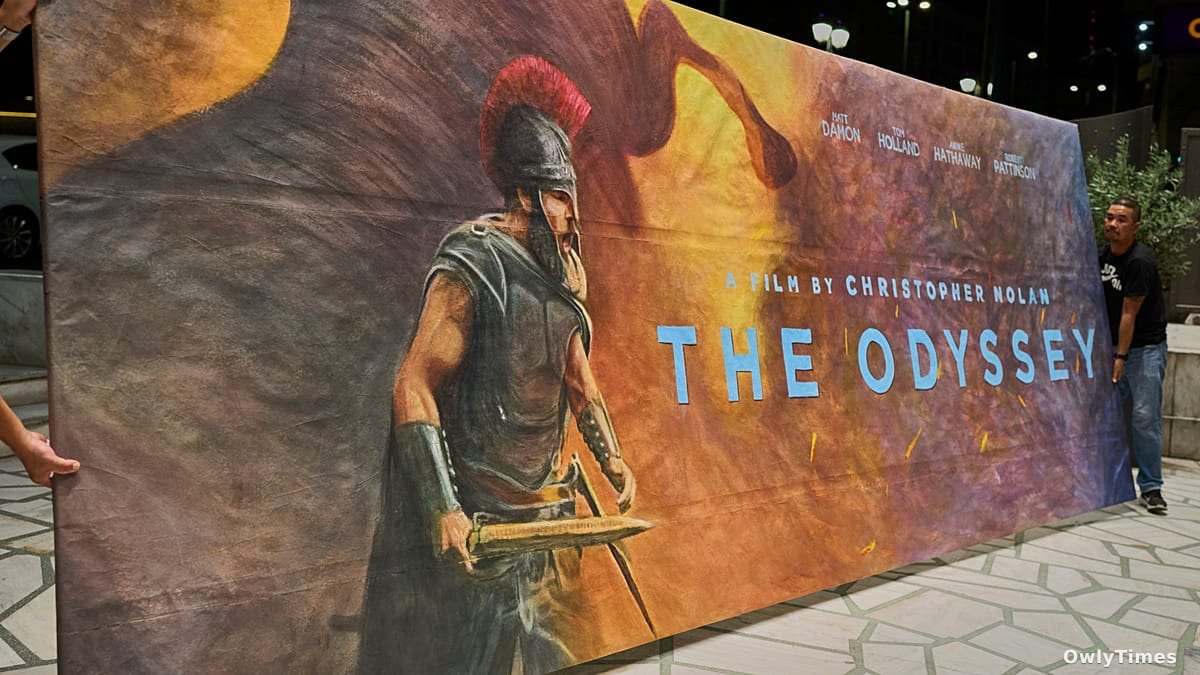

If we treat the history of cinema as a series of long-distance voyages, is Christopher Nolan’s latest endeavor a masterpiece of navigation or a ship destined for the rocks? The real story here isn't the predictable online outrage over casting choices — it’s the fact that a $250 million blockbuster has been tasked with proving that a 2,700-year-old poem can still serve as a mirror for our own fragile era of civilizational anxiety.
As reported by The Guardian, the film is a direct descendant of the success of Oppenheimer, with the director noting that he only secured the massive budget for such a high-risk adaptation after the momentum of his previous Oscar-sweeping hit. While Euronews confirms the film’s worldwide release today, July 17, 2026, the reception has been predictably polarized. The criticism, however, has diverged sharply between online culture warriors and actual audiences in the film’s spiritual home.
In the United States, figures like Elon Musk and commentator Matt Walsh decried the casting of Lupita Nyong’o as Helen of Troy, labeling the production as "woke," according to The Independent. Rolling Stone notes that this backlash occurred before critics or the public had even seen the film. In Greece, however, the reception has been markedly different. The small nationalist party Niki did protest the government’s decision to provide roughly 6 million euros ($6.9 million) in subsidies for the film, as reported by The Independent. Yet, as Culture Minister Lina Mendoni stated, the state does not dictate artistic interpretation, a sentiment that resonates in a country where foreigners like Brad Pitt and Gerard Butler have long played iconic Greek figures without sparking national scandal.
The film’s technical ambition is undisputed, with The Guardian highlighting the grueling six-month shoot that required crews to haul 300lb (136kg) IMAX cameras across mountains and Arctic landscapes. Euronews praises the “monumental technical achievement” and Ludwig Göransson’s “throbbing score,” though it notes that the film occasionally feels like a “dutiful α to β to γ trip,” lacking the emotional breathing room one might expect from such a sprawling odyssey.
For the ordinary viewer, the film functions less like a history lesson and more like a warning. Rolling Stone argues that Nolan uses the fall of Troy to mirror the real-world collapse of the Bronze Age, drawing parallels to the climate and trade instability described in Eric H. Cline’s 1177 B.C.: The Year Civilization Collapsed. Whether or not the audience connects with these heavy themes of guilt and societal trauma remains the primary hurdle for the film’s commercial viability.
We will see if this "Hail Mary" of a project lands, as the global box office receipts in the coming weeks will determine if this massive investment was a visionary success or a cautionary tale about the limits of blockbuster ambition.