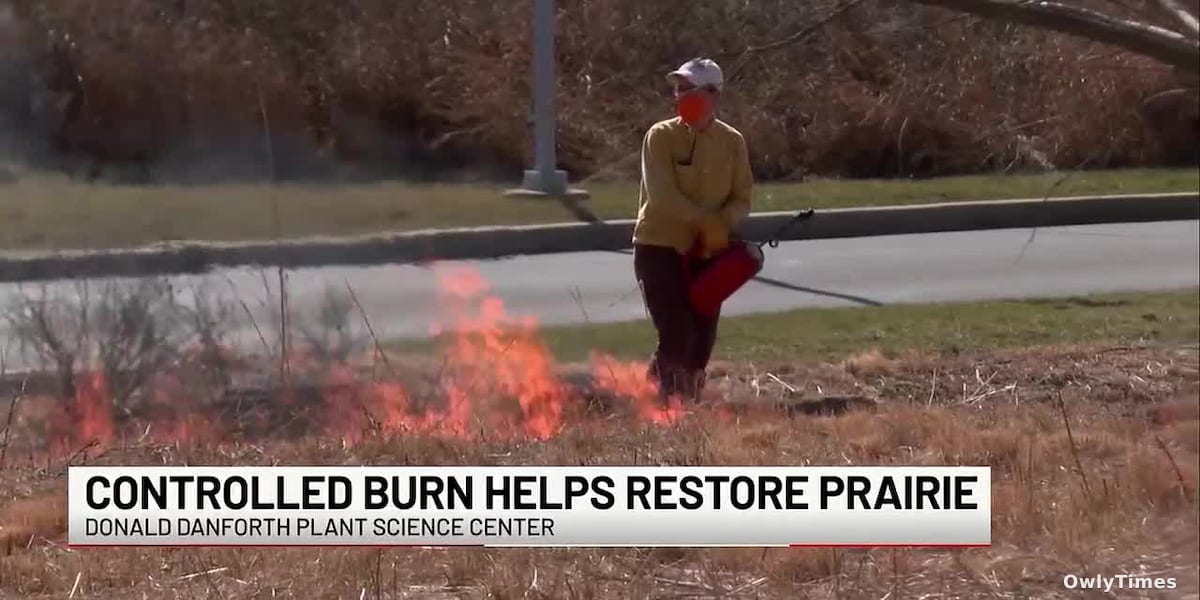

The seemingly paradoxical act of setting fire to land is, in specific ecological contexts, a powerful tool for renewal. This isn’t about destruction, but a carefully orchestrated intervention—a practice increasingly recognized as vital for maintaining the health of ecosystems like Missouri’s prairies. On Saturday, February 21st, 2026, the Donald Danforth Plant Science Center in Creve Coeur demonstrated this principle with a controlled burn of six acres, a move that speaks to a growing shift in land management philosophies and a deeper understanding of prairie ecology. While initial reports might focus on the visual spectacle of fire, the significance lies in the complex biological processes ignited by the flames, and the implications for biodiversity in a rapidly changing climate.
Beyond the Smoke: How Fire Shapes Prairie Life
For decades, fire suppression was the dominant strategy in land management, stemming from a cultural aversion to wildfires and a belief that all fire was inherently damaging. However, prairies, and many other ecosystems globally, evolved with fire. Native prairie plants possess adaptations – thick root systems, rapid regrowth capabilities – that allow them to not only survive but thrive after a burn. The Danforth Center’s controlled fire wasn’t a random event, but a deliberate attempt to mimic these natural processes. According to the center, the primary goal was to curb “woody encroachment,” the gradual takeover of prairie land by trees and shrubs. This encroachment isn’t simply an aesthetic issue; it fundamentally alters the habitat, shading out sun-loving prairie plants and reducing biodiversity. Invasive plant species also benefit from the absence of fire, outcompeting native flora.
Reporting from firstalert4.com informs this analysis.
The benefits extend beyond simply clearing space for desired plants. Fire plays a crucial role in nutrient cycling. Prairie plants accumulate dead organic matter – leaves, stems, roots – throughout the growing season. Burning rapidly releases these nutrients back into the soil in a readily available form, essentially providing a natural fertilizer boost. This is particularly important in prairies, where soil nutrients can be relatively low. Furthermore, the altered landscape created by fire provides varied habitats for wildlife, supporting a greater diversity of species. The Danforth Center specifically highlighted the support of native plant diversity and wildlife habitat as key outcomes of the burn.
A Six-Acre Experiment, A Larger Ecological Question
It’s important to note that the Danforth Center’s burn encompassed just six acres. While impactful for that specific plot, it’s a relatively small-scale intervention in the context of the broader Missouri prairie landscape, which has been reduced to less than one percent of its original extent. This raises a critical question: can controlled burns, even when scaled up, truly reverse the decades of ecological damage caused by fire suppression and habitat fragmentation? The success of this practice isn’t solely about if fire is beneficial, but how it’s implemented. Factors like burn frequency, intensity, and timing are all crucial, and must be tailored to the specific prairie type and its current condition. A poorly executed burn can do more harm than good, potentially damaging sensitive species or promoting the spread of invasive plants.
Limitations to Consider: Scale and Long-Term Monitoring
The data currently available from the Danforth Center focuses on the immediate rationale for the burn and anticipated benefits. However, a comprehensive assessment requires long-term monitoring. We need to know not just that a burn occurred, but what changes in plant community composition, wildlife populations, and soil health result over years, even decades. This kind of longitudinal data is expensive and time-consuming to collect, and often underfunded. Another limitation is the inherent variability of natural systems. Prairie ecosystems are influenced by a multitude of factors – rainfall, temperature, grazing pressure – making it difficult to isolate the specific effects of fire. Establishing robust control groups (unburned prairie plots) is essential for accurate comparison, but logistically challenging.
The Future of Prairie Restoration: From Demonstration to Widespread Practice
The Danforth Center’s controlled burn isn’t an isolated incident. Land managers across the Midwest are increasingly incorporating prescribed fire into their restoration efforts. The next crucial research step is to refine these practices, developing predictive models that can optimize burn parameters for different prairie types and management goals. Specifically, researchers need to investigate the interplay between fire, grazing, and invasive species control. Can strategically timed grazing before a burn enhance its effectiveness in reducing fuel loads and promoting native plant regrowth? What are the long-term consequences of repeated burns on soil carbon sequestration? As climate change intensifies, with more frequent and severe droughts, understanding the role of fire in maintaining prairie resilience will become even more critical. We should be watching for data on how these controlled burns impact carbon storage in prairie soils – will they enhance or diminish this vital ecosystem service? The answer will shape the future of prairie conservation in a warming world.





