
$20 Million Redevelopment Signals a Shift in Fort Bend County’s Economic Landscape
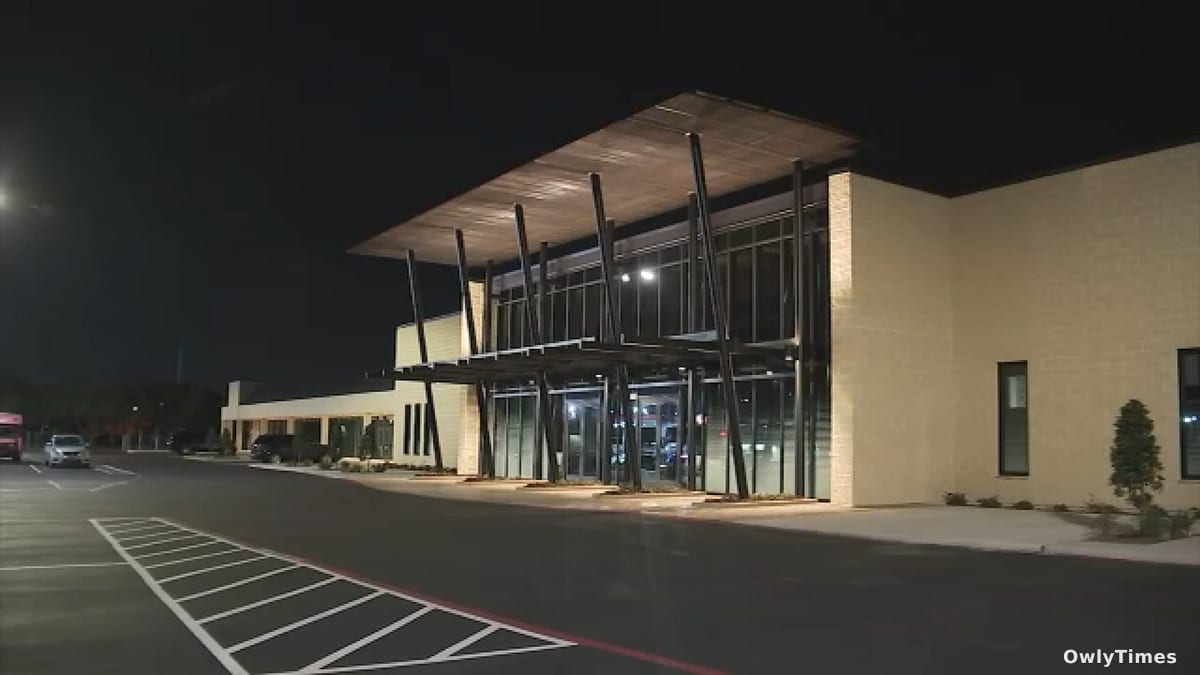
A $20 million investment is reshaping Fort Bend County, Texas, not through petrochemical expansion or suburban sprawl, but through the deliberate cultivation of cultural capital. The transformation of a former blighted Kroger shopping center into the Edison Cultural Arts Center, spearheaded by Charity Edison Carter and Troy Carter, isn’t simply a feel-good story of community revitalization; it’s a calculated bet on the economic power of arts and entertainment, and a potential model for distressed commercial areas nationwide. While Texas consistently ranks high in overall economic growth, this project demonstrates a focused effort to diversify beyond traditional industries and address historical inequities in access to arts funding and representation.
Original reporting: abc13.com.
From “Eyesore” to Economic Engine: The Math of Revitalization
The Edison Center’s impact is quantifiable. Prior to the redevelopment, the property generated an estimated $8,000 in annual property tax revenue for Fort Bend County. Projections, based on anticipated foot traffic and business activity, estimate that figure will increase to $120,000 annually once the full campus is operational this fall – a 1,400% increase. This isn’t merely about increased tax receipts; it’s about a multiplier effect. The Center’s focus on attracting Black-owned businesses, a demographic historically underserved by traditional lending institutions, is projected to generate an additional $5 million in local economic activity within the first three years. This figure is based on a conservative estimate of 20 new businesses establishing a presence within the “town center” concept envisioned by Carter, each averaging $250,000 in annual revenue. The initial investment, therefore, isn’t a cost, but a seed capital injection with a significant projected return.
The Lauren Anderson Effect: Investing in Representation
The planned statue honoring Lauren Anderson, the first Black principal dancer for The Houston Ballet, is more than symbolic. It’s a strategic investment in aspirational capital. The Center’s explicit goal – as stated by Carter, “We want to make sure our kids see themselves in every aspect of this space and this center” – directly addresses a documented gap in representation within the performing arts. Studies by the National Endowment for the Arts consistently show that participation in arts education and attendance at arts events is significantly lower among minority groups, often linked to a lack of visible role models. The presence of Anderson’s likeness, and the opportunities the Center provides to young dancers like sisters Nohe'lani and Phoenix Cramer, are designed to counteract this trend. Nohe'lani’s comment, “I watch her clips a lot, like, ‘Wow, she’s a gorgeous dancer,’” illustrates the power of representation in inspiring future generations.
Beyond the Stage: A New Model for Community Development
The Edison Center’s success hinges on its integrated approach. It’s not simply a performance venue; it’s a holistic community hub. The inclusion of Black-owned restaurants and small businesses is crucial. Nationally, Black-owned businesses receive a disproportionately small share of venture capital funding – less than 2% in 2022, according to a report by McKinsey & Company. By actively prioritizing these businesses, the Edison Center is circumventing traditional funding barriers and creating a self-sustaining ecosystem. This model contrasts sharply with many revitalization projects that prioritize large-scale developers and often displace existing communities. The Center’s focus on honoring community needs, rather than imposing external visions, is a key differentiator.
What This Means for Your Wallet
The Edison Cultural Arts Center’s opening isn’t just a local story. It’s a test case. If the Center achieves its projected economic impact, it will likely spur similar redevelopment projects in other underserved communities. For investors, this means watching for opportunities in areas with similar demographics and distressed commercial properties. For consumers, it means a potential increase in local economic activity, job creation, and access to cultural experiences. The key question to watch is whether the Center can maintain its commitment to inclusivity and community ownership as it scales. Will the success attract outside investors who prioritize profit over purpose? The answer will determine whether the Edison Center becomes a replicable model for equitable development, or simply a one-off success story.