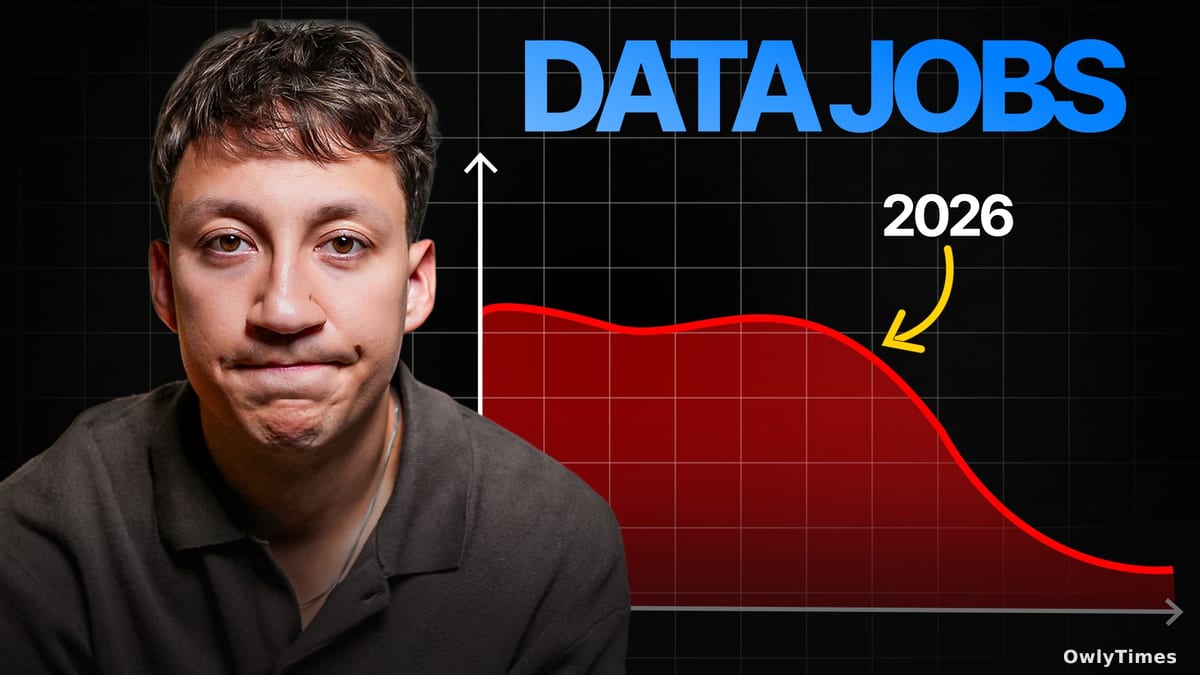

The Persistent Paradox of the Data Science Job Market
For the past five years, headlines have periodically declared the “death of data science.” From anxieties in 2018 to the tech layoffs of 2022-2023, the narrative of a cooling job market has been remarkably consistent. Yet, despite these recurring pronouncements, data science isn’t disappearing; it’s undergoing a fundamental shift. The current situation isn’t a simple decline, but a complex evolution where the type of data science role is changing faster than the overall number of positions. Understanding this nuance is crucial, because focusing solely on layoff numbers – like the nearly 90,000 tech employees laid off in January 2023 alone, as reported by TechCrunch – paints a misleading picture.
Reporting from towardsdatascience.com informs this analysis.
A recent study by 365datascience supports this. While widespread layoffs dominated the news cycle, their analysis of affected employees revealed that data scientists were disproportionately less impacted than other tech roles. The largest group of laid-off employees worked in HR & Talent Sourcing (27.8%), followed by software engineers (22.1%). Marketing, customer service, and PR roles accounted for a further 11.7% combined. Notably, only 2.7% of those laid off from Amazon during this period held the title of “data scientist.” This suggests the narrative of a data science collapse was, at least partially, a misattribution of broader tech industry corrections. It’s not that data science jobs vanished, but that the cuts were concentrated elsewhere.
This apparent contradiction – a feeling of increased competition alongside positive job posting trends – is resolved when we look at the growth in demand for specific data science specializations. Data science job postings, after reaching a low point in July 2023, experienced a remarkable 130% year-over-year increase, while data analyst openings grew by 63% in the same timeframe. This surge isn’t simply a return to previous levels; it indicates a re-calibration of what companies are looking for. The “generalist” data scientist – the Swiss Army knife capable of handling everything from data cleaning to model deployment – is becoming less valuable. Instead, companies are seeking specialists with focused expertise.
The evolution of the data science role has fragmented the field into three primary flavors: analysts, engineers, and infrastructure specialists (often data engineers). Data analysts focus on business reporting and experimentation, delivering insights through data visualization and recommendations. Data engineers build and maintain the data infrastructure, ensuring data is accessible and reliable. And machine learning engineers – a role increasingly distinct from the traditional “data scientist” title – focus on deploying and scaling machine learning solutions. This specialization is a direct response to companies realizing they weren’t getting a return on investment from the earlier, broad-scope approach. They’ve become more stringent about roles and responsibilities to maximize efficiency.
However, this shift presents a significant challenge for those entering the field. A study examining 285,000 companies between 2015 and 2025, and the impact of GenAI adoption on hiring, reveals a concerning trend: while hiring for senior data science positions continues to increase, hiring for junior positions is decreasing. This makes intuitive sense; the tasks typically assigned to junior data scientists are more readily automated by advancements in artificial intelligence. It’s not that junior positions are disappearing entirely, but the rate of new postings is slowing, creating a more competitive landscape. The supply of entry-level candidates remains high while the demand for those specific roles plateaus.
This isn’t a signal to abandon a data science career, but a call for strategic adaptation. The days of landing a job with basic Python, SQL, and an introductory machine learning course are over. Those skills are now table stakes. To differentiate yourself, aspiring data scientists need to specialize in emerging domains like Generative AI, model deployment, time series forecasting, or recommendation systems. Equally important is developing domain-specific expertise – understanding the nuances of a particular industry. But technical skills alone aren’t enough. The skills AI cannot easily replicate – effective communication, business acumen, critical thinking, and strong foundational knowledge in mathematics and statistics – are becoming increasingly valuable.
Furthermore, networking and building genuine relationships within the field are paramount. It’s not simply what you know, but who knows you and values your expertise. Referrals and a strong professional network are, as many in the industry attest, the “golden ticket” to securing top-tier data science positions. This requires proactive effort, stepping outside your comfort zone to connect with individuals and build trust. The reality is that data scientists will likely need to reinvent themselves every 3-5 years to stay relevant in this rapidly evolving field.
The question isn’t “Is data science dying?” but rather, “Are you prepared to evolve with data science?” The field is in constant flux, and those willing to embrace continuous learning and specialization will be best positioned to thrive. Looking ahead, we should be watching for the emergence of new specialized roles driven by advancements in AI and the increasing demand for data-driven decision-making. Specifically, will companies begin to prioritize “AI integration specialists” – professionals who can bridge the gap between data science models and existing business processes – and how will this impact the demand for traditional data science roles? The answer to that question will likely define the next chapter in the ongoing evolution of this dynamic field.