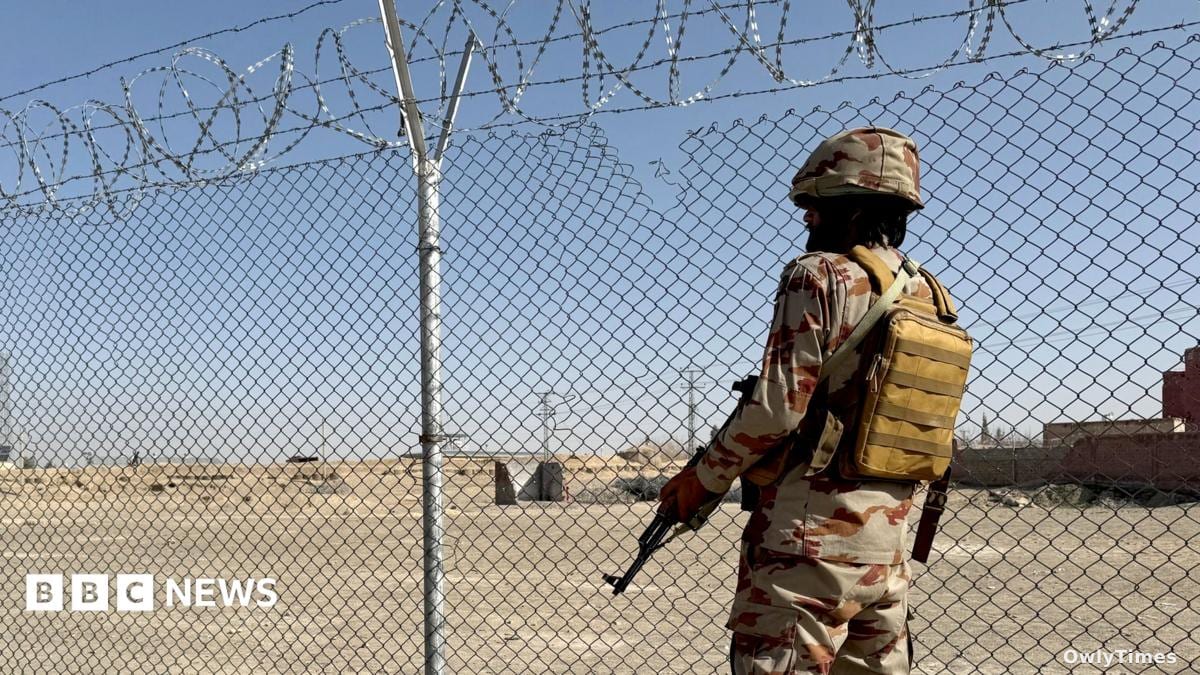

Is it possible for a border to be both a physical line on a map and a digital front line for modern warfare? We often talk about tech-enabled surveillance and precision strikes as surgical tools that minimize "collateral damage," but the reality on the ground rarely matches the glossy brochures of defense contractors. The real story here isn't just the latest geopolitical friction between two neighboring states—it’s how the lack of a shared digital and intelligence truth is turning localized skirmishes into a cycle of escalating, high-velocity violence.
A Tale of Two Narratives
The divergence in reporting on this weekend’s military activity highlights a dangerous disconnect in how information is weaponized. According to CBS News, Pakistani security forces conducted a ground operation followed by "calibrated strikes" that allegedly killed 29 fighters. Conversely, The Guardian and NPR report that Afghanistan’s Taliban government claims the strikes resulted in 36 civilian deaths and over 160 injuries.
While Pakistan’s information minister, Attaullah Tarar, asserts that these operations targeted the hideouts of groups like Jamaat-ul-Ahrar and Fitna al-Khawarij—a term Pakistan uses for the Tehrik-e-Taliban Pakistan (TTP)—the Afghan Taliban spokespeople, including Hamdullah Fitrat, paint a picture of devastating impact on residential homes in the Paktia, Paktika, and Kunar provinces. The BBC notes that it has not been able to independently verify either the casualty figures or the specific nature of the targets, underscoring the "fog of war" that persists even in an era of satellite imagery and real-time social media documentation.
The Karachi Catalyst
The immediate trigger for these strikes was a deadly assault on the regional headquarters of the Pakistan Rangers in Karachi. Both The Guardian and CBS News confirm that three soldiers were killed in that attack, with three militants also killed and one wounded assailant captured. The Pakistani military identified the captured individual as an Afghan national, a detail that served as the primary justification for the subsequent cross-border retaliation.
For the average citizen in either country, these shifts are felt not through policy white papers, but through the closing of borders and the sudden, unpredictable disruption of regional stability. The escalation is a stark reminder that when intelligence-based operations rely on contested narratives, the "precision" claimed by state actors is rarely perceived as such by the populations caught in the crossfire.
When Precision Fails
The operational methodology described by officials creates a harrowing feedback loop. According to NPR, Taliban officials claim that an area in Paktia province was struck a second time after residents had gathered to rescue victims from the initial blast. This tactic—often referred to in military theory as "double-tap" strikes—is essentially a weaponization of humanitarian impulse, where the act of providing aid becomes a liability.
The diplomatic fallout is equally severe. The Guardian reports that Pakistan’s army chief, Field Marshal Asim Munir, previously stated that peace could only prevail if the Taliban renounced support for terrorism. Meanwhile, NPR notes that Afghanistan has summoned Pakistan’s diplomats to protest the violation of their airspace, while India—drawn into the rhetoric by Pakistani claims of foreign support for militants—has dismissed these allegations as "baseless."
The next major signal to watch for is the response of the regional powers who have previously attempted to broker truces. With previous mediation efforts by China and Saudi Arabia failing to hold, the current cycle of "calibrated" violence suggests that the next trigger will likely be a formal, state-level retaliatory action, as suggested by the deputy minister of information for the Taliban, Hayatullah Mohajer Farahi, who explicitly stated that Afghanistan would respond "in due time."