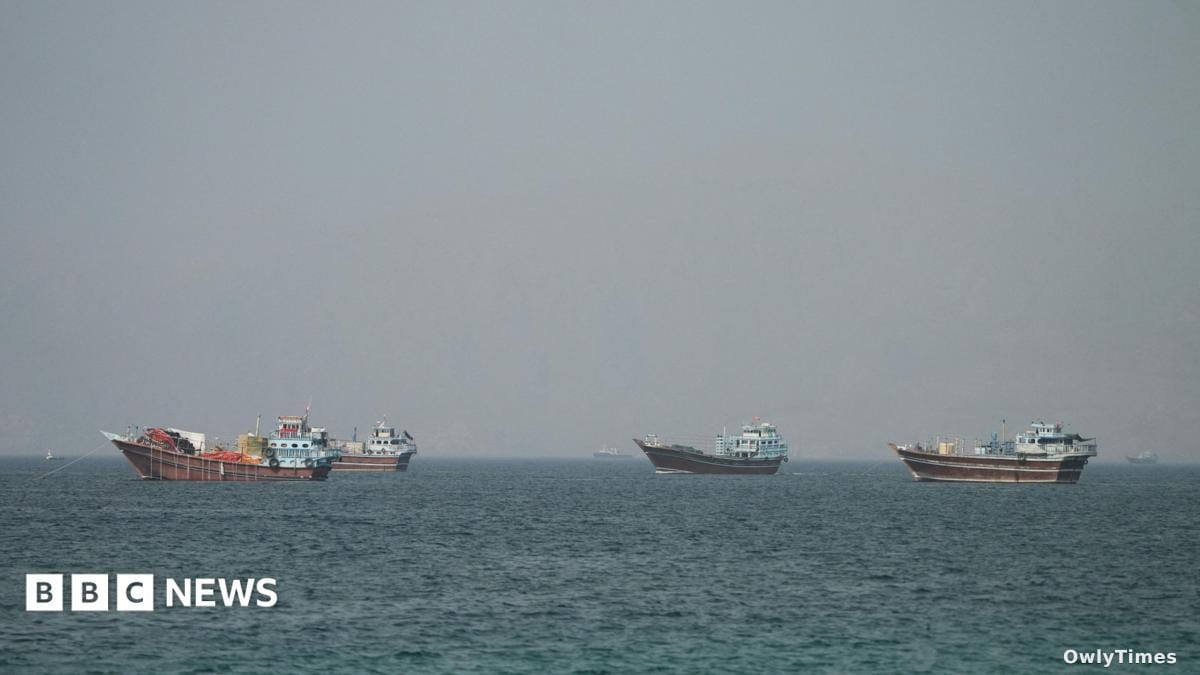

Is the global supply chain held together by sophisticated algorithms, or is it just a fraying rope currently being pulled by two different sides at once? The recent chaos in the Strait of Hormuz suggests that even in an era of digital maritime tracking and high-stakes diplomacy, the reality of international trade remains dangerously physical.
The real story here isn't just the fluctuating price of oil — it’s the collapse of a digital-age safety net designed to protect the world's most critical maritime chokepoint. The International Maritime Organization (IMO) officially paused its evacuation plan for over 11,000 stranded sailors on Thursday after a Singapore-flagged cargo ship, the Ever Lovely, was struck by an "unknown projectile" near the coast of Oman, according to the BBC.
While the BBC reports the vessel was struck 7.5 nautical miles southeast of the port of Dahit, the Associated Press and CBS News provide a more specific, albeit alarming, technical detail: a U.S. official confirmed the projectile was an Iranian drone operated by the Islamic Revolutionary Guard Corps (IRGC). Despite the bridge damage reported by the UK Maritime Trade Operations (UKMTO), no casualties were recorded, and the ship continued its transit.
This attack highlights a widening rift between two competing "operating systems" for the strait. The IMO and regional partners like Oman have been coordinating a southern route to bypass Iranian-claimed zones. Conversely, Iran’s Persian Gulf Strait Authority (PGSA) has asserted control, stating via X that any vessel utilizing routes outside its designated framework does so at the owner's risk, according to Al Jazeera. It is a stark reminder that while companies like Maersk have successfully navigated these waters—with the Maersk Baltimore making it out on Thursday—the lack of a unified digital and physical consensus makes every ship a potential target, as noted by NPR.
For the average consumer, this volatility is a precursor to a familiar frustration. When the flow of one-fifth of the world’s oil and natural gas is interrupted, the impact ripples through global markets with the speed of a high-frequency trading algorithm. Al Jazeera notes that Asian tech indices, including SK Hynix and Samsung Electronics, suffered sharp losses following the news, fueled by fears that rising memory chip costs will force manufacturers to hike prices on consumer hardware like Macs and iPads. We are seeing a direct line from a drone strike in the Gulf of Oman to the price tag on your next laptop.
The diplomatic landscape remains equally fragile. While the U.S. and Iran signed a 14-point memorandum of understanding on June 17, the enforcement of that deal is effectively being tested in real-time. U.S. Secretary of State Marco Rubio, currently on a tour of the region, has characterized the strait as an "international waterway" where tolls cannot be imposed, directly countering Tehran's attempts to charge maritime service fees, as reported by the BBC.
The IMO’s evacuation plan will remain frozen until "necessary safety guarantees" are reinstated, according to IMO chief Arsenio Dominguez. With the U.S.-Iran 60-day negotiation window already underway, the next measurable signal to watch is the resumption—or further suspension—of these coordinated transits, as any sustained blockage will inevitably translate into further inflationary pressure on global commodity prices.