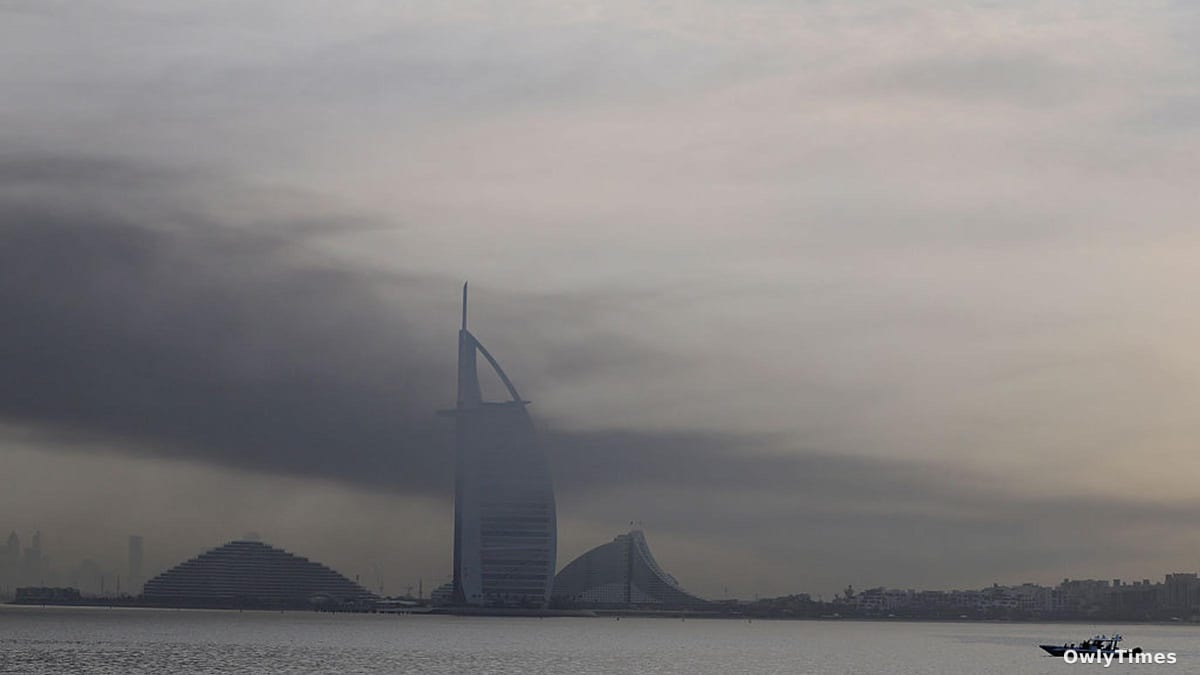

The strategic calculus behind Dubai’s increasingly aggressive suppression of information regarding attacks within its borders isn’t about denying the reality of conflict – it’s about preserving a carefully constructed illusion. While the world focused on a contained fire aboard the Kuwaiti oil tanker Al Salmi following a reported Iranian drone strike on Tuesday, the near-total lack of independent visual confirmation speaks volumes. The incident, potentially one of the most significant escalations of the Iran War thus far, was documented by a single agency photo and later, carefully curated images released by Kuwait Petroleum Corporation after the flames were extinguished. This isn’t a failure of journalism; it’s a deliberate constriction of it. The UAE, and Dubai in particular, is actively managing the narrative of security, even as the threat level demonstrably rises, and the cost of maintaining that facade is the erosion of fundamental freedoms.
The core dynamic at play is simple: who benefits and who loses? The UAE benefits from maintaining its image as a safe, stable, and luxurious destination for tourism and investment. Acknowledging the frequency and proximity of attacks – 1,977 drones, 19 cruise missiles, and 433 ballistic missiles reported by the Defense Ministry since the start of hostilities – undermines that image. Those who lose are the residents, both Emirati and the vast expatriate population, whose right to information is being curtailed, and potentially, the long-term viability of Dubai’s economic model, which relies on attracting foreign capital and talent. The arrests of survivors for sharing photos of damage, the detention of journalists, and the broad application of vaguely worded cybercrime laws – carrying penalties of up to two years in prison and hefty fines of $5,450 to $54,500 – are not about public safety, but about controlling the flow of information. As Radha Stirling, CEO of Detained in Dubai, notes, “That is probably a conservative estimate” of the hundreds arrested.
This isn’t a new phenomenon. The UAE’s reliance on manufactured realities has deep roots. As urban theorist Mike Davis observed in his 2010 work Fear and Money in Dubai, the city has always been “a strange paradise” – a meticulously crafted spectacle built on the exploitation of migrant labor and a deliberate detachment from regional realities. However, the current crackdown represents a significant escalation. Historically, the UAE has projected an image of aloofness, insulated from the conflicts plaguing its neighbors. Now, it’s actively suppressing evidence of those conflicts within its own borders. This shift is particularly jarring given Dubai’s reliance on social media influencers to promote its brand of aspirational luxury. The swift pivot of these influencers from lifestyle content to war coverage, followed by a near-uniform return to praising the official response, highlights the extent of the pressure being applied.
This article draws on reporting from time.com.
The situation echoes historical precedents of states attempting to control information during times of crisis. During the Falklands War, the British government maintained tight control over reporting from the front lines, prioritizing a narrative of national resolve. Similarly, during the Gulf War, access for journalists was heavily restricted. However, the UAE’s approach is distinct in its breadth and its targeting of private citizens. The fact that individuals are being arrested for sharing information in private messages – simply to reassure family members – demonstrates a level of surveillance and control rarely seen outside of authoritarian regimes. This is further complicated by the UAE’s alleged role in fueling conflicts elsewhere, as U.N. monitors have accused it of backing anti-government rebels in Sudan’s devastating civil war, a contradiction that underscores the hypocrisy at the heart of its security narrative.
The long-term consequences of this strategy remain to be seen. While the UAE may succeed in suppressing immediate panic, the erosion of trust and the chilling effect on free expression could ultimately damage its reputation and deter investment. The reliance on a curated reality is particularly vulnerable given the ubiquity of smartphones and social media. Despite the crackdown, information will inevitably leak, and the contrast between the official narrative and the lived experience of residents will become increasingly stark. The question now is not whether the UAE can prevent attacks, but whether it can maintain the illusion of security while simultaneously suppressing evidence of its vulnerability. The political chess move to watch next is whether the UAE will further tighten its grip on information, potentially escalating the crackdown to include even greater restrictions on internet access and social media, or whether it will attempt to recalibrate its approach, acknowledging the reality of the threat while attempting to reassure its residents and investors.