
Beyond the Rink: How Professional Sports Teams are Redefining Science Education
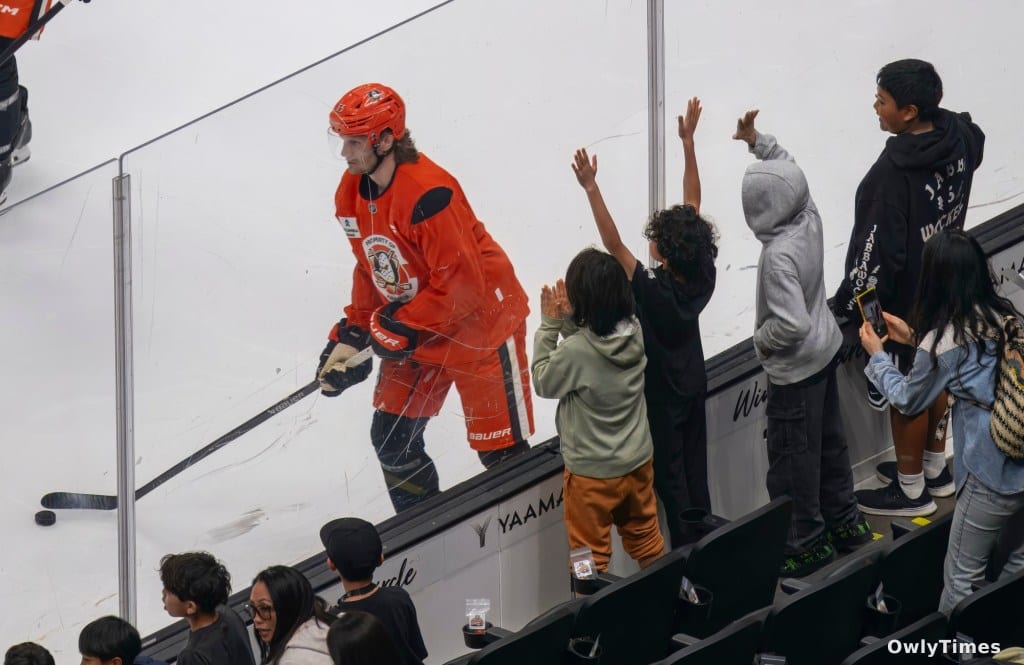
The image is striking: nearly 7,000 elementary school students filling the stands of the Honda Center on February 26, 2026, not for a game, but for a science lesson. While headlines focus on the novelty of the Anaheim Ducks’ “First Flight Field Trip,” the event reveals a quietly significant shift in how STEM education is being approached – and who is delivering it. It’s no longer sufficient to rely solely on traditional classroom settings; organizations are recognizing the power of immersive experiences and unconventional educators to ignite a passion for science in young minds. This isn’t simply about making learning “fun,” but about strategically leveraging environments and figures that already command children’s attention to address a growing concern: declining STEM engagement.
The Ducks’ initiative, formally part of their S.C.O.R.E. (Scholastic Curriculum of Recreation & Education) program, isn’t an isolated incident. S.C.O.R.E. also encompasses reading programs, school facility improvements, and in-school assemblies, demonstrating a comprehensive commitment to educational outreach. Thursday’s event specifically centered on the theme “Light the Lamp,” using the excitement of a hockey goal as a springboard to explore the principles of electricity and circuitry. Ducks players themselves led demonstrations, effectively transforming from athletes into science communicators. This is a crucial distinction; research consistently shows that students are more likely to engage with STEM fields when they see relatable role models actively involved. A 2022 study by the National Science Foundation found that students who interacted with STEM professionals reported a 15% increase in their stated interest in pursuing a STEM career, compared to a control group.
However, it’s important to clarify what this event doesn’t represent. Reports haven’t detailed a rigorous, longitudinal study measuring the impact of the field trip on student learning outcomes. While anecdotal evidence suggests enthusiasm, we don’t yet know if this translates into improved test scores or increased enrollment in advanced science courses. The event is, at this stage, best understood as a targeted intervention designed to foster positive associations with STEM, rather than a comprehensive curriculum overhaul. The Ducks are providing a spark, but sustained engagement requires ongoing support from schools and families. Furthermore, the accessibility of such programs is a key consideration. While 7,000 students benefited from this particular event, it represents a fraction of the elementary school population in the Anaheim area.
Based on the original ocregister.com report.
The broader context of this initiative is the ongoing national conversation about STEM education gaps. The United States consistently lags behind other developed nations in STEM proficiency, particularly among underrepresented groups. This isn’t simply a matter of academic performance; it’s an economic imperative. The Bureau of Labor Statistics projects that STEM occupations will grow 10.8% from 2022 to 2032, significantly faster than the average for all occupations. Filling these roles requires a robust pipeline of qualified candidates, and that pipeline begins in elementary school. Programs like S.C.O.R.E. offer a potential solution by reaching students at a formative age and challenging the perception that science is inaccessible or uninteresting. The program’s expansion into areas like building street hockey facilities at schools also suggests a holistic approach, recognizing that physical activity and community engagement can complement academic learning.
Limitations to Consider
While the Ducks’ S.C.O.R.E. program is commendable, it’s crucial to acknowledge its limitations. The event’s impact is likely strongest on students who are already predisposed to enjoy sports or have a general interest in science. Reaching students who are disengaged or lack access to such opportunities remains a significant challenge. Additionally, the program’s reliance on a professional sports team raises questions about sustainability. What happens if the team’s financial situation changes, or if their priorities shift? A more robust approach would involve partnerships with multiple organizations and a diversified funding model. Finally, the focus on “cool” demonstrations, while effective in capturing attention, shouldn’t overshadow the importance of foundational scientific concepts and critical thinking skills.
Looking ahead, the most valuable research will focus on quantifying the long-term effects of programs like S.C.O.R.E. Are students who participate in these events more likely to pursue STEM degrees? Do they exhibit greater scientific literacy? Tracking these outcomes will require collaboration between sports teams, schools, and independent researchers. More immediately, we should be asking: how can the lessons learned from the Ducks’ success be replicated in other communities, and with other sports? Could a Major League Baseball team use the physics of pitching to teach mechanics, or a WNBA team explore the biomechanics of athletic performance? The potential is vast, and the stakes are high. The future of STEM education may well depend on our ability to think outside the classroom – and beyond the traditional textbook.





