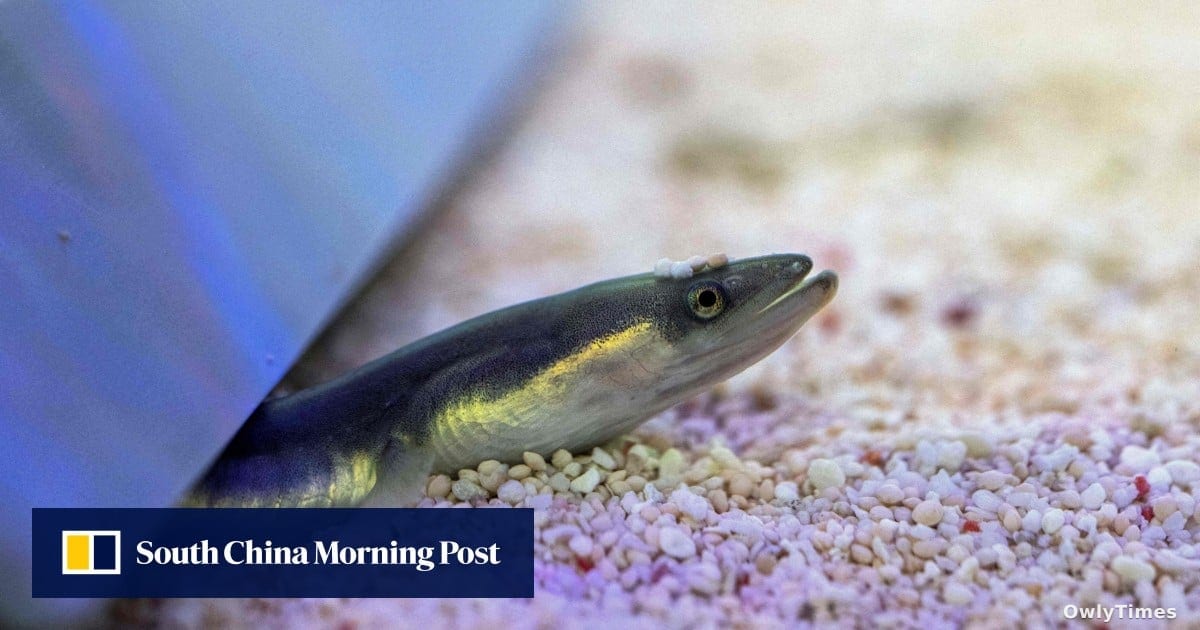

For decades, the life cycle of the eel has remained one of nature’s most stubborn enigmas, a biological odyssey that defies simple human intervention. From hatching to maturity and spawning, these creatures undergo six distinct stages of physical transformation over at least five years, traversing a staggering 6,000km (3,700 miles) between deep ocean trenches and freshwater ecosystems. The scientific question is not merely how to keep these fish alive in captivity, but how to replicate the precise, mysterious environmental triggers that signal to an eel that it is time to reproduce.
Decoding the Migration Map
The recent breakthrough by Zhao Feng and his team at the Chinese Academy of Fishery Sciences pivots away from traditional trial-and-error aquaculture. Instead, the researchers employed satellite-tracking technology to map the specific environmental variables and feeding habits of adult eels in their natural oceanic habitat. By translating these raw data points into a controlled laboratory setting, the team attempted to mirror the complex conditions of the open sea within an artificial pool.
While headlines may suggest that the eel crisis is solved, the reality is more nuanced. The study represents a successful proof-of-concept for artificial breeding rather than an immediate industrial overhaul. In an interview published in China Science Daily on April 14, Zhao reported that through three to four months of refined nutritional enhancement and environmental simulation, the team cultivated over 3,000 high-quality breeding parents and over 3 million fry. These figures are significant, yet they represent a controlled laboratory success that must now be scaled to meet a global demand that relies on the export of more than 65,000 tonnes of fish and associated products, as recorded in 2025 customs data.
Balancing Conservation and Commerce
The tension here lies in the current reliance on wild-caught fry. Because China accounts for 75 per cent of the world’s farmed eels, the industry has historically been tethered to the health of wild populations, which are currently facing a global conservation crisis. The new project, a national key research and development programme launched in December 2024, aims to decouple farming from this precarious reliance on net fishing.
Limitations to consider include the extreme difficulty of maintaining such precise "environmental simulations" at a commercial scale. What works for 3,000 parents in a high-tech workshop may not translate linearly to the massive volumes required by the market. Furthermore, the genetic diversity of lab-reared fry compared to their wild counterparts remains a critical variable for long-term population health.
Testing Grounds for Future Scaling
The methodology passed preliminary acceptance in March at two dedicated testing bases located in Hainan and Fujian provinces. This institutional validation suggests that the technological framework is robust, but the transition from a government-led research initiative to a self-sustaining commercial reality is a separate hurdle.
The next reading of the production yields at the Hainan and Fujian testing bases will show whether this artificial reproduction technology can maintain consistent output beyond the initial research phase. Should these facilities continue to successfully transition fry from the spawning stage to maturity without relying on wild stock, it would fundamentally alter the economic and ecological footprint of the global eel trade. The progress of these specific testing bases will serve as the primary metric for determining the viability of this intervention against the backdrop of the current conservation crisis.