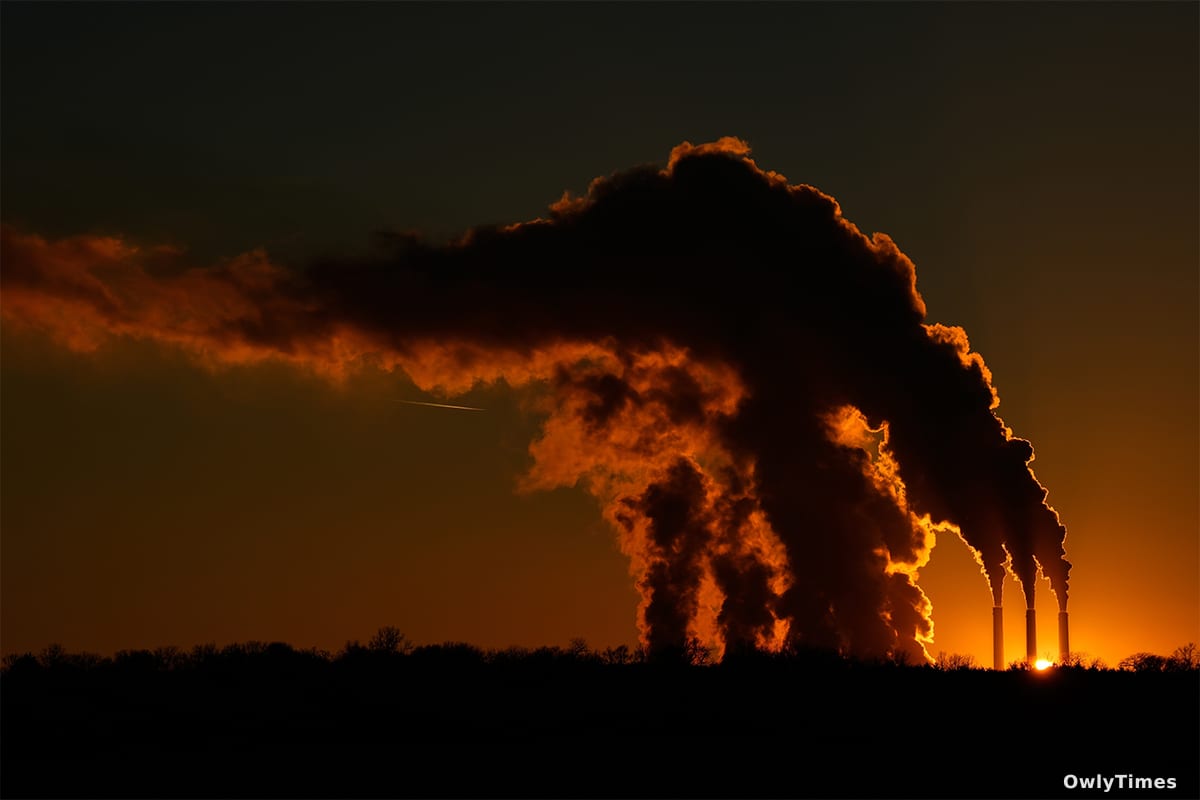

The assertion that climate change regulations are a matter of “belief” rather than scientific consensus, recently reiterated with the rollback of a key Environmental Protection Agency (EPA) finding, isn’t a new argument – but the stakes have demonstrably increased. On February 12th, the Trump administration formally rescinded the 2009 “endangerment finding,” a pivotal determination that greenhouse gases pose a threat to public health and welfare, justifying federal regulation under the Clean Air Act. While framed as a $1.3 trillion economic boon through deregulation, the decision reveals a fundamental tension: the prioritization of short-term economic gains for specific industries over the long-term, broadly distributed costs of a changing climate and its impact on public health. The narrative surrounding this reversal isn’t simply about environmental policy; it’s about who bears the burden of climate change and whether that burden will be systematically shifted from those who profit from greenhouse gas emissions to the public at large.
The 2009 endangerment finding wasn’t arrived at arbitrarily. Following extensive scientific study, the EPA under the Obama administration concluded that gases like carbon dioxide and methane do contribute to warming, and that warming does threaten public health. This wasn’t merely an academic exercise; it provided the legal foundation for regulating emissions from vehicles and power plants, driving down pollution and incentivizing cleaner technologies. The current administration’s claim that the original analysis was “flawed” and “unorthodox” is, according to experts at Northeastern University, a mischaracterization. Julia Varshavsky, assistant professor of public health and health sciences, succinctly frames the situation: “It’s not a public health decision. It’s a fossil-fuel industry decision.” This isn’t conjecture; the EPA Administrator Lee Zeldin explicitly linked the reconsideration to lowering costs for American families and bringing auto jobs back to the U.S. – economic benefits directly tied to the fossil fuel and automotive sectors.
This article draws on reporting from news.northeastern.edu.
The process leading to the rescission itself is revealing. The EPA’s call for reconsideration in March of last year generated an astonishing 571,673 public comments, a testament to the widespread concern. Yet, the administration ultimately relied on a Department of Energy report commissioned with scientists who have publicly questioned the consensus view on human-caused climate change. This raises questions about the objectivity of the information used to justify the policy shift. Sharmila Murthy, professor of law and public policy and co-director of Northeastern’s Center for Public Interest Advocacy and Collaboration, highlights the core issue: the administration is “shifting the massive costs of climate change away from the producers of greenhouse gases…and onto you and me, the actual American public.” This isn’t about offering consumers more choices, as the administration claims; it’s about making everyone pay for the consequences of those choices, regardless of their desire to do so.
The implications for public health are particularly concerning. Varshavsky points to the well-established links between air pollution – exacerbated by greenhouse gases – and a range of health problems, including asthma, cardiovascular disease, pre-term birth, and even neurodegenerative diseases like Alzheimer’s. The rollback isn’t simply about rising temperatures; it’s about a direct threat to the health and well-being of communities across the country. Murthy emphasizes the inescapable nature of these impacts: “I don’t have a choice when there’s flooding in my area…I don’t have a choice when climate change is allowing infectious diseases to spread.” The administration’s framing of deregulation as an abstract good ignores the very real, tangible harms it will inflict.
While environmental groups are preparing legal challenges, the path forward is fraught with difficulty. Murthy cautions that a conservative Supreme Court, with recent rulings limiting environmental regulation, poses a “significant risk.” A ruling that the Clean Air Act doesn’t authorize the EPA to regulate greenhouse gases would not only invalidate current policies but also “tie the hands of any new administration in 2029 unless Congress acts.” This highlights a critical vulnerability: the potential for a permanent dismantling of federal climate policy, requiring legislative intervention to restore regulatory authority. The question now isn’t simply whether the endangerment finding will be reinstated, but whether the legal framework for addressing climate change will survive at all. Looking ahead, we should watch closely for the outcomes of ongoing litigation and, crucially, the composition of the Supreme Court and the potential for Congressional action in the coming years – the fate of climate regulation may well depend on it.