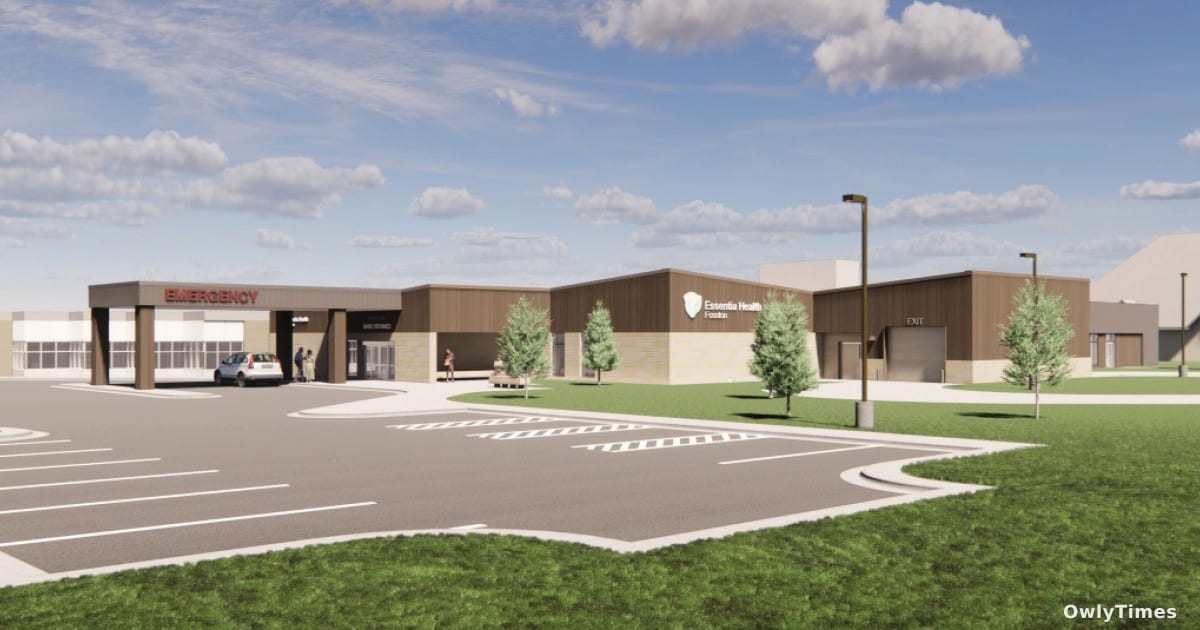

Beyond Bricks and Mortar: How Fosston’s ED Expansion Reflects a Broader Rural Healthcare Strategy
The announcement of a $12 million expansion to the emergency department at Essentia Health-Fosston isn’t simply a construction project; it’s a carefully considered response to the evolving demands placed on rural healthcare systems. While headlines focus on the impressive 5,500 square foot increase – expanding the current 1,100 square foot ED to 6,700 – the deeper story lies in how this investment addresses both patient needs and the economic health of the surrounding communities. This isn’t about building a bigger room to treat the same problems; it’s about proactively adapting infrastructure to meet increasingly complex medical challenges in a geographically isolated setting.
The project, slated to begin this April with completion expected in early summer 2027, will be overseen by general contractor Kraus-Anderson. Mike Curtis, administrator at Essentia Health-Fosston, framed the expansion as a benefit for patients, staff, and the wider region, specifically mentioning communities like Erskine, Bagley, Oklee, and Clearbrook. This geographic reach is crucial. Rural hospitals often serve as the sole point of access for emergency care across vast distances, meaning improvements aren’t just about serving Fosston residents, but a significantly larger population. What’s particularly noteworthy is the deliberate emphasis on local economic impact, with Essentia’s request for proposal prioritizing local subcontractors – a strategy that has resulted in approximately 75% of the work being awarded to area businesses. This isn’t simply good public relations; it’s a recognition that a thriving local economy is intrinsically linked to the sustainability of rural healthcare.
Source material: essentiahealth.org.
The design of the new ED also reveals a shift in priorities. Beyond simply increasing capacity, the expansion will incorporate dedicated spaces for behavioral health patients, a critical addition given the documented rise in mental health crises nationwide, and particularly acute in rural areas where access to specialized care is limited. The inclusion of a new ambulance bay also speaks to the importance of seamless integration with Essentia Health’s EMS team, recently recognized by the American Heart Association for their rapid response to cardiac and stroke patients. This isn’t a standalone ED; it’s a node in a larger, coordinated emergency response network. Pat Weerts, director of operations for Kraus-Anderson, highlighted the broader benefits, stating that projects like this “create meaningful economic impact by supporting area businesses, creating jobs and keeping investment within the community.” This echoes a growing understanding that healthcare facilities aren’t just service providers, but economic anchors.
However, it’s important to contextualize this investment. A $12 million expansion, while substantial for a rural facility, represents a relatively small fraction of the overall capital expenditure occurring in larger metropolitan healthcare systems. While Essentia is proactively addressing needs, the underlying systemic challenges facing rural healthcare – including physician shortages, declining reimbursement rates, and an aging population – remain. The expansion doesn’t solve these problems, but it does demonstrate a commitment to mitigating their impact within the Fosston community. Furthermore, the projected completion date of early summer 2027 is a significant timeframe. Healthcare needs are dynamic, and a three-year construction period requires ongoing assessment of evolving community demands.
Looking ahead, the success of this project won’t be measured solely by square footage or on-time completion. The crucial next step will be evaluating how the expanded ED impacts key metrics: wait times, patient satisfaction, staff retention, and, most importantly, clinical outcomes. Will the dedicated behavioral health spaces demonstrably improve the quality of care for patients experiencing mental health crises? Will the improved ambulance bay translate into faster response times and better patient outcomes for time-sensitive emergencies? These are the questions that will determine whether this investment truly delivers on its promise – and whether the Fosston model can serve as a blueprint for other rural communities facing similar challenges. Residents should watch for publicly released data on these metrics beginning in late 2027 and early 2028 to assess the true impact of this significant undertaking.





