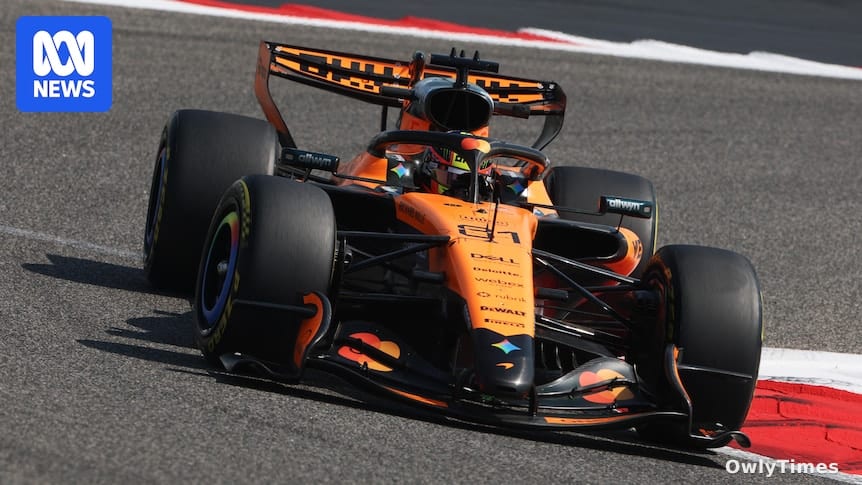

The upcoming Formula 1 season isn’t simply a visual refresh; it represents a fundamental shift in the science of racing, and a deliberate attempt to rebalance the competitive landscape. While headlines proclaim “faster, louder” cars for 2026, the reality is more nuanced. This isn’t about chasing absolute speed, but about recalibrating the complex interplay of aerodynamics, engine technology, and energy management – a recalibration that, according to those within the sport, will likely introduce a welcome dose of unpredictability. The changes are so extensive that Chris Papadopoulos, a former Renault engineer and now managing director of Volante Rosso, calls it “one of the biggest regulation changes since the sport’s inception.” Understanding why these changes are happening, and what they truly mean for performance, requires a deeper look under the hood of these incredibly complex machines.
At its core, an F1 car, as described by Bradley Lord, the Mercedes F1 team representative, is “the lightest, fastest, strongest, most potent road-going vehicle you could make.” Reaching speeds exceeding 350 kilometers per hour, these vehicles are often likened to fighter planes, but their performance isn’t solely about brute force. The aerodynamic elements – front and rear wings, side pods, and the diffuser – are meticulously designed to manipulate airflow, generating downforce to keep the car glued to the track while minimizing drag on straights. These forces are not opposing enemies, but rather tools to be balanced depending on the track’s demands. The Federation Internationale de l'Automobile (FIA), the sport’s governing body, dictates the precise shapes, sizes, temperatures, and weights of these components, essentially defining the boundaries within which teams innovate. This constant push against regulatory limits is, according to Papadopoulos, an “evolutionary arms race.”
See the original abc.net.au story for the full account.
The 2026 regulations represent a significant tightening of those boundaries, and a deliberate attempt to address concerns about the previous generation of cars. For years, teams had exploited increasingly complex floor designs to generate immense downforce, but this came at a cost. Cars were running so close to the ground that they were “bashing” into it, creating an uncomfortable ride for drivers and a reliance on intricate suspension systems. Sammy Diasinos, a former Williams engineer and now lecturer at Macquarie University, explains that the new rules mandate a “much simpler” floor design, raising the car’s ride height and altering airflow. This simplification results in approximately 30% less downforce compared to 2023, meaning drivers will need to brake earlier and manage their speed more carefully through corners. It’s a shift away from maximizing downforce at all costs, and towards a more driver-centric experience.
Beyond aerodynamics, the power unit is undergoing a transformation. The 2026 cars will achieve a 50/50 split between power derived from a traditional V6 combustion engine and a battery-electric system – a first for Formula 1. This move is central to the sport’s commitment to net-zero carbon emissions by 2030. Mercedes has been developing a synthetic fuel since 2022, aiming for a 65% reduction in greenhouse gas emissions compared to the 10% ethanol fuel used last year. Simultaneously, battery capacity is tripling, allowing for greater energy recovery during braking and more powerful acceleration out of corners. However, the FIA limits the amount of energy that can be recovered per lap, introducing a strategic element: drivers and teams must carefully manage energy deployment to maximize performance without depleting the battery. This “high-speed chess,” as Lord describes it, will add another layer of complexity to race strategy.
One immediate and noticeable change will be the sound of the cars. The removal of the heavy and complex heat motor generator unit – a component that previously acted as a silencer – will result in a louder, “throatier” engine note. While some fans will welcome this return to a more visceral auditory experience, it’s important to note that engineers are already working to improve energy efficiency, which could ultimately lead to quieter cars again. This highlights a key tension within the sport: the desire for spectacle versus the relentless pursuit of performance optimization. The increased volume isn’t simply about nostalgia; it’s a byproduct of shedding wasted energy, a principle that underscores the broader sustainability goals.
However, the impact of these changes remains uncertain. Teams are entering the 2026 season with a significant learning curve, and Lord predicts “quite a decent chunk of unpredictability and chaos” in the early races, particularly at the Melbourne Grand Prix. The reduced downforce, coupled with the complexities of energy management, will create a more challenging and potentially volatile racing environment. The question now isn’t just how fast these cars will be, but how consistently teams can extract performance from them. Will the simplification of aerodynamic elements truly level the playing field, or will established teams find new ways to exploit the regulations? And, crucially, will the increased emphasis on energy management lead to more strategic racing, or simply more mechanical failures? The answers will unfold on the track, and the first few races of the 2026 season will be a critical testing ground for the future of Formula 1.





