
The Fractured Pews: Faith, Politics, and the Search for Belonging in Post-Partisan America
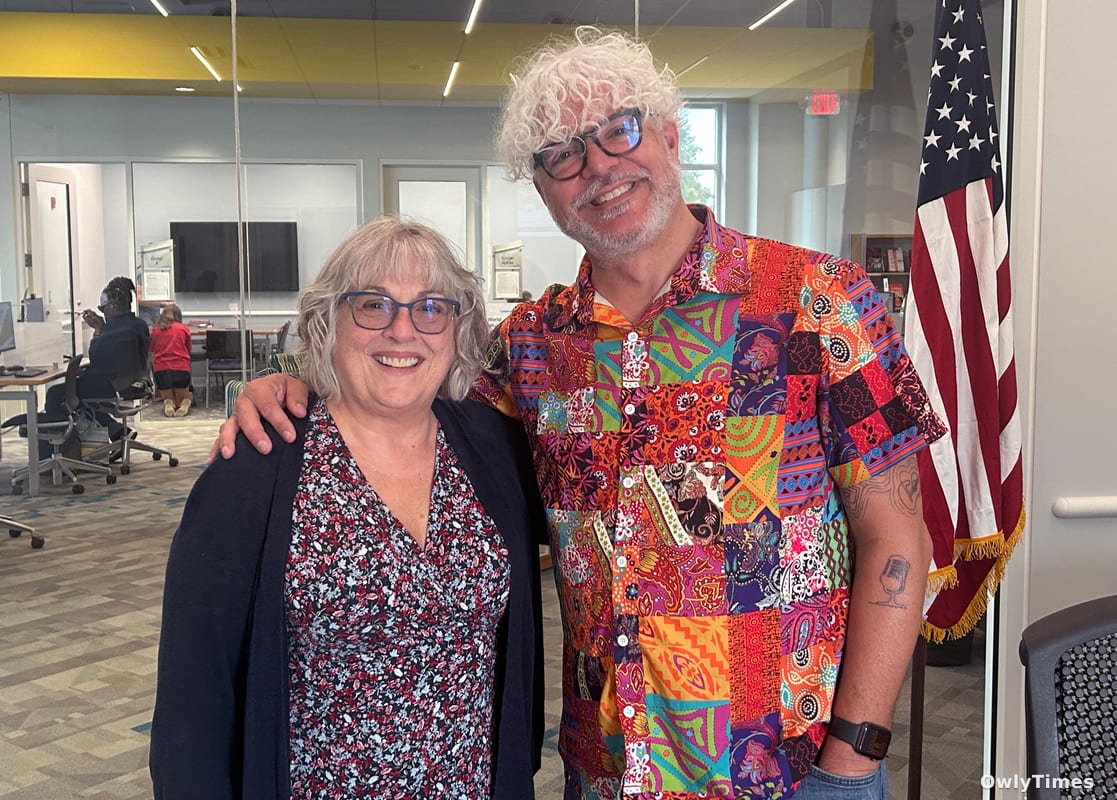
The seemingly innocuous act of two strangers – PR Frank of Dayton and Mary McKnight of Trotwood – sharing their faith journeys in a Dayton Metro Library branch, as part of WYSO’s “One Small Step” initiative, reveals a deeper strategic realignment occurring within the American religious landscape. This isn’t simply a story about personal belief; it’s a case study in how the fracturing of traditional political allegiances is forcing a reckoning within faith communities, and how individuals are navigating the tension between shared spiritual values and irreconcilable political divides. The conversation, captured by StoryCorps and published April 1, 2026, highlights a growing phenomenon: the erosion of the automatic link between religious affiliation and political identity, and the resulting search for authentic spiritual connection outside of established institutions.
Based on the original wyso.org report.
Frank’s account of “church-hopping” – leaving five congregations after experiencing ideological clashes – isn’t an isolated incident. It’s symptomatic of a broader trend. He explicitly links his departures to disagreements over “judgment calls” made by church leadership, and the discomfort of worshipping alongside individuals who support political figures he fundamentally opposes. The fact that he finds himself in churches filled with “Trumpsters” while simultaneously seeking “the magic and the mystery of Jesus” encapsulates the core contradiction many Americans now face. This isn’t a rejection of faith itself, but a rejection of the increasingly politicized environments where faith is often practiced. The willingness to endure repeated heartbreak – “leaving another family” with each departure – speaks to the depth of his need for spiritual nourishment, even as he actively rejects the political baggage attached to it.
This dynamic echoes historical precedents. The First Great Awakening in the 18th century, for example, saw a surge in individual religious experience precisely because established churches were perceived as too closely aligned with colonial authorities. Similarly, the rise of the Social Gospel movement in the late 19th and early 20th centuries represented a challenge to traditional doctrines, driven by a desire to apply religious principles to address social and economic injustices. Today, we’re witnessing a parallel shift, but instead of challenging theological dogma, the challenge is to disentangle faith from partisan politics. The key difference is the speed and pervasiveness of information – and misinformation – facilitated by modern media, which amplifies political divisions and makes finding common ground increasingly difficult.
McKnight’s journey offers a contrasting, yet equally revealing, perspective. Her deliberate embrace of a “secular life” after a period of involvement with the Mormon faith underscores the disillusionment many feel with organized religion’s capacity for inclusivity and ethical consistency. Her statement that people “love to judge” and “use their religion to support their judgment” is a pointed critique of the exclusionary tendencies within some faith communities. However, her simultaneous desire to “reclaim the word Christianity” for herself – to define her own moral and ethical framework rooted in Judeo-Christian values – suggests a yearning for spiritual grounding that transcends institutional boundaries. This is a crucial point: the rejection of organized religion doesn’t necessarily equate to a rejection of spirituality. In 2025, Gallup polling data showed a continued decline in church membership, falling to 47%, the lowest on record, while self-reported spiritual belief remained relatively stable at 81%. This gap indicates a growing segment of the population seeking meaning and purpose outside of traditional religious structures.
The fact that McKnight’s husband is an atheist further complicates the picture. This represents a common household dynamic in contemporary America, where differing belief systems coexist – often uneasily. It highlights the increasing acceptance of religious diversity, even within the most intimate of relationships. But it also underscores the challenge of finding shared values and a sense of community in a society increasingly polarized along ideological lines. The Charles F. Kettering Foundation’s support of the “One Small Step” initiative, alongside the Corporation for Public Broadcasting, is itself a strategic move, signaling a recognition of the need for facilitated dialogue and bridge-building in a fractured society.
The political chess move to watch next isn’t happening within the halls of Congress or the campaign trails, but within the pews – and increasingly, outside of them. The question is whether religious leaders will adapt to this evolving landscape by prioritizing inclusivity and ethical consistency over partisan alignment, or whether they will continue to reinforce existing divisions. Specifically, will denominations actively address the concerns of individuals like Frank, who feel alienated by the political leanings of their congregations? The future of faith in America may well depend on their answer.